
- Happy Rewards
- October 8, 2026
Top 5 Online Loyalty Card Manufacturer
What makes a loyalty card worth keeping? It is not just the design. The right loyalty card can make your brand more memorable, simplify reward tracking, and give customers another reason to return. That is why choosing the right loyalty card manufacturer matters when you are building a strong customer loyalty program.
But with so many online providers offering custom loyalty cards and digital reward solutions, how do you know which one fits your business? Ready to find the right fit? Let’s narrow down the options and explore five online loyalty card manufacturers worth knowing. We’ll look at their digital card solutions, customization options, reward features, customer engagement tools, and the value they can bring to your loyalty strategy.
We’ll also explore what to consider when choosing a digital loyalty card, including branding, Apple Wallet, Google Wallet, QR codes, digital stamps, rewards, and customer engagement capabilities.
Finally, we’ll look at how physical loyalty cards compare with digital alternatives and where each option can fit into a modern loyalty program.
If you are ready to take your loyalty strategy beyond traditional cards, HappyRewards.io can help you explore digital ways to manage rewards, engage customers, and encourage repeat visits.
What Is an Online Loyalty Card Manufacturer?
An online loyalty card manufacturer is a provider that helps businesses create, customize, and manage loyalty cards through a digital platform. Unlike traditional card manufacturers that focus mainly on printing physical cards, online providers can help businesses build digital loyalty cards that customers can access from their smartphones. This makes loyalty programs easier to manage while giving customers a convenient way to collect and redeem rewards.
Digital Loyalty Cards and Online Card Creation
With an online platform, businesses can create a branded digital loyalty card without managing the technical side themselves. The process may include choosing a card style, adding business details, setting up rewards, and publishing the card for customers.
Instead of ordering a large batch of physical cards, businesses can manage their loyalty card experience online and make changes when their program evolves.
Branding and Customization
A loyalty card should feel like part of your brand. That is why card customization is an important feature to consider. Depending on the provider, businesses may be able to customize:
Your loyalty card should feel like a natural extension of your brand, not a generic reward tool. That is why card customization is an important feature to consider when choosing an online loyalty card provider. A flexible platform should give you control over the way your card looks, what information customers see, and how they interact with your rewards. Key customization options may include:
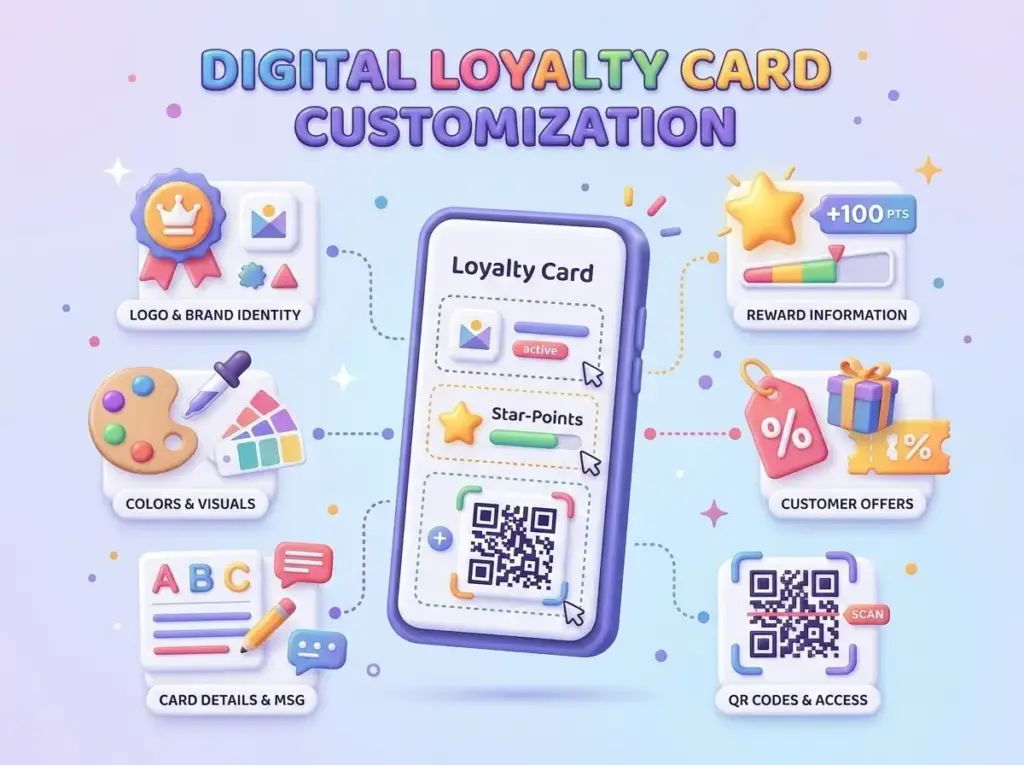
Good customization makes the digital loyalty card feel more like a natural extension of the customer experience.
Apple Wallet and Google Wallet
One of the biggest advantages of a digital approach is mobile accessibility. Providers may allow customers to save loyalty cards to Apple Wallet or Google Wallet, making them available directly from their smartphones.
This removes the need to carry a separate physical card and can make it easier for customers to access their rewards when they visit a business.
QR Codes, Digital Stamps, and Rewards
QR codes can provide a simple way for customers to access or interact with a loyalty program. Businesses can also use digital stamps or points-based rewards to encourage repeat purchases.
For example, a loyalty program could reward customers after completing a certain number of purchases, collecting stamps, or reaching a specific points threshold. The exact reward structure depends on the platform and the business model.
Customer Tracking and Loyalty Management
A modern loyalty card platform can also help businesses understand customer activity. Depending on the provider, businesses may be able to track participation, rewards, redemptions, and other loyalty activity.
This information can support better loyalty management and help businesses understand which rewards encourage customers to return.
In short, an online loyalty card manufacturer is not simply creating a card. It can provide the technology behind a complete digital loyalty program, connecting the card, rewards, customer engagement, and loyalty management in one experience. Once you understand what these platforms offer, it becomes easier to decide which provider fits your business.
Top 5 Online Loyalty Card Providers
1. HappyRewards
HappyRewards is a digital loyalty platform designed to help businesses create and manage customer reward programs. It supports digital loyalty cards, digital stamp cards, rewards, customer engagement, and other loyalty features.
What makes it useful is that businesses can build a loyalty experience around their own brand instead of relying only on traditional paper or plastic cards. Customers can access their rewards digitally, while businesses can use loyalty data to encourage repeat visits and ongoing engagement.
It can be a practical choice for businesses looking for more than a basic digital stamp card
2. TapForLoyalty
TapForLoyalty focuses on digital loyalty cards that customers can use through their mobile devices. Its platform supports Apple Wallet and Google Wallet, allowing customers to keep their loyalty card accessible without needing to carry a physical card.
Businesses can use digital cards to manage rewards, track customer activity, and encourage repeat visits. Its wallet-based approach can work particularly well for local businesses that want a straightforward loyalty experience.
3. Stamp Me
Stamp Me specializes in digital stamp cards designed to encourage repeat purchases and visits. Instead of using a traditional paper stamp card, customers can collect digital stamps through the platform.
The service is particularly relevant for businesses built around frequent purchases, such as cafes, restaurants, salons, and other local businesses. It also provides tools for managing loyalty activity and communicating with customers.
4. Loyally
Loyally takes a broader approach to digital loyalty cards, offering different reward formats that can be adapted to business needs. These can include stamps, rewards, discounts, cashback, coupons, and membership-style benefits.
Its platform can help businesses create a digital loyalty experience while keeping customer engagement in one system. This makes it worth considering for businesses that want more flexibility than a simple stamp-based program.
5. Increasify
Increasify focuses on branded digital loyalty cards that customers can access from their smartphones. Its approach centers on creating a mobile loyalty experience that can work with Apple Wallet and Google Wallet.
For businesses that want customers to have a branded loyalty card readily available on their phones, this type of wallet-based solution can provide a convenient alternative to physical cards.
The right provider ultimately depends on how you want customers to earn and redeem rewards. Before choosing one, consider digital loyalty card features, wallet support, customization, customer engagement tools, and how easily the platform fits into your existing loyalty strategy.
What Does an Online Loyalty Card Manufacturer Do?
Choosing an online loyalty card manufacturer is about more than finding a platform that creates a digital card. From my perspective, the better approach is to look at how well the provider supports the entire loyalty program, from card creation and rewards to customer engagement and reporting. These factors can also help you make a more informed choice when comparing different providers.
Digital Loyalty Card Customization
Your digital loyalty card should look and feel connected to your brand. Check whether the provider allows you to customize your logo, colors, messaging, card appearance, and reward information.
A flexible platform should make it possible to create a branded experience without requiring advanced technical skills.
Apple Wallet and Google Wallet
Mobile accessibility is an important part of digital loyalty. Look for providers that support Apple Wallet and Google Wallet, allowing customers to keep their loyalty cards on their smartphones. A loyalty card manufacturer that supports mobile wallet integration can make it easier for customers to access their cards and rewards whenever they need them.
This can make rewards easier to access and remove the need for customers to carry a physical card.
Reward and Stamp Options
Different businesses need different reward structures. Before choosing a provider, check whether it supports options such as:
- Digital stamps
- Points-based rewards
- Discounts
- Coupons
- Membership benefits
- Visit-based rewards
The more flexibility you have, the easier it is to build a customer loyalty program around your specific business model.
Customer Engagement and Automation
A loyalty card should do more than sit on a customer’s phone. Look for customer engagement features that can help you communicate relevant rewards, promotions, and reminders.
Automation can make this easier by triggering certain messages or actions based on customer activity, helping businesses stay connected without managing every interaction manually.
Loyalty Analytics
I always recommend looking beyond the card itself and checking what data the platform provides. Loyalty analytics can show how customers interact with your program and whether your rewards are actually driving engagement.
Useful information may include enrollment, reward redemption, purchase activity, repeat visits, and campaign performance.
Integrations
Your loyalty platform should fit into your existing business workflow. Check whether it can connect with your POS system, marketing tools, customer databases, or other software you already use.
Good integrations can reduce manual work and make customer information easier to manage.
Ease of Use and Scalability
Finally, consider how easy the platform is to use today and whether it can support your business tomorrow. A straightforward interface can make setup and daily management much easier.
At the same time, look for scalability if you plan to add more customers, locations, rewards, campaigns, or loyalty features as your business grows.
Once you evaluate these factors, comparing the five online loyalty card providers becomes much easier. Instead of choosing based only on appearance or price, you can focus on the features that will actually support your loyalty strategy.
Benefits of Using an Online Loyalty Card
Choosing an online loyalty card is not simply about replacing a paper card with a digital version. From my perspective, the bigger advantage is creating a loyalty experience that is easier for customers to access and easier for businesses to manage. When the right digital loyalty card platform is in place, businesses can combine convenience, rewards, customer data, and engagement in one system. A reliable loyalty card manufacturer can also provide the tools businesses need to customize their cards, manage rewards, and create a more connected customer experience.
Customers Can Access Rewards More Easily
Physical loyalty cards can be forgotten, lost, or left at home. A digital loyalty card gives customers a more convenient way to access their rewards through a smartphone.
Depending on the platform, customers may be able to use:
- Apple Wallet or Google Wallet
- QR codes for identifying loyalty accounts
- Mobile apps
- Digital membership cards
- Digital stamp cards
- Mobile reward notifications
This convenience can remove friction from the loyalty experience. Customers do not have to remember to carry another card every time they visit.
Businesses Can Encourage Repeat Purchases
The main goal of a customer loyalty program is to give customers a reason to return. Digital cards make it easier to structure rewards around specific customer actions.
For example, a business could offer:
- Digital stamps after a set number of purchases
- Points rewards that customers accumulate over time
- Discounts for returning customers
- Membership rewards with exclusive benefits
- Referral rewards for introducing new customers
The important part is not simply offering rewards. The program should make the reward easy to understand and valuable enough to encourage another visit.
Customer Engagement Becomes More Flexible
A modern loyalty card platform can do more than record purchases. A loyalty card manufacturer can provide digital tools that help businesses use customer activity to create more relevant engagement.
This can include personalized offers, reward reminders, promotional campaigns, and other loyalty communications. Instead of sending the same message to everyone, businesses can create different experiences based on customer activity and program participation.
That gives businesses more opportunities to stay connected without relying entirely on broad promotional campaigns
Businesses Gain Useful Loyalty Data
Another important benefit is visibility into how customers interact with the program. Loyalty analytics can help businesses understand whether customers are enrolling, earning rewards, redeeming them, and returning.
Useful metrics can include:
- Customer retention
- Reward redemption rate
- Purchase frequency
- Loyalty program participation
- Repeat visit rate
- Campaign engagement
These insights can help identify what is working and where the loyalty strategy needs improvement.
The Program Can Grow With the Business
An online loyalty card can also be easier to expand than a traditional card-based system. As a business grows, it may want to introduce new rewards, campaigns, customer segments, or engagement strategies.
That flexibility matters because a loyalty program should not remain static. What works for a small customer base may need to change as the business attracts more customers.
Ultimately, the strongest advantage of an online loyalty card is the combination of customer convenience, repeat purchase incentives, and business insights. When these elements work together, a digital loyalty program can become an ongoing part of the customer experience rather than simply another promotional tool.
Physical vs. Online Loyalty Cards
When I look at physical loyalty cards versus online loyalty cards, I do not see one as automatically better than the other. I have found that the right choice depends on how customers interact with a business and how much flexibility the business needs from its loyalty program.
Physical Loyalty Cards
Traditional cards can still work well, particularly for businesses where customers regularly visit the same location. A simple card can make rewards easy to understand and gives customers something tangible to keep.
Physical loyalty cards can still work well for simple, repeat-visit programs, but they come with some practical limitations. Businesses need to consider how easily customers can keep track of their cards, how much ongoing maintenance they require, and how much customer information they can provide. Some common challenges include:
However, there are some practical limitations:
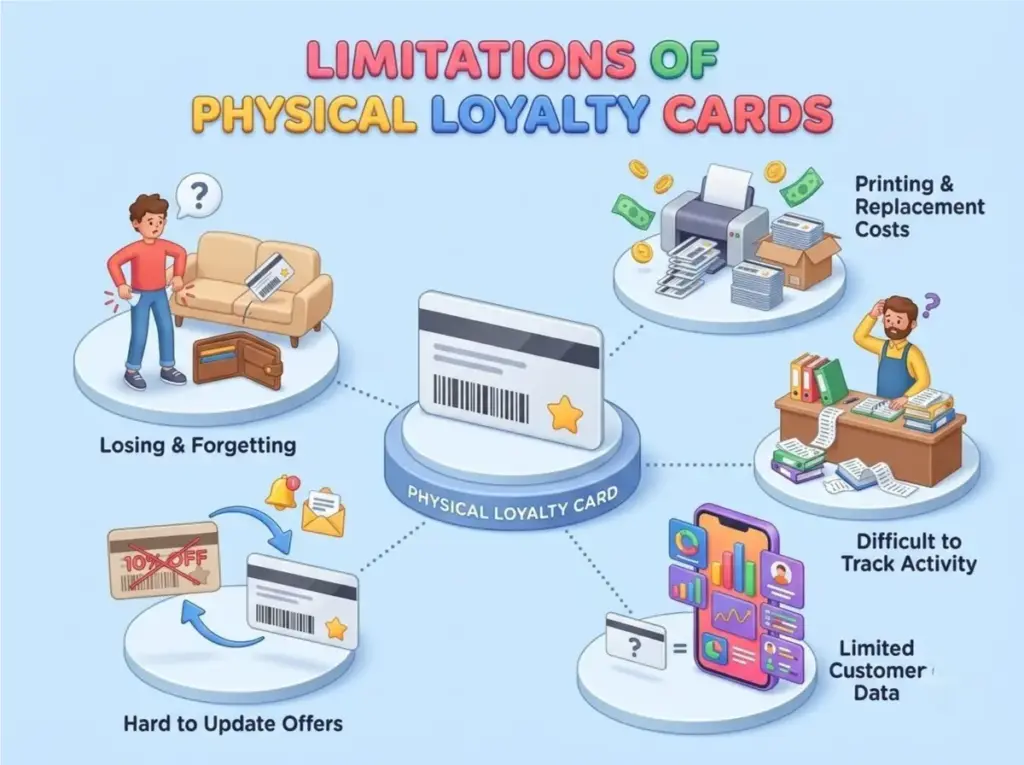
Physical loyalty cards can be useful for straightforward loyalty programs, but they can also create challenges for both businesses and customers. Cards can be misplaced or forgotten, while printing and replacing them can add ongoing costs. Businesses may also have limited visibility into customer activity, making it harder to track engagement and understand buying behavior. Updating rewards or offers can require new cards or separate customer communication, which can make the program less flexible. Compared with digital systems, physical cards also provide more limited customer data, making it harder to personalize rewards and measure overall loyalty program performance.
For businesses with a straightforward reward structure, these limitations may not be a major concern.
Online Loyalty Cards
An online loyalty card takes the same basic loyalty concept and moves it to a digital environment. In my experience, this can make the program much easier to manage and more convenient for customers.
With a digital loyalty card, businesses can offer:
- Apple Wallet and Google Wallet access
- Digital stamps or points
- Mobile reward notifications
- Personalized offers
- Customer activity tracking
- Flexible loyalty campaigns
Which Option Makes More Sense?
I would choose based on the business model rather than following a one-size-fits-all approach. Physical cards may suit simple, local reward programs, while digital loyalty programs offer more flexibility for businesses that want stronger engagement, data, and automation.
The key is choosing a system that customers will actually use consistently. A well-designed loyalty experience should feel convenient, valuable, and simple from the first interaction to the final reward.
Conclusion
Choosing the right online loyalty card is about more than moving away from paper or plastic. Throughout this guide, we explored how loyalty card manufacturer work, what features businesses should look for, and five online loyalty card providers worth considering. We also discussed how a well-planned customer loyalty program can make rewards easier to access while helping businesses encourage repeat purchases and improve customer engagement.
We looked at important features such as Apple Wallet, Google Wallet, digital stamps, rewards, customer data, loyalty analytics, and personalized offers. We also compared the practical differences between physical and digital loyalty cards.
So, what should you do next? Start by identifying the loyalty features your customers will actually use and choose a platform that can grow with your business. If you are exploring a flexible digital loyalty card manufacturer, Happyrewards.io can help you create digital rewards, engage customers, and build a loyalty experience that keeps them coming back. The right solution can turn simple rewards into a stronger, more consistent customer relationship.
