
- Happy Rewards
- September 22, 2026
Clover Loyalty Program – A 2026 Guide to Features Pricing & More
If customers already buy from your business through Clover, the next question is simple: how do you give them a reason to return? A well-planned Clover Loyalty Program can turn everyday purchases into opportunities to build stronger customer loyalty, encourage repeat visits, and create a more rewarding experience.
There is a difference between offering an occasional discount and running a structured customer rewards program. Discounts can bring customers back once, while a well-designed loyalty program can give them an ongoing reason to engage with your business.
In this guide, we’ll explore how a Clover loyalty program works, which features to consider, loyalty ideas for different types of businesses, and practical ways to create a program customers actually want to use. We’ll also look at how a dedicated loyalty program software solution such as Happyrewards.io can fit into your broader customer retention strategy.
The journey is straightforward: Clover POS → Customer Purchase → Loyalty Activity → Reward → Repeat Visit.
How the Clover Loyalty Program Works
A Clover loyalty program connects customer purchases with rewards that encourage people to return. The idea is simple: instead of ending the customer relationship at checkout, each purchase becomes part of a longer customer loyalty journey.
The process can look like this:
Enroll → Purchase → Earn → Track → Redeem → Return
While the exact setup depends on the loyalty solution a business uses with Clover, there are several important steps behind this journey.
Customers Enroll in the Loyalty Program
The first step is getting customers into the program. Businesses can introduce the loyalty option during checkout and make enrollment part of the normal purchasing experience.
The simpler this step is, the easier it is to encourage participation.
A business might collect basic customer information and connect the customer’s profile with their loyalty activity. Once enrolled, future purchases can contribute toward rewards according to the rules of the program.
The goal is to avoid making loyalty feel like a separate process. Ideally, customers should understand the benefit while they are already interacting with the business.
Purchases Turn Into Loyalty Activity
After enrollment, customer purchases can contribute toward the reward structure.
A business needs to decide what it wants to reward. For example, it could offer:
- Points based on spending
- Rewards after a certain number of visits
- Discounts after reaching a threshold
- Free products or services
- Bonus points during promotions
- Special rewards for selected customer groups
This is where a customer rewards program becomes more than a simple discount. Businesses can design rewards around the behaviors they want to encourage.
For example, a café may want customers to visit more frequently, while a salon may want to encourage customers to book their next appointment.
Customers Build Toward a Reward
Once customers begin earning, they need a clear way to understand their progress.
Showing customers what they have earned, what reward is available, and what they need to do next can make the program easier to use.
This is also where digital loyalty program features can become useful. Instead of relying on paper cards or manually tracking visits, businesses can use digital systems to organize customer activity and reward progress.
For businesses, the same data can provide insight into purchasing patterns, engagement, and repeat behavior.
Rewards Give Customers a Reason to Return
The reward itself is only one part of the strategy. The bigger objective is to create another reason for the customer to purchase again.
For example:
Purchase → Earn Points → Get Reward → Redeem → Purchase Again
A well-structured program makes the next visit feel connected to the previous one.
Businesses can also use different rewards for different customer behaviors. A new customer might receive an introductory reward, while an existing customer could receive a bonus for reaching a spending or visit milestone.
Businesses Monitor and Adjust the Program
A Clover loyalty program should not be treated as something that is launched once and then forgotten.
Businesses can review indicators such as:
- Loyalty program enrollment
- Repeat purchases
- Reward redemption
- Customer engagement
- Average purchase activity
- Most popular rewards
- Inactive loyalty members
- Campaign performance
These insights can help identify what is working and where customers are dropping out of the loyalty journey.
For example, if many customers enroll but few redeem rewards, the earning structure or reward value may need to be reviewed. If customers redeem rewards but do not return, the business may need to rethink what happens after redemption.
The Right Loyalty Structure Depends on the Business
There is no single reward structure that works for every Clover business.
A coffee shop may benefit from frequent visit-based rewards. A restaurant could use spending-based points. A salon might combine purchase rewards with VIP benefits, while a retail store could use targeted promotions around specific product categories.
The important thing is to connect the reward structure with the behavior the business wants to encourage.
That makes the process more strategic:
Business Goal → Reward Structure → Customer Action → Loyalty Activity → Reward → Repeat Purchase
Once this foundation is in place, the next step is understanding the features a Clover loyalty program should have, from points and digital rewards to customer segmentation, automation, and loyalty analytics.
Step-by-Step: How to Sign Up for and Set Up Clover Rewards
Setting up a Clover Rewards program can be straightforward when you approach it step by step. The exact process may vary depending on your Clover plan, POS setup, and the loyalty solution you choose. However, the basic process usually involves creating your account, configuring rewards, enrolling customers, and tracking results.
1. Create Your Clover Account
Start by creating a Clover account and completing the merchant application. You may need to provide business and payment information before your account is approved. Once your account is active, you can access the tools and services available for your specific Clover setup.
2. Choose Your Clover POS Setup
Select the Clover POS hardware and plan that fits your business. Your available loyalty features can depend on your Clover system and connected services. Consider your transaction volume, business type, number of locations, and desired customer experience before choosing your setup.
3. Access Your Clover Dashboard
Once your account is ready, log in to your Clover Dashboard. You can manage products, customers, transactions, applications, and other business settings from this central location. Your available loyalty tools will also depend on your account configuration.
4. Find the Rewards or Loyalty Feature
Look for the available Clover loyalty program features or compatible loyalty applications. Depending on your setup, you may use Clover’s own functionality or a third-party application from the Clover App Market. Review the available features before making your selection.
5. Create Your Reward Structure
Decide how customers will earn and redeem rewards. Your loyalty rewards program could reward purchases, visits, spending milestones, or specific actions.
You could offer:
- Points for qualifying purchases
- Visit-based rewards
- Birthday offers
- Spending milestones
- Promotional bonus points
Keep the rules simple so customers can understand them easily.
6. Set Up Customer Enrollment
Choose how customers will join your customer loyalty program. Make enrollment quick and easy for both customers and employees. Clearly explain how customers earn points and when they can redeem rewards.
7. Test Your Loyalty Program
Before launching, run test transactions to confirm that points, rewards, and redemption rules work correctly. Testing can help identify problems before customers begin using the program.
8. Promote Your Program
Once everything is ready, promote your Clover rewards program through checkout conversations, receipts, email, social media, and in-store signage. Employees can also introduce the program during purchases.
9. Track Customer Engagement
After launch, monitor enrollment, repeat purchases, reward redemption, and engagement. These insights can help you refine your customer retention strategy and improve the program over time.
The setup is only the beginning. A successful Clover loyalty program requires ongoing attention to rewards, customer engagement, and performance.
Key Features to Look for in Clover Loyalty Program Software
Choosing Clover loyalty program software is about more than finding a tool that gives customers points or discounts. You also need to consider how easily customers can join, how rewards are managed, and whether the system can support customer engagement without creating manual work.
Here are the key features worth considering.
Flexible Points and Rewards
Businesses need different reward structures. A café may reward frequent visits, while a retail store may offer points based on spending. A salon could reward appointments, referrals, or milestones.
Look for flexible options such as:
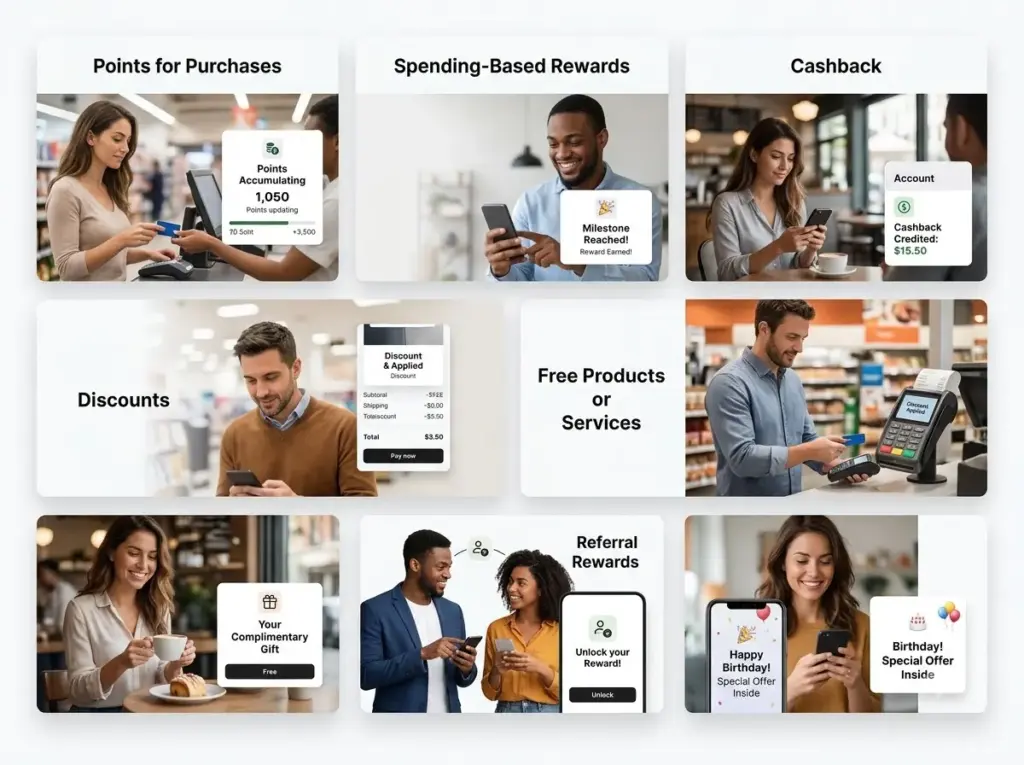
The earning rules should be just as customizable as the rewards themselves.
Digital Loyalty Cards
A digital loyalty card makes participation more convenient by giving customers access to their rewards without relying on a physical card.
Depending on the platform, customers may be able to track points, view benefits, and access membership or reward information digitally. This can create a customer loyalty experience while making the program easier to use between purchases.
Automated Customer Rewards
Automation can reduce repetitive work while keeping customers engaged. Businesses can create campaigns around birthday rewards, purchase milestones, re-engagement, promotions, reward reminders, and referrals.
The goal is not to automate every interaction. Instead, loyalty program automation should handle predictable activities while leaving businesses in control of the customer experience.
Referral and VIP Programs
Referral programs can encourage existing customers to bring new customers to the business, while VIP programs can recognize customers who demonstrate ongoing loyalty.
VIP benefits might include:
- Exclusive rewards
- Special discounts
- Member-only offers
- Additional loyalty benefits
- Milestone rewards
Customer Segmentation and Personalization
A first-time customer and a frequent buyer may need different incentives. Customer segmentation allows businesses to group customers according to purchase activity, spending, engagement, loyalty status, or lifecycle stage.
This makes personalized rewards more relevant. For example, inactive customers could receive re-engagement offers, while frequent buyers could receive VIP benefits.
Loyalty Analytics and Reporting
Loyalty analytics can help businesses understand whether their program is encouraging engagement and repeat purchases.
Metrics include:
- Enrollment rate
- Active loyalty members
- Reward redemption rate
- Repeat purchase activity
- Referral activity
- Revenue from loyalty members
Platforms such as Happy Rewards bring customizable rewards, digital loyalty cards, automation, referrals, VIP programs, personalization, and analytics together. These features provide a useful framework when evaluating what your Clover loyalty program actually needs.
Clover Rewards Limitations You Should Know
A Clover loyalty program can give businesses a practical way to reward repeat customers, but it may not cover every loyalty requirement a growing business has. Before choosing a solution, it is worth looking beyond the basic points and rewards functionality and considering where you may need more flexibility.
Customer Adoption Can Be a Challenge
A loyalty program only works when customers actually participate. Clover’s loyalty experience can involve the Clover app and customer information such as a phone number or other account details.
For businesses, this means enrollment needs to be simple. If customers do not see an immediate reason to join, some may skip the process altogether.
Customization May Not Cover Every Requirement
Clover provides loyalty functionality through its customer engagement tools, including rewards and promotions. However, businesses looking for highly customized loyalty program software may need capabilities beyond the standard experience.
For example, you may want more control over your branding, reward logic, customer journeys, or specialized loyalty campaigns.
Customer Communication Has to Be Considered
Rewards are only one part of customer engagement. Businesses may also want to send targeted reminders, promotional messages, and re-engagement campaigns based on customer behavior.
Clover supports customer communications through channels such as email, text, and its mobile app, but businesses should evaluate whether the available communication and automation capabilities match their specific customer retention strategy.
Program Rules Can Change
Clover’s current loyalty terms state that merchants can modify, pause, suspend, or discontinue benefits and program elements, subject to applicable law and disclosed terms.
That makes it important for businesses to establish clear reward rules and communicate them properly to customers.
Advanced Loyalty Needs May Require Another Solution
As a business grows, basic rewards may no longer be enough. You may eventually want deeper customer segmentation, more sophisticated personalized rewards, advanced automation, referral programs, VIP tiers, or detailed loyalty analytics.
That is where dedicated loyalty platforms can become worth evaluating. Instead of asking whether Clover Rewards is good or bad, the better question is whether its capabilities match the complexity of your loyalty strategy.
For businesses that want greater flexibility, solutions such as Happy Rewards can be evaluated based on the specific features, integrations, customization, and customer engagement capabilities they provide.
Before choosing a loyalty solution, consider your current needs, expected growth, customer behavior, and how much control you want over the overall customer loyalty experience.
Clover Loyalty Program Use Cases by Industry
A Clover Loyalty Program can look very different depending on what a business sells and how often customers return. In my experience, the most useful approach is to start with the customer’s buying behavior rather than choosing a reward simply because it sounds attractive. Here are a few practical ways different businesses can structure a customer loyalty program.
Clover Loyalty Program for Restaurants and Cafés
Restaurants and cafés often have frequent transactions, making repeat purchases a natural loyalty goal. A business could offer:
- Points for qualifying orders
- A free drink after a set number of visits
- Birthday rewards
- VIP benefits for frequent customers
- Bonus rewards for trying selected menu items
The idea is to make regular visits feel progressively more rewarding. For a café, for example, a customer who visits every week could earn points toward a future purchase rather than receiving the same discount every time.
Clover Loyalty Program for Retail Stores
Retail businesses may have fewer visits but higher-value transactions. A points-based loyalty program can therefore work well when rewards are connected to spending.
Possible ideas include:
- Points based on purchase value
- Member-only discounts
- Spending milestone rewards
- Referral rewards
- Early access to promotions
This structure gives customers a reason to continue shopping while giving the business flexibility to reward higher-value activity.
Clover Loyalty Program for Salons and Beauty Businesses
For salons and beauty businesses, loyalty can revolve around appointments and customer relationships. A digital loyalty program could reward customers for returning regularly, reaching milestones, or referring friends.
Businesses could offer:
- Rewards for repeat appointments
- Referral incentives
- Birthday rewards
- Appointment milestones
- VIP benefits for frequent customers
These rewards can help turn occasional appointments into a more consistent customer relationship.
Clover Loyalty Program for Service Businesses
Service businesses can build loyalty around repeat interactions rather than traditional product purchases. Depending on the business model, rewards could be connected to:
- Repeat appointments
- Memberships
- Referrals
- Customer milestones
- Customer anniversaries
The important thing is to choose actions that naturally fit the customer’s relationship with the business.
How to Choose the Right Reward Structure
Before creating a loyalty rewards program, consider:
- Purchase frequency
- Average transaction value
- Customer preferences
- Business margins
- Reward profitability
- Desired customer behavior
The biggest discount is not automatically the best reward. A strong customer retention strategy should give customers meaningful value while encouraging behavior that also makes sense for the business.
That balance is what turns a simple rewards offer into a sustainable customer loyalty program. give diffrent h2 for this
Clover Loyalty vs Happy Rewards: Feature Comparison
Here’s a quick side-by-side look at the key features of Clover Loyalty and Happy Rewards to help you compare their capabilities.
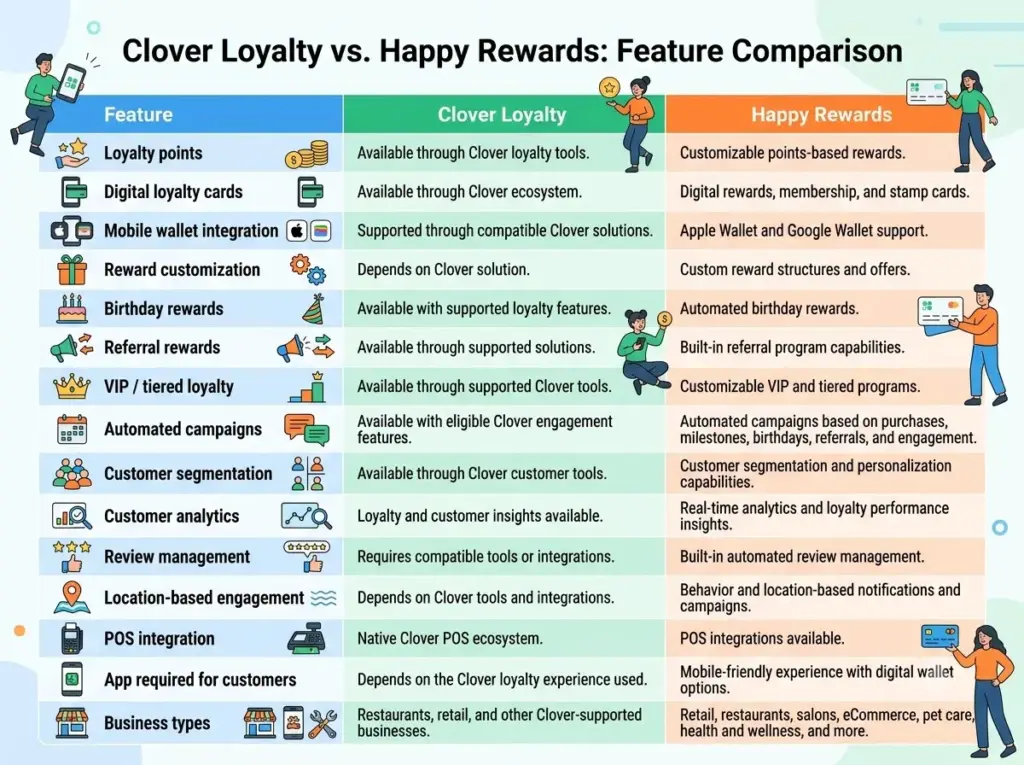
This comparison makes it easier to see which loyalty program features align with your business needs and customer engagement goals.
Conclusion
A Clover loyalty program can help businesses turn everyday purchases into meaningful customer relationships, encouraging repeat visits and long-term engagement. Throughout this guide, we explored how Clover Rewards works, how to set it up, the key features to consider, potential limitations, and practical industry-specific loyalty use cases.
However, as your business grows, you may need more flexibility than a basic customer loyalty program can provide. If you are looking for digital loyalty cards, personalized rewards, referral programs, VIP loyalty programs, automated customer engagement, and detailed loyalty analytics, a dedicated platform such as Happyrewards.io can be worth exploring.
Ultimately, the right loyalty program software should make rewards simple and valuable for customers while helping your business strengthen customer retention, increase repeat purchases, and build lasting relationships. The goal is not just to reward customers, but to give them more reasons to return.
