
- Happy Rewards
- October 23, 2026
Restaurant CRM: Turn Guest Data Into Repeat Visits
Running a restaurant is about more than serving great food. You also need to understand what brings customers back, what makes them choose a competitor, and how their experiences influence future visits. However, customer information often sits across reservation systems, payment records, online orders, and feedback platforms, making it difficult to see the bigger picture. This is where a restaurant CRM can help.
A restaurant customer relationship management system helps businesses organize guest information, recognize customer behavior, improve communication, and make more informed decisions. When used effectively, it can help restaurant owners create better dining experiences and build stronger customer relationships.
For businesses exploring ways to encourage repeat visits, platforms like Happyrewards.io also highlight how digital loyalty experiences can support broader customer retention efforts. The key is understanding which information matters, how to use it responsibly, and which tools fit your restaurant’s needs. Let’s explore how to turn guest data into meaningful improvements and lasting customer relationships.
Where Restaurants Lose Valuable Customer Information
Restaurants interact with guests at multiple touchpoints, from reservations and online orders to payments and post-visit feedback. Each interaction can reveal something useful about customer preferences, dining habits, and service expectations. However, I often see a common challenge: restaurants collect information without having a clear process for organizing and using it. A restaurant CRM can help address this problem, but first, restaurant owners need to understand where valuable customer information gets lost.
Disconnected Systems Create Incomplete Customer Records
Many restaurants rely on separate tools for reservations, point-of-sale (POS) transactions, online ordering, email marketing, and loyalty programs. When these systems do not share relevant information, staff members may struggle to understand a guest’s complete journey.
For example, a restaurant might know what a customer ordered during one visit but have no easy way to connect that purchase with their reservation history or loyalty activity. This limits the value of restaurant customer data and makes personalized service more difficult.
I recommend identifying the information each system collects and checking whether the details can be connected appropriately. A centralized customer relationship management system for restaurants can help organize relevant records and make them easier to use.
Missed Feedback Hides Opportunities to Improve
Customer feedback often appears in online reviews, surveys, social media comments, and direct conversations with staff. When restaurants handle these responses separately, recurring problems can go unnoticed.
I suggest reviewing feedback regularly and looking for patterns such as:
- Service quality: Repeated complaints about slow service or order accuracy.
- Menu preferences: Requests for new dishes, dietary options, or portion changes.
- Dining experience: Comments about seating, cleanliness, atmosphere, or wait times.
- Customer satisfaction: Positive feedback that reveals which experiences encourage guests to return.
Organizing these insights helps restaurant teams make informed improvements instead of responding to individual comments without addressing the underlying issue.
Inconsistent Records Lead to Missed Follow-Ups
Incomplete or outdated customer records can also weaken retention efforts. Duplicate profiles, missing contact details, and inconsistent purchase histories make it harder to recognize returning guests or communicate relevant offers.
To improve restaurant customer retention, I recommend establishing simple data-management practices:
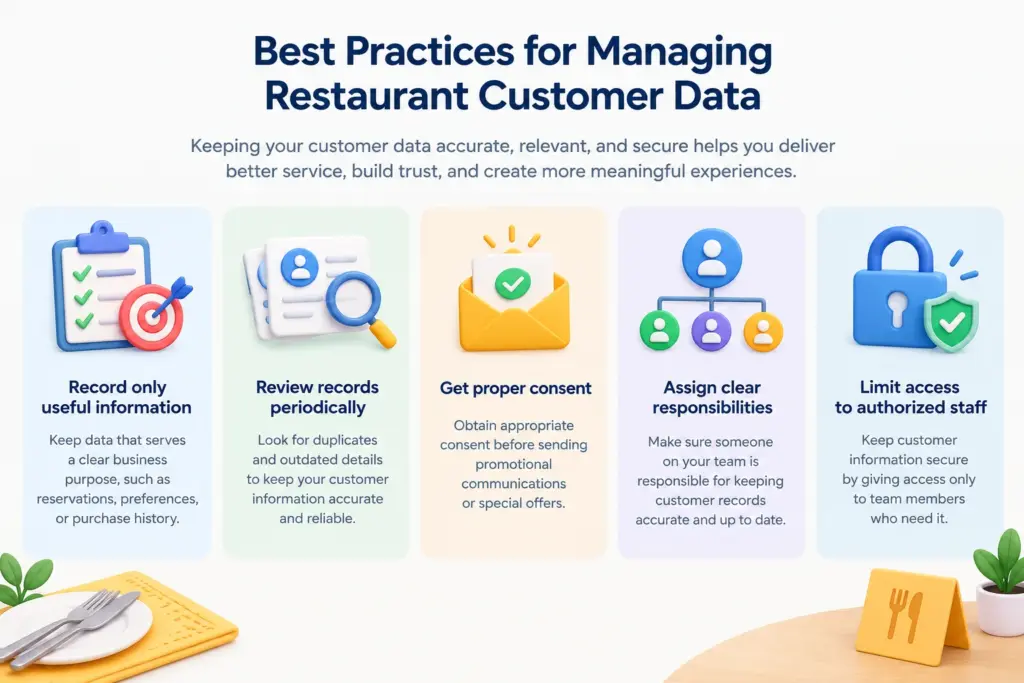
A reliable restaurant CRM strategy begins with accurate, responsibly managed information. Once restaurants understand where data gaps occur, they can build a stronger foundation for personalized experiences, more relevant marketing, and repeat visits.
How to Build a Reliable Restaurant Customer Data Workflow
A reliable customer data workflow helps restaurants turn scattered information into practical business insights. Collecting guest details is only the first step. Restaurant teams also need clear procedures for recording, updating, reviewing, and using that information. When I develop a restaurant CRM strategy, I focus on creating a process that employees can follow consistently without adding unnecessary work to daily operations.
Identify the Customer Touchpoints Worth Tracking
Restaurants interact with customers through several channels, but not every interaction requires detailed tracking. I recommend starting with touchpoints that directly support service improvements, customer retention, and relevant marketing.
Consider tracking:
- Reservation history: Booking frequency, party size, and preferred dining times.
- Purchase behavior: Order patterns, popular menu items, and average transaction values.
- Loyalty program activity: Reward participation, redemption patterns, and repeat visits.
- Customer feedback: Reviews, survey responses, and recurring service concerns.
- Marketing engagement: Responses to promotional emails or other consent-based communications.
These details help a restaurant customer relationship management system provide a clearer picture of guest behavior. The goal is to collect useful information, not every available data point.
Set Clear Rules for Collecting and Maintaining Customer Data
Inconsistent data collection creates incomplete profiles and unreliable reports. I recommend establishing a standard process for recording customer information across relevant systems.
Start by defining which details employees should collect, when they should record them, and who can update them. Use consistent naming conventions and avoid creating duplicate records whenever possible. Restaurants should also explain their data practices clearly, obtain required consent, and follow applicable privacy requirements.
A well-maintained restaurant customer database becomes more useful when records remain accurate, relevant, and appropriately protected.
Assign Responsibilities Across Restaurant Teams
Customer data management should not depend on one employee remembering every detail. I suggest assigning clear responsibilities so that the process continues even when staff schedules change.
For example:
- Front-of-house staff can record relevant guest preferences and service feedback.
- Managers can review data quality and identify recurring operational issues.
- Marketing teams can use approved customer information to plan relevant campaigns.
- System administrators can manage permissions and maintain integrations.
Clear ownership strengthens restaurant data management and reduces avoidable errors.
Create a Simple Process for Acting on Customer Information
Data becomes valuable when it leads to a practical decision. I recommend reviewing customer insights regularly and connecting each finding with an appropriate next step. For example, recurring complaints about long waits might prompt a staffing review, while declining repeat visits could justify examining the dining experience.
A restaurant CRM system should support this workflow rather than complicate it. By combining useful tracking, consistent procedures, clear responsibilities, and regular reviews, restaurants can build stronger guest relationships and improve restaurant customer retention over time.
How to Use Guest Behavior to Improve Restaurant Performance
Understanding guest behavior helps restaurants make informed decisions about service, marketing, and customer retention. A restaurant CRM can organize customer information, but its real value comes from how restaurant owners use those insights. I recommend looking beyond individual transactions to identify patterns that explain why customers visit, what they prefer, and what encourages them to return. This approach makes restaurant customer relationship management a practical part of daily business improvement.
Understand Visit Patterns and Changes in Customer Behavior
Tracking customer visit frequency, ordering habits, and spending patterns can help restaurants recognize meaningful changes in demand. For example, a regular guest who stops visiting may indicate a missed opportunity to improve the experience or reengage that customer.
I suggest reviewing information such as:
- Repeat visit rates: How frequently customers return over a specific period.
- Average order value: How much customers typically spend per transaction.
- Dining preferences: Which menu items, services, or ordering methods customers favor.
- Visit timing: When customers usually dine and which periods experience lower demand.
These restaurant customer insights can help identify opportunities to improve service and encourage repeat visits without relying on assumptions.
Use Customer Insights to Improve the Guest Experience
Customers are more likely to develop lasting relationships with restaurants when the experience feels consistent and convenient. I recommend using relevant customer preferences to make service more thoughtful without making guests feel uncomfortable or excessively monitored.
For example, staff can use appropriately collected information to recognize a returning guest’s stated preferences or accommodate a previously communicated dietary requirement. Restaurants should verify important details when necessary and avoid making assumptions based on incomplete records.
A well-managed restaurant CRM system can help teams organize these details, support consistent service, and improve the overall restaurant guest experience.
Make Restaurant Marketing More Relevant
Generic promotions may reach many customers but fail to address their interests. I prefer using customer segmentation to organize audiences according to relevant behaviors, preferences, or engagement patterns.
Restaurants can create more relevant campaigns by:
- Sharing lunch offers with customers who regularly visit during midday.
- Promoting suitable menu additions to guests who have expressed interest in related items.
- Sending loyalty reminders to eligible members with unused rewards.
- Reconnecting with inactive customers through appropriate, consent-based offers.
This approach supports restaurant marketing automation and makes promotional communication more useful.
Turn Customer Feedback Into Operational Improvements
I recommend reviewing reviews, surveys, and staff observations together to identify recurring issues. Repeated comments about slow service, limited menu options, or inconsistent food quality can reveal where changes are needed.
Connect Customer Recognition With Retention Activities
Recognition works best when it feels genuine. Restaurants can use loyalty rewards, relevant offers, and consistent service to strengthen customer loyalty and restaurant customer retention. By connecting guest behavior with thoughtful action, businesses can turn customer data into measurable improvements in the dining experience.
How to Connect Restaurant Systems Without Adding Unnecessary Complexity
Restaurants often use multiple digital tools to manage orders, reservations, payments, marketing, and loyalty programs. When these systems operate independently, employees may need to enter the same information repeatedly, and important customer details can become difficult to access. A restaurant CRM can help bring relevant information together, but I recommend evaluating existing systems before investing in additional software. The goal is to build a connected restaurant management system that supports daily operations without creating unnecessary complexity.
Understand the Roles of POS, Reservation, Ordering, and CRM Systems
Each restaurant technology serves a different purpose. Understanding these differences helps owners determine which tools should exchange information.
- POS systems: Record transactions, process payments, and provide sales data.
- Reservation systems: Manage bookings, guest details, and seating availability.
- Online ordering platforms: Organize digital orders and provide information about ordering behavior.
- Restaurant CRM software: Helps organize customer information, analyze relevant interactions, and support retention activities.
- Loyalty platforms: Manage reward participation, eligible purchases, and redemption activity.
I recommend identifying which information each system already captures. This prevents duplicate work and clarifies how restaurant customer data integration could improve visibility across the business.
Decide Which Integrations Your Restaurant Actually Needs
Not every restaurant needs to connect every available tool. I suggest prioritizing integrations that solve specific operational problems or support measurable business goals.
For example, connecting POS transactions with a CRM may help a restaurant understand purchasing patterns and repeat visits. Linking a loyalty platform with relevant customer records may also simplify reward tracking.
Before choosing an integration, consider:
- Whether it solves a documented business problem.
- Whether the systems support compatible integrations.
- Whether information updates accurately and consistently.
- Whether the expected benefits justify implementation and maintenance costs.
A focused restaurant technology integration strategy is usually more manageable than connecting multiple tools without a clear purpose.
Compare Standalone Tools With Connected Platforms
Standalone applications can work well for smaller restaurants with straightforward requirements. Connected platforms may be more suitable when teams need to coordinate information across multiple locations or channels.
I recommend comparing restaurant CRM software options based on usability, reporting capabilities, integration support, scalability, and total cost. A single platform may simplify administration, but it should not force a restaurant to abandon tools that already meet its needs.
Protect Customer Information When Connecting Systems
Integration also introduces responsibilities around privacy and security. Restaurants should review vendor security practices, control user permissions, and understand how customer information is transferred and stored.
I recommend establishing these safeguards:
- Restrict access according to employees’ responsibilities.
- Use secure connections and authentication controls.
- Review data-sharing arrangements and retention policies.
- Obtain required consent for marketing communications.
A well-planned restaurant CRM integration should make customer information more useful while keeping it appropriately protected. By connecting only the systems that provide clear value, restaurants can improve operational efficiency and build a stronger foundation for customer retention.
How to Measure the Business Impact of Better Customer Management
A restaurant CRM can help organize guest information, but restaurant owners also need to understand whether their efforts produce meaningful business results. I recommend measuring outcomes rather than focusing only on the amount of customer data collected or the number of marketing messages sent. By tracking relevant performance indicators, restaurants can evaluate their restaurant CRM strategy, identify weaknesses, and make better decisions about customer retention and profitability.
Track Repeat Visits and Customer Retention
Repeat visits are an important indicator of customer loyalty. I suggest monitoring how frequently guests return and whether retention improves after introducing changes to service, marketing, or loyalty programs.
To understand whether your restaurant’s customer retention efforts are working, I recommend looking beyond total sales and reviewing how guests interact with your business over time. These performance indicators can reveal whether customers are returning, how their dining habits change, and how much value long-term relationships contribute to your restaurant. Tracking them regularly also helps you identify which areas need improvement and make more informed decisions about your restaurant CRM strategy.
Useful restaurant customer retention metrics include:
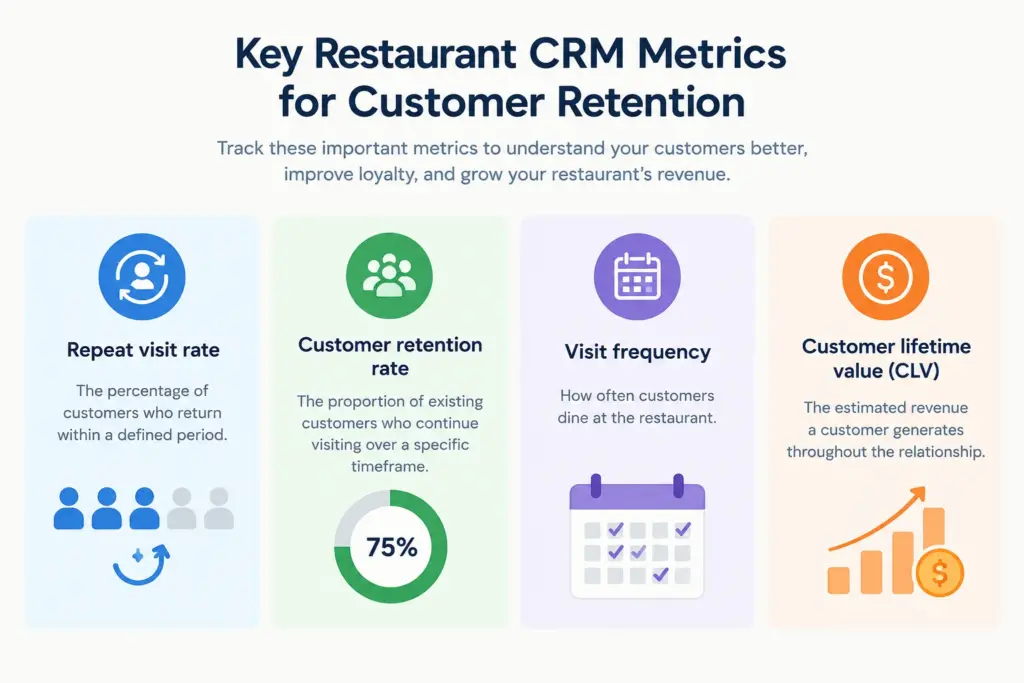
These restaurant CRM metrics provide a clearer picture of customer behavior and help businesses evaluate whether their retention efforts are working.
Measure Marketing and Service Improvements
Restaurant marketing campaigns should be assessed according to their objectives. For example, a loyalty promotion may aim to increase repeat purchases, while a win-back campaign may focus on reengaging inactive customers.
I recommend reviewing indicators such as:
- Campaign conversion rate: The proportion of recipients who complete the intended action.
- Offer redemption rate: How frequently customers redeem eligible promotions.
- Customer feedback trends: Changes in reviews, satisfaction scores, or recurring complaints.
- Engagement rate: Customer responses to relevant promotional communications.
These measures help connect restaurant marketing performance with customer behavior. I also recommend comparing results against a previous period or a suitable control group when possible, rather than attributing every improvement to one campaign.
Connect Customer Metrics With Revenue and Profitability
Higher engagement does not automatically mean higher profit. A promotion might generate more visits but reduce margins if the discount is too generous. For this reason, I encourage restaurants to evaluate restaurant revenue growth alongside campaign costs, average transaction value, and gross profit.
For each initiative, consider whether additional purchases justify the associated expenses. This makes restaurant CRM ROI more meaningful and supports better budgeting decisions.
Review Results and Improve One Process at a Time
I find that regular reviews make performance measurement more actionable. Establish a consistent reporting schedule, assign responsibility for reviewing results, and choose one improvement to test at a time.
By connecting customer relationship management for restaurants with measurable business objectives, restaurant owners can identify what works, refine underperforming activities, and build a sustainable approach to restaurant customer retention.
