
- Happy Rewards
- October 19, 2026
25 Questions to Ask Customers When They Join Your Loyalty Program
A loyalty program can give customers a good reason to return, but creating rewards people actually want starts with understanding their preferences. For small businesses, asking the right loyalty program signup questions can reveal what customers enjoy, how often they shop, and which benefits would make them more likely to come back. The challenge is collecting useful information without turning a simple signup into a lengthy survey that discourages people from joining.
So, what should you ask, and which questions are worth including in your loyalty program? The answer depends on your business goals, customer habits, and the rewards you offer. In this article, we’ll cover 25 questions to ask customers when they join your loyalty program, explain why each question matters, and explore how cafes, retail stores, restaurants, and service businesses can use customer feedback effectively. We’ll also discuss how to simplify loyalty program enrollment, offer personalized rewards, improve customer retention, and collect customer data responsibly. Platforms like Happyrewards.io can support businesses in building engaging digital loyalty programs that encourage repeat visits and strengthen customer loyalty.
What Should You Learn About Customers Before Choosing Your Questions?
Before adding questions to your loyalty program signup form, take a moment to decide what you want to learn. Collecting customer information is not about asking as many questions as possible. It is about understanding what matters to your customers and using those insights to create a better experience. A clear goal helps you choose relevant questions, improve customer engagement, and build a more effective customer loyalty program.
Identify Your Main Goal for Collecting Customer Information
Start by identifying the purpose of your questions. Do you want to encourage repeat visits, understand reward preferences, improve customer service, or discover why customers choose your business? Your answers will determine which information is worth collecting.
For example, a cafe might want to learn how often customers visit and whether they prefer free drinks or discounts. A salon might focus on preferred services, appointment convenience, and booking reminders. Both businesses can use these insights to improve customer retention without collecting unnecessary details.
Choose Questions That Match Your Business and Customer Journey
Your questions should reflect how customers interact with your business. A retail store may benefit from asking about favorite product categories, while a restaurant might focus on dining habits and preferred rewards. Think about the information that could help you deliver more relevant personalized rewards or improve the overall customer experience.
Timing also matters. Sign-up is a convenient opportunity to ask a few essential questions, but it may not be the right time to ask about every preference. You can learn more through voluntary feedback and customers’ interactions with your business over time.
Decide Which Questions Are Essential and Which Are Optional
Keep your signup process short and straightforward. Collect only the information needed to enroll customers and operate your program. Questions about preferred rewards, shopping habits, or special offers can usually be optional, allowing customers to participate without completing a long survey.
Be transparent about why you collect information and how you intend to use it. Respect customers’ communication preferences, obtain consent where required, and avoid asking for sensitive details that are irrelevant to the program.
A simple sign-up experience builds trust and reduces friction. When you focus on useful customer data collection, you can learn what customers value while making it easy for them to join and start earning rewards.
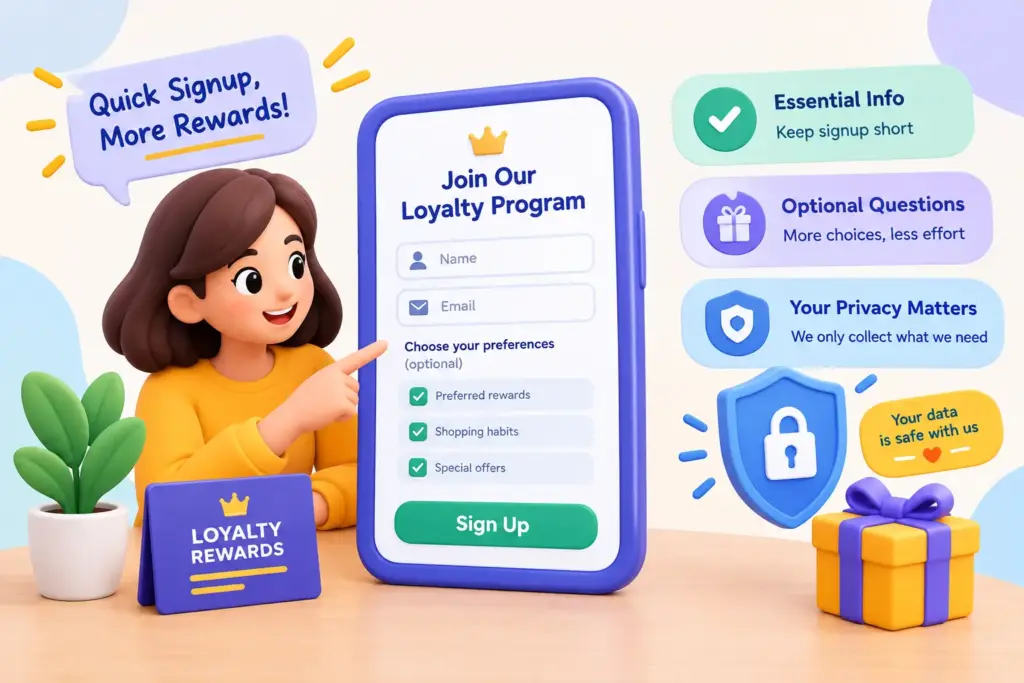
A simple sign-up process makes it easier for customers to join your loyalty program and start earning rewards. Focus on collecting essential information first, while keeping questions about shopping habits, reward preferences, and special offers optional. Explain how customer information will be used, respect communication preferences, and avoid collecting unnecessary personal details. This approach helps build trust, improves the customer signup experience, and supports more relevant loyalty rewards without overwhelming new members.
25 Questions to Ask Customers When They Join Your Loyalty Program
The questions you ask during signup can help you understand what customers value, what encourages them to return, and how you can make your loyalty program more appealing. However, asking every customer to complete a long questionnaire is rarely necessary. The goal is to choose questions that provide useful insights without making enrollment feel like work.
Below are 25 practical loyalty program signup questions, grouped into five categories. You can select the ones that fit your business, make some questions optional, and introduce others later as you learn more about your customers.
Questions About Shopping Habits and Visit Frequency
Understanding how customers interact with your business helps you identify opportunities to encourage repeat visits and improve customer retention. These questions focus on buying behavior, shopping routines, and the reasons customers return.
1. How often do you visit our business?
This question helps you understand whether a customer visits daily, weekly, monthly, or only occasionally. A coffee shop might use this information to identify opportunities to encourage occasional visitors to return more frequently. Keep the answer options simple, and avoid assuming that every customer wants to visit more often.
2. What products or services do you purchase most often?
Knowing which products or services customers prefer can help you create more relevant offers. A bakery might discover that a customer regularly purchases bread, while a salon might learn that someone frequently books haircuts. Use these insights to develop personalized rewards that relate to genuine customer interests rather than promoting unrelated products.
3. When do you usually shop with us?
Ask whether customers typically visit during mornings, afternoons, evenings, or weekends. For businesses with quieter periods, these answers may help identify opportunities for targeted promotions. For example, a cafe could test a weekday afternoon offer to encourage visits during slower hours. The aim is to make promotions useful for customers while supporting business goals.
4. Do you usually shop with us in-store, online, or both?
This question is especially useful for businesses that sell through multiple channels. Understanding shopping preferences can help you communicate relevant offers and make reward redemption more convenient. For instance, an online retailer might highlight digital rewards, while a local store could explain how customers earn and redeem rewards during in-person purchases.
5. What usually brings you back to our business?
Customers return for different reasons, including product quality, convenience, friendly service, competitive prices, and attractive rewards. Asking this question helps you understand what customers already appreciate about your business. Their answers can inform your customer loyalty strategy and help you strengthen the benefits that matter most instead of relying entirely on discounts.
Questions About Reward Preferences and Incentives
A reward that excites one customer may not interest another. Some people appreciate immediate savings, while others prefer earning a free product after several visits. These questions help you understand what customers value before investing in a particular loyalty rewards program.
6. What type of reward would you find most useful?
Offer a few clear choices, such as discounts, free products, complimentary services, or points toward future purchases. You can also include an optional answer for customers who prefer something different. This information helps you evaluate which reward types deserve testing, although stated preferences should be compared with actual redemption behavior.
7. Would you prefer smaller rewards more often or a larger reward after several visits?
Some customers enjoy receiving quick benefits, while others are happy to work toward a bigger reward. This question helps you understand which earning structure may appeal to your audience. A cafe could test a small reward after a few visits against a larger reward after more purchases, then compare participation and redemption rates.
8. Which products or services would you like to receive rewards for?
This question identifies the offerings customers would most like to see included in your program. A restaurant might discover that customers prefer rewards on popular meals, while a salon could learn that clients value discounts on specific treatments. Use the answers to explore relevant offers without promising rewards your business cannot sustainably provide.
9. Would you be interested in special rewards during certain seasons or occasions?
Seasonal promotions can give customers a reason to return at relevant times. For example, a bakery might offer a seasonal treat, while a retail store could introduce rewards during a holiday shopping period. This question helps gauge interest before launching a campaign. Keep seasonal offers optional and avoid assuming every customer celebrates the same occasions.
10. What would make our loyalty program more valuable to you?
This open-ended question lets customers describe what they want in their own words. They might ask for simpler redemption rules, more reward choices, exclusive offers, or fewer restrictions. Their responses can reveal gaps you may not have considered. Review the suggestions regularly to improve your customer loyalty program based on real customer needs.
Questions About Interests and Personal Preferences
Personalization works best when it reflects what customers actually want. These questions help businesses understand interests and preferences without asking for unnecessary personal information. They can also support more relevant recommendations and a better customer experience.
11. Which of our product or service categories interest you most?
If your business offers several categories, ask customers which ones they prefer. A retailer could provide a short list of product categories, while a salon might list its main services. Use the answers to make relevant offers rather than sending every customer the same promotion, regardless of their interests.
12. Are there any new products or services you would like us to introduce?
Customers can sometimes identify opportunities that businesses overlook. A cafe might receive requests for new drink options, while a salon could discover interest in an additional treatment. This question is useful for collecting ideas, but remember that a suggestion does not automatically indicate enough demand to justify launching something new.
13. Would you like recommendations based on your previous purchases?
Some customers appreciate suggestions that match their interests, while others prefer to make their own choices. Asking permission helps you understand whether personalized recommendations are welcome. If customers opt in, use relevant purchase information appropriately and explain how recommendations work. Avoid making personalization feel intrusive or using information beyond the purpose customers expect.
14. What features or benefits matter most when choosing a business like ours?
Customers may prioritize convenience, product quality, affordability, customer service, variety, or flexible scheduling. Understanding these priorities helps you improve the overall experience instead of focusing only on rewards. You can offer a short list of options and allow customers to select more than one, making responses easier to interpret.
15. Is there anything we could do to make your experience more convenient?
This question invites customers to identify practical improvements. They might suggest faster checkout, easier booking, clearer reward rules, or more convenient redemption options. Such feedback can help businesses improve everyday interactions. Review recurring suggestions and prioritize changes that address genuine problems and are realistic for your team to implement.
Questions About Communication and Customer Engagement
Even valuable rewards can become frustrating if customers receive too many messages or miss important updates. Understanding communication preferences helps you build a more respectful customer engagement strategy and share information through appropriate channels.
16. How would you prefer to hear about your rewards?
Ask whether customers prefer email, text messages, app notifications, or another available channel. Choose options that your business can genuinely support. Remember that selecting a preferred channel does not automatically replace any consent required for marketing communications. Keep promotional permissions clear and separate where necessary.
17. How often would you like to receive loyalty program updates?
Some customers welcome regular updates, while others prefer to hear from you only when they earn or redeem a reward. Ask whether they prefer occasional updates, important notifications only, or another available frequency. Use these preferences to avoid unnecessary messages and keep communications relevant.
18. Would you like to hear about new products and services?
Reward notifications and general marketing updates serve different purposes. A customer may want to know when a reward is available but have little interest in product announcements. This question helps you distinguish those preferences and communicate more thoughtfully. Make promotional updates optional and respect customers’ choices.
19. Would you be interested in members-only promotions?
Exclusive offers can make membership feel more valuable, but not every customer wants additional promotions. Ask whether customers would like access to special deals, early product announcements, or members-only events, depending on what your business offers. Use the answers to evaluate interest before committing resources to new promotional activities.
20. Would you like reminders when you have a reward available to redeem?
Customers may forget about rewards if they do not receive a timely reminder. This question helps you understand whether redemption notifications would be helpful. If customers agree, send clear, relevant reminders through supported channels. Avoid excessive follow-ups, and make sure each message explains the reward’s value and any applicable redemption conditions.
Questions About Feedback and Future Experiences
Your loyalty program can also create opportunities to understand customer satisfaction and improve the service you provide. These final questions focus on enrollment motivation, feedback, and customers’ overall impressions of your business.
21. What made you decide to join our loyalty program?
Customers may join because they want discounts, enjoy your products, appreciate your service, or want to earn rewards on purchases they already make. Understanding their motivation helps you communicate the benefits that attracted them. Compare responses over time to identify which aspects of your program encourage enrollment.
22. What has your experience with our business been like so far?
This broad question allows customers to share their overall impressions. It can reveal positive experiences as well as concerns about service, convenience, product quality, or pricing. Since new members may have limited experience, make the question optional and consider asking it again after they have interacted with your business.
23. What is one thing we could improve?
A focused question often produces more actionable feedback than a long survey. Customers might mention confusing reward rules, waiting times, limited choices, or difficulties with booking. Review answers for recurring themes and identify improvements that can make a meaningful difference. Let customers know their feedback is valued, even when every suggestion cannot be implemented.
24. Would you recommend our business to friends or family?
This question can help you understand how customers feel about their experience and whether they would be comfortable recommending your business. You can use a simple rating scale, followed by an optional question asking why they chose that rating. Treat responses as one indicator of customer sentiment, not a guarantee of referrals or future purchases.
25. Is there anything else you would like us to know?
An optional open-ended question gives customers room to share information that your other questions may have missed. They might suggest a new reward, describe an accessibility concern, or explain what would improve their experience. Keep this question voluntary, and remind customers not to include sensitive personal information that is not necessary for your business to address their feedback.
The most effective loyalty program signup questions are those you can use to make thoughtful improvements. Start with a few relevant questions, respect customers’ choices, and review the answers regularly. This approach helps you build a more useful rewards experience without making enrollment unnecessarily complicated.
How to Choose the Right Questions for Your Type of Business
Not every business needs to ask customers the same questions when they join a loyalty program. A cafe may want to understand visit frequency and favorite drinks, while a retail store might focus on product preferences and shopping habits. Choosing questions that match your business model helps you collect useful information and create a better customer loyalty experience without overwhelming new members.
Questions for Cafes, Restaurants, and Bakeries
For food businesses, questions about visit frequency, favorite products, reward preferences, and preferred visiting times can provide valuable insights. For example, a cafe might ask customers whether they prefer coffee discounts, free drinks, or rewards after several visits. These answers can help the business design a loyalty rewards program that encourages customers to return.
Restaurants can also ask whether customers prefer dine-in, takeout, or delivery, provided these options are relevant to their services. Bakeries might focus on favorite product categories or interest in seasonal offers. Rather than asking every customer all 25 questions, choose a few that support your immediate goals. This keeps loyalty program enrollment simple while helping you understand what customers value most.
Questions for Retail Stores and Online Shops
Retail businesses can benefit from asking about favorite product categories, preferred shopping channels, and the types of promotions customers find useful. For example, a clothing store might ask which product categories interest customers most, while an online shop could ask whether shoppers would like recommendations based on previous purchases.
These insights can support personalized rewards, relevant product suggestions, and more thoughtful promotions. However, avoid assuming that every customer wants frequent discounts or marketing messages. Give customers control over their communication preferences and use the information they willingly share to improve their customer engagement strategy.
Questions for Salons and Appointment-Based Businesses
Salons, spas, and other appointment-based businesses should focus on questions that improve service convenience and encourage repeat bookings. You might ask which services customers use most often, how they prefer to receive appointment reminders, or what would make scheduling easier.
For example, a salon could use customer preferences to share relevant service updates or offer a suitable reward after repeat visits. These approaches can strengthen customer retention without requiring an extensive sign-up questionnaire.
Be careful about the information you collect. Ask only for details that serve a clear business purpose, explain how customer information will be used, and respect privacy preferences. Avoid collecting sensitive personal details unless they are genuinely necessary for the service and handled appropriately.
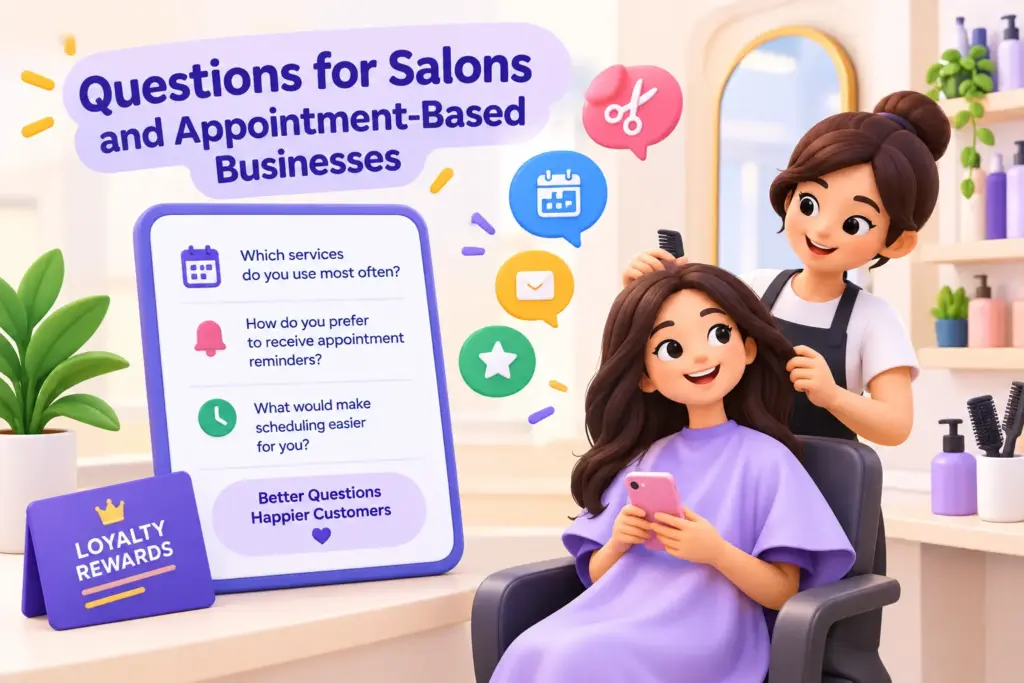
For salons and appointment-based businesses, asking the right questions can make every visit more convenient and rewarding. Understanding customers’ preferred services, booking habits, and reminder preferences helps businesses deliver a more personalized customer experience. Use these insights to create relevant loyalty rewards, simplify appointment scheduling, and encourage clients to return. By keeping signup questions short and protecting customer information, you can build trust while improving customer retention and strengthening long-term relationships.
Ultimately, the best loyalty program questions are those that fit your customers’ needs and help you take meaningful action. Start small, review the responses, and adjust your questions as your business learns more about its audience.
How to Use Customer Answers Without Making Signup Complicated
Collecting customer information is only useful when you can turn those answers into better experiences. Your loyalty program enrollment process should feel quick and convenient, while giving you enough insight to improve rewards and encourage repeat visits. Instead of asking every question at signup, start with a few important details and gather additional feedback over time.
Start With High-Value Questions
Choose questions that directly support your business goals. For example, if you run a cafe, knowing whether customers prefer free drinks or discounts can help you create more appealing rewards. A retail store might benefit more from learning which product categories customers shop most often.
To keep customer data collection simple:
- Ask only two or three essential questions during signup.
- Make questions about personal preferences optional.
- Use multiple-choice answers when possible to make responding faster.
- Explain why you are collecting information and how you plan to use it.
This approach makes loyalty program signup easier while reducing the risk of overwhelming new members.
Turn Responses Into Relevant Rewards
Use customer answers to create personalized rewards that match actual preferences. If customers frequently purchase a particular product, consider offering related discounts or bonus points. If many members prefer occasional larger rewards, adjust your program to reflect that preference where practical.
You can also use feedback to improve your offers, introduce popular products, and make the overall customer experience more convenient. The goal is to make customers feel understood without sending them irrelevant promotions.
Review Results and Respect Privacy
Customer preferences can change, so review responses regularly to understand what is working. Track useful indicators such as repeat visits, reward redemptions, and participation in customer loyalty programs. These measures can help you identify which benefits encourage stronger customer retention.
At the same time, protect customer data by collecting only what you need, limiting access to it, and following applicable privacy requirements. Respect communication preferences and obtain consent where required before sending marketing messages.
When sign-up stays simple and answers lead to meaningful improvements, your loyalty program becomes more useful for both your business and your customers.
