- Happy Rewards
- October 13, 2026
7 Steps to Launch a Successful Customer Loyalty Program
Have you ever wondered why some customers keep coming back to the same coffee shop, salon, or retail store when plenty of other options are available? Often, it is not just about the product or service. Customers also appreciate feeling valued, receiving thoughtful rewards, and knowing that their next visit comes with an extra benefit. That is where a customer loyalty program can make a real difference.
For small businesses, building customer loyalty does not have to involve complicated systems or expensive discounts. A well-planned program can encourage repeat purchases, strengthen customer relationships, and give people another reason to choose your business. From simple stamp cards to digital rewards and membership perks, there are several ways to make customers feel appreciated.
With the right approach and a solution like HappyRewards.io, businesses can explore digital loyalty cards that make rewarding repeat customers more convenient. In this guide, you will learn seven practical steps to launch a successful customer loyalty program, choose rewards your customers actually want, and build relationships that last.
Define Your Goal And Understand Your Customers
Before choosing rewards or investing in loyalty software, take a step back and ask yourself one important question: What do you want your loyalty program to achieve? Having a clear answer helps you build a program that supports your business goals while giving customers a genuine reason to return. In my experience, starting with the purpose makes every decision that follows much easier.
Identify Your Main Business Objective
A customer loyalty program can do much more than offer discounts. When planned strategically, it can encourage repeat purchases, increase customer spending, and strengthen relationships with existing customers. However, trying to achieve everything at once can make your program unnecessarily complicated.
Start by identifying one or two priorities, such as:
- Increase repeat purchases: Encourage customers to visit your store or book your services more frequently.
- Improve customer retention: Give existing customers compelling reasons to stay with your business rather than switch to a competitor.
- Increase average order value: Offer rewards that motivate customers to spend a little more per transaction without relying on excessive discounts.
- Encourage referrals: Reward eligible customers for recommending your business to friends and family.
- Strengthen customer engagement: Use relevant offers and exclusive benefits to maintain relationships between purchases.
For example, if you own a neighborhood coffee shop, your main objective might be to increase weekly visits. A digital stamp card that rewards customers after a set number of qualifying purchases could support that goal. A home decor retailer, on the other hand, might focus on encouraging repeat purchases over several months.
Understand What Your Customers Value
Once you know your goals, consider what motivates your customers. A reward that excites one audience might feel irrelevant to another. That is why understanding customer behavior, purchasing habits, and preferences is essential when designing an effective customer retention strategy.
Start by reviewing purchase patterns, asking customers for feedback, and observing which products or services they return for most often. You can also ask a simple question at checkout: What kind of reward would make your next visit more worthwhile?
Consider these examples:
- Cafes: Free drinks, complimentary add-ons, or a reward after several visits.
- Salons: Discounts on future appointments or complimentary treatments.
- Retail stores: Exclusive offers, early access to new collections, or points toward future purchases.
- Restaurants: Free side dishes, birthday treats, or rewards for repeat visits.
The goal is to create a program that feels relevant rather than generic.
I recommend keeping your first program simple, with clear objectives and rewards customers can realistically earn. Once you understand what motivates your audience, you can refine the experience using a digital loyalty program such as one supported by HappyRewards. A strong foundation makes it easier to choose the right structure, control reward costs, and build lasting customer relationships.
Choose a Loyalty Program Structure That Fits Your Business
Once you understand your business goals and customer preferences, the next step is choosing a loyalty program structure. This decision shapes how customers earn rewards, how they redeem them, and how often they have a reason to return. I recommend choosing a model that feels natural for your business rather than adopting a complicated system just because another brand uses it.
Points-Based Loyalty Programs
A points-based loyalty program allows customers to earn points when they make qualifying purchases. They can then redeem those points for discounts, free products, or other benefits.
This structure works well for retail stores, restaurants, and businesses where customers make purchases of different values. For example, a clothing store could award points based on spending, allowing customers to accumulate rewards over several visits.
The key is to make earning and redeeming points easy to understand. If customers struggle to work out what their points are worth, they may lose interest.
Digital Stamp Card Programs
A digital stamp card rewards customers after they complete a specific number of qualifying purchases or visits. It is particularly useful for businesses that rely on frequent, relatively predictable transactions.
Think about a neighborhood coffee shop offering one free drink after eight qualifying purchases. Customers understand the goal immediately, and every visit brings them closer to a reward.
Digital stamp cards can also reduce reliance on physical cards that customers might misplace. With a suitable digital loyalty solution, businesses can make reward tracking more convenient for participating customers.
Tiered and Membership-Based Programs
A tiered loyalty program gives customers access to different benefits as they meet defined spending, activity, or membership requirements. For example, a beauty retailer might offer basic benefits to all members and additional perks to customers who reach higher spending tiers.
Membership programs can also provide benefits such as exclusive offers, early access, or special services. These structures are useful when your business wants to recognize highly engaged customers and encourage longer-term participation.
However, make sure each tier offers meaningful value. Too many levels can make the program difficult to understand and manage.
Cashback and Spend-Based Rewards
A cashback loyalty program returns a portion of eligible spending as credit or another clearly defined benefit. Spend-based programs reward customers when their purchases reach a specified threshold.
Cashback and spend-based rewards give customers an incentive to spend more while receiving something valuable in return. Depending on the program, customers may earn cashback, store credit, or rewards after reaching a specific spending threshold. This approach works particularly well for retail stores and businesses with higher-value purchases, where customers may appreciate benefits tied to their total spending.
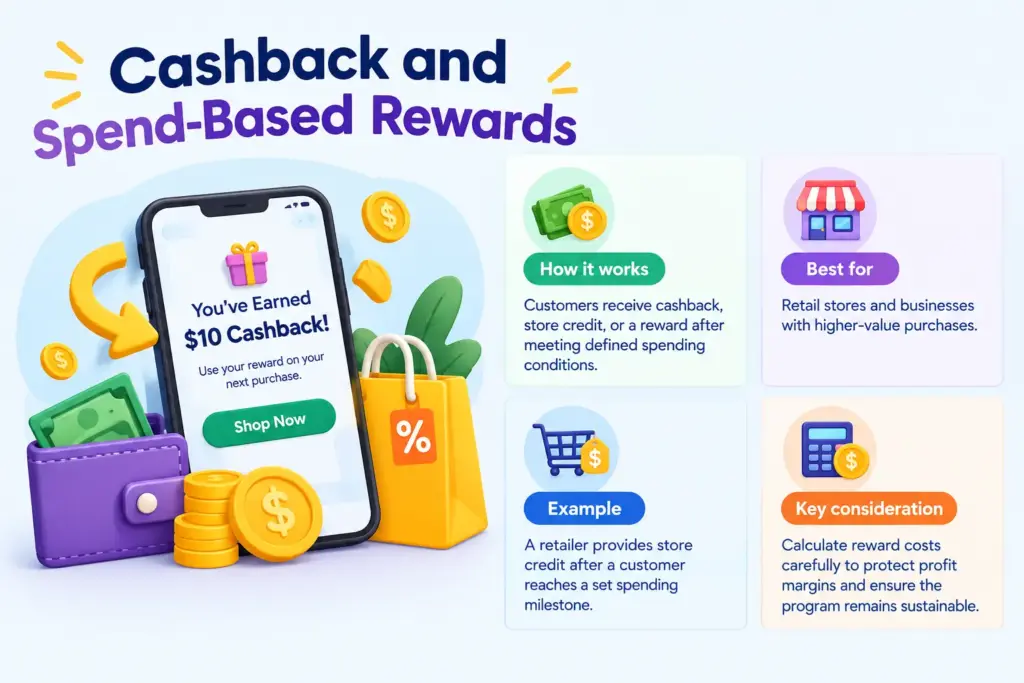
For example, a retailer might offer store credit when a customer reaches a spending milestone, encouraging them to return for another purchase. However, it is important to calculate the cost of each reward before launching the program. Set realistic spending thresholds, review profit margins, and make sure the rewards remain attractive to customers without putting pressure on your business finances.
How to Choose the Right Loyalty Program
Use this quick comparison to identify a suitable starting point:
- Points-based programs: Choose these when customers make purchases of different values and you want flexible rewards.
- Digital stamp cards: Choose these when frequent visits or repeat purchases are your main priority.
- Tiered rewards: Consider these when you want to recognize your most engaged customers with additional benefits.
- Cashback programs: Consider these when spending-based incentives fit your business model.
Ultimately, the best customer loyalty program structure should reflect your customers’ habits, your operational capacity, and your budget. Start with one easy-to-understand model, explain the rules clearly, and use customer feedback to improve it over time. With a suitable digital loyalty solution, such as HappyRewards, you can explore ways to make loyalty cards and reward experiences more convenient for your customers.
Design Rewards Customers Actually Want
Choosing a loyalty program structure is only half the job. The rewards you offer determine whether customers feel motivated to participate and return. I always recommend looking at rewards from the customer’s perspective first. A reward might seem generous to you, but if it does not match what your customers value, it may not encourage the behavior you want.
Choose Relevant and Meaningful Rewards
The most effective customer loyalty rewards are easy to understand, attainable, and relevant to your audience. You do not necessarily need expensive gifts or large discounts. Sometimes, a small benefit connected to a customer’s regular purchase is enough to make the experience memorable.
Consider these ideas for different business types:
- Cafes and bakeries: Offer a free drink, complimentary pastry, or an upgrade after a set number of qualifying purchases.
- Salons and spas: Provide a discount on a future appointment, a complimentary treatment add-on, or a birthday perk.
- Retail stores: Give customers exclusive offers, early access to new collections, or rewards toward future purchases.
- Restaurants: Offer a complimentary side dish, a special birthday reward, or a benefit after several visits.
I would also consider asking regular customers which rewards they would genuinely use. Their feedback can help you avoid spending money on benefits that look attractive on paper but rarely get redeemed.
Set Clear Earning and Redemption Rules
Even appealing rewards can lose their value when the rules are confusing. Your loyalty rewards program should explain exactly how customers qualify for benefits and what they need to do to redeem them.
Make sure you:
- Set realistic reward thresholds that customers can reach with reasonable effort.
- Explain which purchases or visits qualify for rewards.
- Clearly communicate any expiration dates, exclusions, or minimum spending requirements.
- Make redemption straightforward, without unnecessary steps or hidden conditions.
- Train staff to answer common questions consistently.
For example, if a salon offers a complimentary add-on after five eligible appointments, customers should know which services qualify and how to claim the benefit.
Protect Your Profit Margins
Rewards should encourage repeat business without putting unnecessary pressure on your finances. Before launching an offer, calculate its cost and consider whether the additional purchases it generates can justify that expense.
I recommend starting with a manageable reward, tracking how customers respond, and adjusting the offer based on actual results. Avoid assuming that a higher-value discount will automatically produce better retention.
With HappyRewards, businesses can explore digital loyalty card options that support their chosen reward approach. The important thing is to combine convenient reward tracking with benefits customers genuinely appreciate. When rewards feel valuable, the rules are clear, and the costs remain sustainable, your program has a stronger foundation for long-term customer loyalty.
Select the Right Loyalty Program Software
Once you have chosen your rewards and established clear rules, it is time to decide how you will manage the program. The right loyalty program software can simplify reward tracking, make participation more convenient, and help you understand customer engagement. I recommend evaluating your actual business needs before choosing a platform, rather than paying for features you may never use.
Compare Paper Cards With Digital Loyalty Programs
Paper stamp cards can work well for small businesses with straightforward reward systems. However, customers can lose them, forget to bring them, or damage them over time. Digital loyalty programs offer another option by allowing customers to access their loyalty information electronically, depending on the platform.
Here are some advantages of digital loyalty solutions:
- Convenient access: Customers can access their digital loyalty cards through supported devices or platforms.
- Simplified reward tracking: Digital systems can help businesses manage stamps, points, or membership benefits.
- Less physical paperwork: Businesses can reduce their reliance on printed loyalty cards.
- Better visibility: Depending on the software, businesses may access reports about participation and reward activity.
Look for Features That Match Your Needs
Not every business needs an advanced loyalty management system. When evaluating digital loyalty software, I suggest prioritizing features that make everyday operations easier.
Look for:
- Customizable loyalty cards: Match card designs with your business branding.
- Flexible reward structures: Support the points, stamps, or membership benefits you intend to offer.
- QR code support: Make card access or enrollment easier when supported by the platform.
- Mobile wallet compatibility: Check whether Apple Wallet and Google Wallet are supported and what customers need to use them.
- Reporting and analytics: Review available data to understand participation and reward redemption.
- Simple customer onboarding: Minimize unnecessary steps that could discourage customers from joining.
Before committing, check the pricing, feature limitations, and setup requirements.
Consider HappyRewards for Digital Loyalty Management
If you want to move beyond traditional paper cards, HappyRewards is worth exploring as a digital loyalty solution. It offers digital loyalty card options for businesses that want to create reward experiences that fit their brand.
Start by identifying the features your program genuinely needs, then compare them with the platform’s current capabilities. This helps you choose a practical solution without paying for unnecessary complexity.
Ultimately, the best loyalty program software is one your business can manage consistently and your customers can use easily. Choose technology that supports your strategy, simplifies participation, and gives you room to improve your program as your business grows.
Launch and Promote Your Loyalty Program
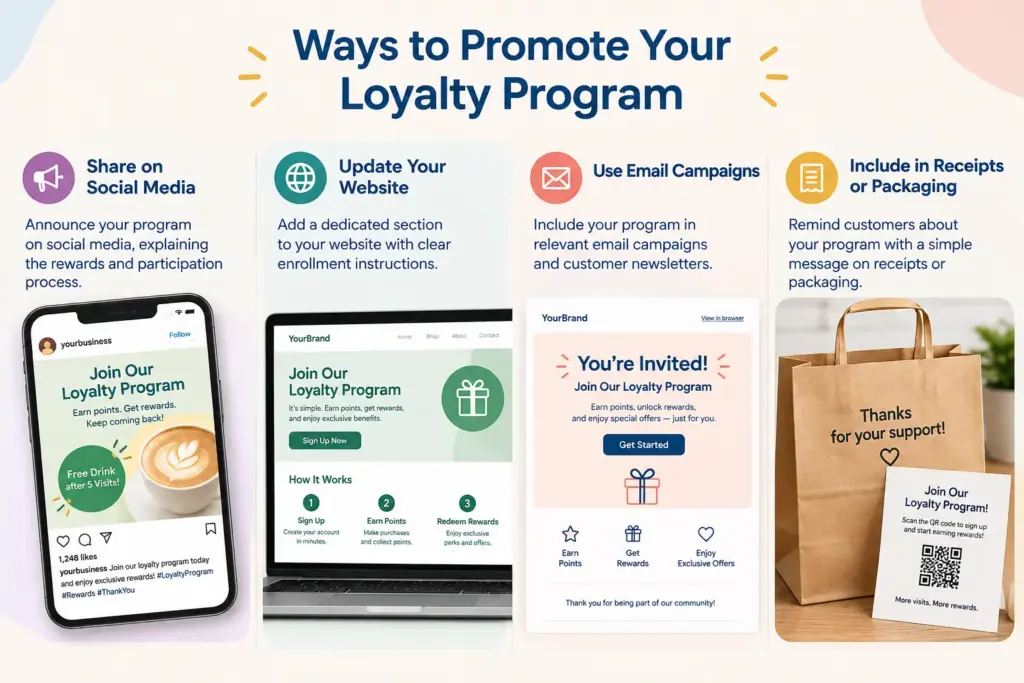
You have defined your goals, selected rewards, and chosen a suitable system. Now comes the part that determines whether customers actually participate: introducing your program and making people aware of its benefits. Even a well-designed customer loyalty program needs consistent promotion to attract members and encourage repeat visits.
Promote the Program at Checkout
Your existing customers are often the easiest audience to reach when launching a loyalty program. I recommend training employees to explain the benefits during checkout without making the conversation feel like a sales pitch.
- Keep the explanation simple: Tell customers how to join, earn rewards, and redeem them.
- Highlight an immediate benefit: Explain what customers can work toward with their next purchase.
- Encourage staff participation: Give employees clear instructions so they can answer common questions confidently.
For example, a cafe employee could mention that customers can collect digital stamps toward a free drink.
Use QR Codes and In-Store Materials
Place clear promotional signs near checkout counters, entrances, or other visible areas. Where supported, QR codes for loyalty programs can direct customers to an enrollment page or digital card.
Make sure the destination works properly and explain what customers should expect after scanning. Check whether registration requires an email address, phone number, or another step before advertising a quick or phone-free signup process.