
- Happy Rewards
- October 30, 2026
Gym Loyalty Programs: Build Stronger Member Relationships
Running a gym is not just about attracting new members. The real challenge is keeping them motivated, encouraging regular attendance, and building relationships that last beyond the first few months of membership. Many people join a fitness center with clear goals but gradually lose consistency when their routines become difficult to maintain. This is where a well-planned gym loyalty program can make a difference. By rewarding regular visits, class participation, referrals, and fitness milestones, gym owners can create a more engaging experience that encourages members to stay active.
A thoughtfully designed fitness loyalty program also helps strengthen gym member retention without depending entirely on discounts or membership offers. With tools such as digital loyalty cards and flexible gym rewards programs, businesses can make participation and reward tracking easier. Platforms like Happyrewards.io help businesses introduce digital loyalty experiences that recognize repeat visits and encourage continued engagement. When members feel appreciated for their consistency and progress, they have more reasons to remain connected to the gym and make fitness a regular part of their lives.
Why Gym Loyalty Programs Matter for Long-Term Member Retention
Attracting new members is important for every fitness business, but keeping existing members engaged is equally essential. Many people sign up for a gym with enthusiasm and specific fitness goals. However, their motivation can decline over time because of busy schedules, slow progress, changing priorities, or a lack of encouragement. When members stop attending regularly, they may eventually decide not to renew their memberships. A well-planned gym loyalty program allows fitness businesses to address this challenge by recognizing consistent participation and making members feel appreciated.
Unlike short-term promotional offers, a fitness loyalty program focuses on building an ongoing relationship with members. It gives people additional reasons to stay connected with a gym while encouraging habits that support their fitness journeys. For gym owners, this can contribute to better customer retention, stronger engagement, and more predictable membership revenue.
The Connection Between Member Motivation and Gym Attendance
Consistency plays an important role in achieving fitness goals. However, maintaining a regular workout schedule is not always easy, particularly for beginners who are still developing exercise habits. Recognizing their efforts through achievable rewards can provide additional encouragement.
For example, a gym could reward members for completing a certain number of visits within a month, attending group classes, or participating in fitness challenges. These incentives recognize participation rather than focusing entirely on physical results.
A rewards system can encourage members to:
- Maintain regular attendance: Earn rewards after reaching achievable visit milestones.
- Stay involved in activities: Receive incentives for joining group classes, workshops, or gym challenges.
- Recognize personal progress: Celebrate consistency and participation throughout their fitness journey.
- Develop stronger routines: Build a habit of returning to the gym through achievable milestones.
These small forms of recognition can make the overall gym member experience more rewarding and encourage people to remain active.
Turning Occasional Visitors Into Regular Members
Not every gym member follows the same attendance pattern. Some visit several times a week, while others struggle to maintain consistency. A structured gym rewards program can help encourage occasional visitors to become more regular participants.
For instance, a fitness center might offer a complimentary group class after a member completes eight eligible visits. Another gym could provide bonus points for attending a scheduled fitness challenge. These rewards give members a clear incentive to participate more consistently.
Recognition also matters beyond the reward itself. Acknowledging membership anniversaries, celebrating attendance milestones, and appreciating referrals can help members feel connected to the fitness community.
Building Loyalty Beyond Monthly Memberships
Paying a monthly membership fee does not necessarily mean someone feels connected to a gym. Long-term loyalty develops through positive experiences, helpful staff, engaging activities, and meaningful recognition.
A thoughtful gym customer loyalty strategy can encourage participation in different services, including personal training, group fitness sessions, wellness workshops, and community events. By recognizing these interactions, gym owners can create stronger relationships instead of relying only on membership renewals.
Ultimately, successful gym member retention depends on giving people reasons to keep coming back. Rewards cannot replace good facilities, professional trainers, or effective fitness programs, but they can complement these services by making members feel valued and encouraging continued participation.
How to Design a Gym Rewards Program That Members Actually Use
Creating a rewards program requires more than offering free memberships or occasional discounts. Gym owners need a structure that encourages participation, supports business goals, and gives members rewards they genuinely appreciate. A well-designed gym rewards program should be simple to understand, easy to participate in, and relevant to different fitness interests. Before introducing one, consider what behaviors you want to encourage and how rewards can support those activities.
Choose Loyalty Actions That Support Your Gym’s Goals
Start by identifying the activities that contribute to member engagement and business growth. Instead of rewarding only membership renewals, consider recognizing different forms of participation. This allows members to earn rewards through activities they already enjoy while discovering other services your gym provides.
Some activities worth including are:
- Regular gym visits: Reward members for reaching weekly or monthly attendance milestones.
- Group fitness classes: Encourage participation in yoga, spinning, strength training, and other sessions.
- Personal training sessions: Recognize members who consistently invest in guided fitness programs.
- Member referrals: Offer incentives when existing members introduce friends or family.
- Fitness challenges: Reward participation in workout competitions, wellness activities, or seasonal challenges.
Choosing relevant actions helps create a fitness loyalty program that supports both member satisfaction and gym participation.
Select a Loyalty Structure That Fits Your Membership Model
Different gyms have different operating models, so the rewards structure should reflect the type of business and its members. A small fitness studio may benefit from a straightforward visit-based system, while a larger fitness center might prefer points or membership tiers.
Common gym loyalty program ideas include:
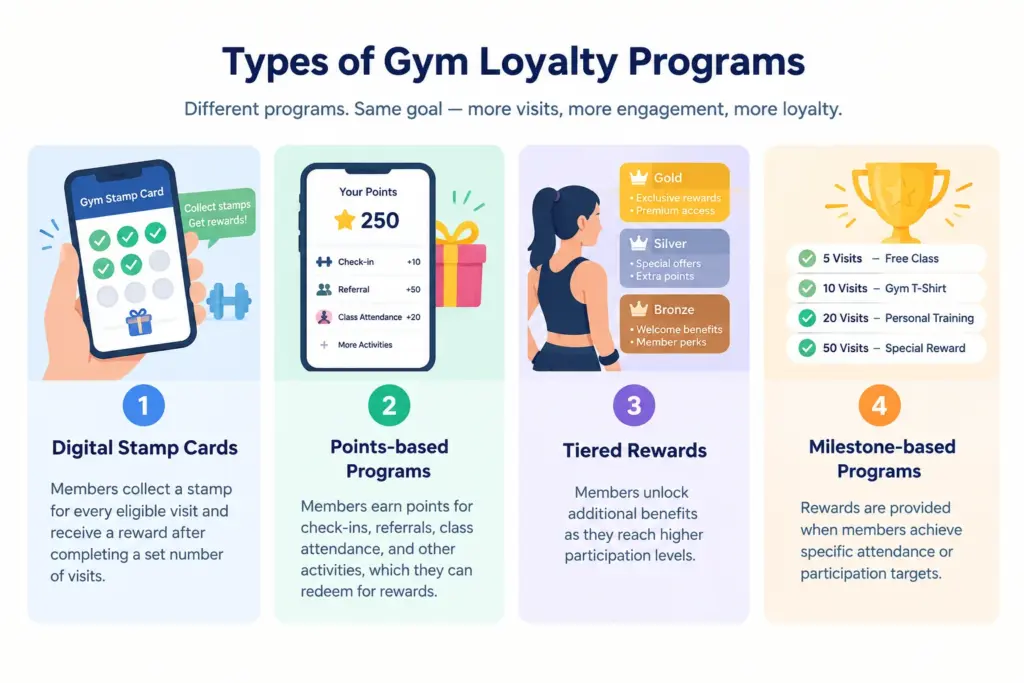 Each type of gym loyalty program offers a different way to encourage members to stay active and engaged. While digital stamp cards reward regular visits, points-based programs recognize a wider range of activities. Tiered rewards motivate members to reach higher participation levels, while milestone-based programs celebrate specific achievements. Gym owners should choose a structure that fits their membership model, reward budget, and members’ preferences. The goal is to make earning rewards simple, meaningful, and motivating enough to encourage long-term participation.
Choose a format that your staff can manage consistently, and members can understand without additional assistance.
Set Achievable Milestones and Reward Progress
Reward targets should encourage participation without feeling unrealistic. For example, offering a complimentary group class after eight visits may motivate members more effectively than setting a target of 30 visits within a short period.
Consider introducing smaller milestones first, followed by more valuable rewards for continued participation. This creates a sense of progress and gives members regular opportunities to earn recognition.
Make Program Rules Easy to Understand
Clear guidelines prevent confusion and help members participate confidently. Explain important details such as:
- Which activities qualify for rewards.
- How points or stamps are collected.
- When rewards become available.
- Whether rewards have expiration dates.
- How members can redeem their benefits.
A straightforward gym membership rewards program makes participation easier for everyone. When members understand how the system works and can see their progress, they are more likely to use it consistently.
Gym Loyalty Reward Ideas That Encourage Consistent Participation
The rewards offered through a gym loyalty program can influence how interested members are in participating. While discounts may attract attention, members often appreciate benefits that support their fitness routines, recognize their efforts, or introduce them to new experiences. Gym owners should therefore choose incentives that provide practical value while remaining affordable for the business. A thoughtful selection of gym loyalty rewards can encourage repeat visits, increase participation in different services, and make members feel appreciated.
Offer Fitness-Related Rewards Members Can Use
Rewards that connect directly with fitness activities can make a loyalty program more relevant. Instead of offering benefits that have little connection to members’ interests, consider incentives they can use during their regular visits.
Some practical fitness rewards program ideas include:
- Complimentary fitness classes: Offer free access to yoga, Zumba, spinning, or other group sessions.
- Personal training sessions: Provide a free introductory session or discounted one-on-one training.
- Fitness assessments: Reward members with progress evaluations to help them understand their development.
- Gym merchandise: Offer branded water bottles, workout towels, gym bags, or other useful accessories.
- Healthy refreshments: Provide complimentary protein shakes, smoothies, or healthy snacks through suitable partnerships.
These incentives make rewards useful while encouraging members to explore more of the gym’s services.
Recognize Milestones and Celebrate Member Progress
Not every reward needs to have a financial value. Recognition can also play an important role in strengthening gym member engagement. Celebrating attendance achievements and membership milestones helps members feel that their efforts are noticed.
For example, gym owners can recognize:
- Members who complete 50, 100, or 200 gym visits.
- Individuals who consistently participate in monthly fitness challenges.
- Members celebrating their first membership anniversary.
- People who reach personal attendance or workout consistency goals.
- Members who actively participate in community fitness events.
Simple gestures, such as personalized appreciation messages, milestone certificates, or special recognition on a gym’s noticeboard, can make the experience more meaningful.
Use Referral Rewards to Grow Your Gym Community
Existing members can become valuable sources of new business when they recommend a gym to friends, colleagues, or family members. A gym referral rewards program gives them an additional reason to share their positive experiences.
Consider offering incentives such as:
- Complimentary guest passes for introducing new visitors.
- Bonus loyalty points for successful referrals.
- Free group classes after a referred member joins.
- Discounts on selected services for both the existing and new member.
Make sure referral conditions are clear so members understand when they qualify for rewards.
Balance Reward Value With Your Gym’s Budget
A successful gym rewards program should benefit members without creating unnecessary operating expenses. Before selecting incentives, calculate their costs and consider how frequently members can redeem them.
Prioritize rewards that are useful, affordable, and connected to your services. Free classes, fitness assessments, and guest passes can often provide meaningful value without requiring large discounts. Reviewing reward participation and redemption rates also helps gym owners understand which incentives are worth continuing.
Using Digital Loyalty Cards to Simplify Gym Member Engagement
Managing a gym loyalty program manually can become difficult as membership numbers grow. Paper punch cards may get lost, attendance records can become inconsistent, and staff may spend additional time checking reward eligibility. These challenges can make it harder to maintain a smooth experience for members and employees. Digital loyalty cards offer a more convenient alternative by allowing members to access their rewards through their mobile devices. With a suitable digital loyalty program, gyms can simplify reward tracking, encourage participation, and make the overall membership experience more convenient.
Replace Paper Reward Cards With Digital Alternatives
Traditional loyalty cards require members to carry a physical card and remember to get it stamped during every eligible visit. Digital alternatives reduce this inconvenience by making reward information accessible through smartphones.
A digital gym loyalty card can help members:
- Access their loyalty card without carrying additional items.
- Check their available points, stamps, or reward progress.
- Review the benefits they can redeem.
- Keep their rewards accessible through supported mobile wallet services.
- Participate in the program with fewer manual steps.
For gym owners, digital cards can also make reward management more organized and reduce the administrative work associated with paper-based systems.
Make Reward Collection Simple With QR Codes
QR codes provide a straightforward way to connect gym visits with loyalty rewards. Members can scan a displayed code at the reception desk or another designated location to access the loyalty program. Depending on the platform and its configuration, the process can also support recording eligible visits.
For example, a gym could display a QR code at its entrance. Members scan it when they arrive, allowing them to collect a stamp or progress toward their next reward.
A simple check-in process should include:
- A clearly visible QR code in an accessible location.
- Easy instructions for first-time participants.
- Clear rules about eligible visits.
- Appropriate checks to prevent duplicate or unauthorized reward collection.
This makes gym check-in rewards easier to manage while keeping participation straightforward.
Collect Useful Member Information Without Complicating Sign-Ups
Member information can help gyms understand their audience and communicate more effectively. However, registration should remain simple so potential participants do not abandon the process.
Consider collecting basic details such as:
- Name and email address.
- Birthday, if members want to receive birthday rewards.
- Preferred fitness activities.
- Communication preferences.
Use this information responsibly, obtain appropriate consent, and avoid collecting unnecessary personal details.
Use Member Engagement Data to Improve Your Program
A digital fitness loyalty program can provide useful insights into how members interact with rewards. Gym owners can review loyalty program enrollment, attendance frequency, reward redemption rates, and participation in different activities.
These insights help identify popular incentives, understand changing attendance patterns, and recognize opportunities to improve member engagement. By reviewing this information regularly, gyms can make informed adjustments to their gym rewards program and create an experience that better reflects what members value.
How to Keep Gym Members Engaged and Measure Loyalty Program Success
Launching a gym loyalty program is only the beginning. To achieve lasting results, gym owners need to keep members interested, encourage regular participation, and evaluate whether their rewards are delivering value. A program that remains unchanged for too long may lose its appeal, especially when members stop finding the incentives relevant. Regular communication, engaging activities, and performance tracking can help gyms improve customer engagement, maintain member interest, and strengthen long-term member retention.
Create Personalized Campaigns to Reconnect With Inactive Members
Some members gradually reduce their gym visits because of busy schedules, changing routines, or declining motivation. Identifying these attendance patterns gives gym owners an opportunity to reconnect before members decide to cancel their memberships.
Consider these approaches:
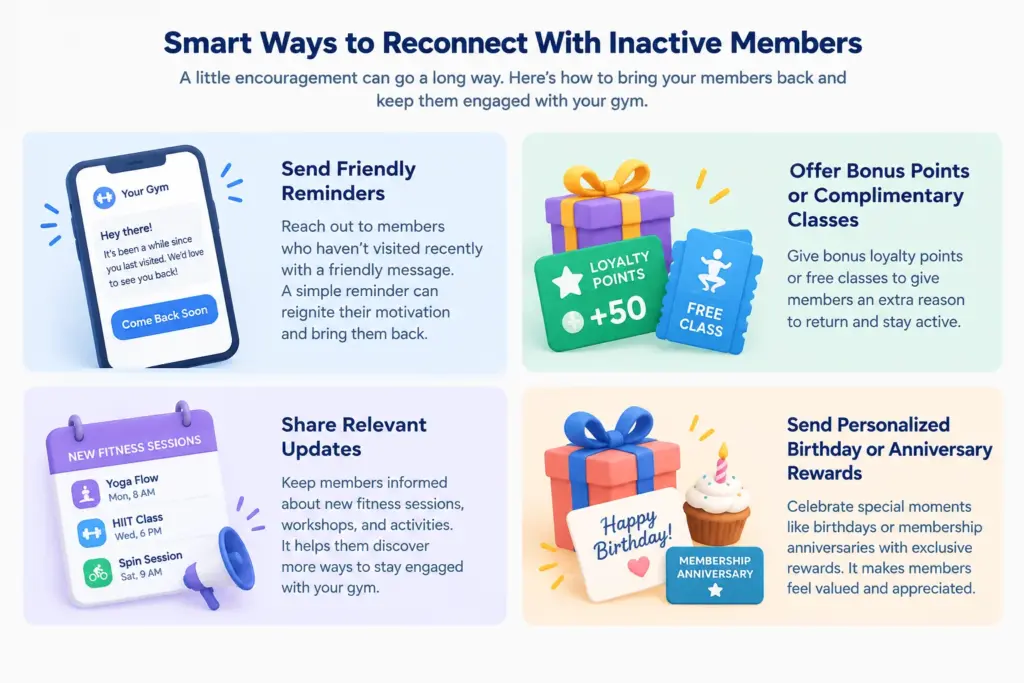
These gym member retention strategies can help rebuild engagement without overwhelming members with repeated promotional messages.
Keep Members Interested With Seasonal Challenges and Special Campaigns
Regular activities give members something new to participate in beyond their usual workouts. Monthly fitness challenges, seasonal campaigns, and community events can introduce variety while encouraging interaction.
For example, gyms can organize a 30-day attendance challenge, a group workout competition, or a summer fitness campaign. Members who complete the activities can receive additional points, merchandise, or complimentary sessions. These initiatives support member engagement and create opportunities for members to connect.
Track the Metrics That Reveal Program Performance
A rewards program should be evaluated using measurable results rather than assumptions. Tracking the right gym loyalty program metrics helps owners understand whether members are participating and which incentives are worth maintaining.
Important metrics include:
- Member retention rate: Measures how many members continue their memberships over a specific period.
- Repeat visit frequency: Shows how often members return to the gym.
- Program enrollment: Indicates how many members have joined the loyalty program.
- Reward redemption rate: Measures how frequently members use their earned benefits.
- Referral participation: Shows how effectively existing members introduce new customers.
- Inactive member reactivation rate: Tracks how many previously inactive members return after receiving engagement campaigns.
Reviewing these figures regularly helps identify areas that need improvement.
