- Happy Rewards
- October 15, 2026
Customer Satisfaction Surveys for Local Businesses
Running a local business means getting to know your customers, understanding what they expect, and giving them reasons to come back. But how do you know whether customers genuinely enjoy their experience or simply choose not to complain? That is where customer satisfaction surveys for local businesses become valuable. They give customers a straightforward way to share their opinions and help business owners identify what is working and what needs attention.
Whether you run a cafe, salon, retail store, or home service business, collecting customer feedback can reveal useful insights about service quality, pricing, product selection, and overall experience. More importantly, acting on that feedback can help improve customer satisfaction, strengthen customer loyalty, and encourage repeat visits. Businesses can also connect these insights with their loyalty strategies through platforms like HappyRewards.io, which helps businesses engage customers through digital loyalty programs. The goal is simple: listen carefully, make meaningful improvements, and give customers more reasons to choose your business again.
Why Customer Satisfaction Surveys Matter for Local Businesses
Running a local business teaches you something important: customers do not always tell you when something goes wrong. A customer might smile, pay the bill, and leave without mentioning that the service was slow or the experience fell short of expectations. If that happens repeatedly, you could lose customers without understanding why.
This is why customer satisfaction surveys for local businesses are so valuable. They give customers an easy way to share their experiences and help business owners make decisions based on real feedback rather than assumptions. Whether you manage a restaurant, salon, retail store, or home service company, customer opinions can reveal opportunities to improve your business.
Understand What Customers Really Think
As a business owner, I would never assume that I know exactly what every customer wants. Even when sales look healthy, there may be small issues affecting the customer experience. A restaurant might have excellent food but slow service, while a salon might offer skilled treatments but struggle with appointment scheduling.
Collecting customer feedback helps uncover these details. By asking customers about product quality, staff friendliness, pricing, and convenience, you can understand which parts of the experience meet expectations and which need attention.
For example, a neighborhood cafe might discover through surveys that customers enjoy its coffee but find the lunchtime queues frustrating. That feedback gives the owner something specific to improve instead of making unnecessary changes to the menu.
Identify Problems Before Customers Stop Returning
One of the biggest advantages of customer satisfaction surveys is that they can highlight recurring problems before they become more serious. Customers who feel disappointed do not always complain directly. Some simply choose another business the next time they need the same product or service.
Regular surveys can help you spot patterns in customer complaints, including long waiting times, unclear pricing, inconsistent service, or limited product availability. Once you recognize a pattern, you can investigate the cause and take practical steps to address it.
For instance, if several customers mention delays at a hair salon, the owner might review appointment spacing or staff scheduling. Small operational improvements can make the experience more convenient and show customers that their opinions matter.
Connect Customer Satisfaction With Repeat Business
Satisfied customers have more reasons to return, recommend your business, and develop a lasting relationship with your brand. However, satisfaction does not happen automatically. Businesses need to understand customer expectations and respond to them consistently.
That is where customer retention and customer loyalty become important. When I evaluate a customer experience, I look beyond a single positive review and consider whether the business gives people reliable reasons to return.
Feedback can also help businesses refine their loyalty programs. Platforms such as HappyRewards.io can support digital loyalty initiatives that encourage repeat visits. Combined with customer insights, these efforts can help local businesses create more relevant experiences and build stronger relationships over time.
How to Design Customer Satisfaction Surveys That Get Useful Answers
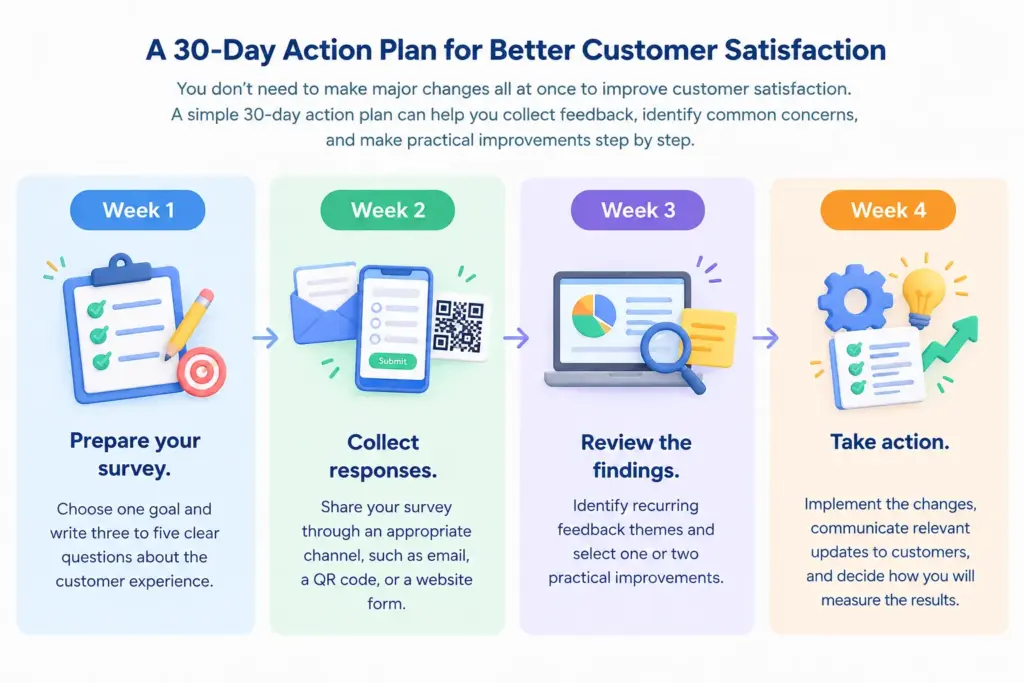
Creating a survey is easy. Getting answers that genuinely help you improve your business takes a little more thought. I always recommend starting with one question: what do you want to learn from your customers? When you have a clear goal, it becomes easier to write relevant questions, choose the right format, and turn responses into practical improvements.
Effective customer satisfaction surveys should feel simple and worthwhile for customers. They should not resemble a lengthy questionnaire that takes several minutes to complete. A few well-chosen questions can reveal useful insights into your service, products, and overall customer experience.
Choose Clear Questions That Match Your Business Goals
Before writing survey questions, identify the areas you want to evaluate. A restaurant might focus on food quality and waiting times, while a salon may want feedback about appointment scheduling and staff service.
I recommend avoiding vague or leading questions. Instead of asking, “You enjoyed our excellent service, right?” ask, “How would you rate the service you received?” The second question gives customers room to express their genuine opinions.
Useful customer satisfaction survey questions include:
- How satisfied were you with your recent experience?
- How would you rate our customer service?
- Did our product or service meet your expectations?
- What could we improve?
- How likely are you to visit us again?
These questions help businesses collect feedback about specific aspects of the customer journey.
Combine Rating Questions With Open-Ended Feedback
Rating questions make it easier to compare responses over time, while open-ended questions explain why customers feel a certain way. I find that using both formats provides a more complete picture than relying on ratings alone.
For example, a customer might rate a restaurant visit three out of five stars. An optional comment could reveal that the food was excellent but the waiting time was too long. Choosing the right questions is essential for collecting meaningful customer feedback. A well-designed survey combines rating questions with open-ended responses to help local businesses understand customer satisfaction, evaluate service quality, identify areas for improvement, and learn whether customers are likely to return. Here are four useful question types to include in your customer satisfaction survey.
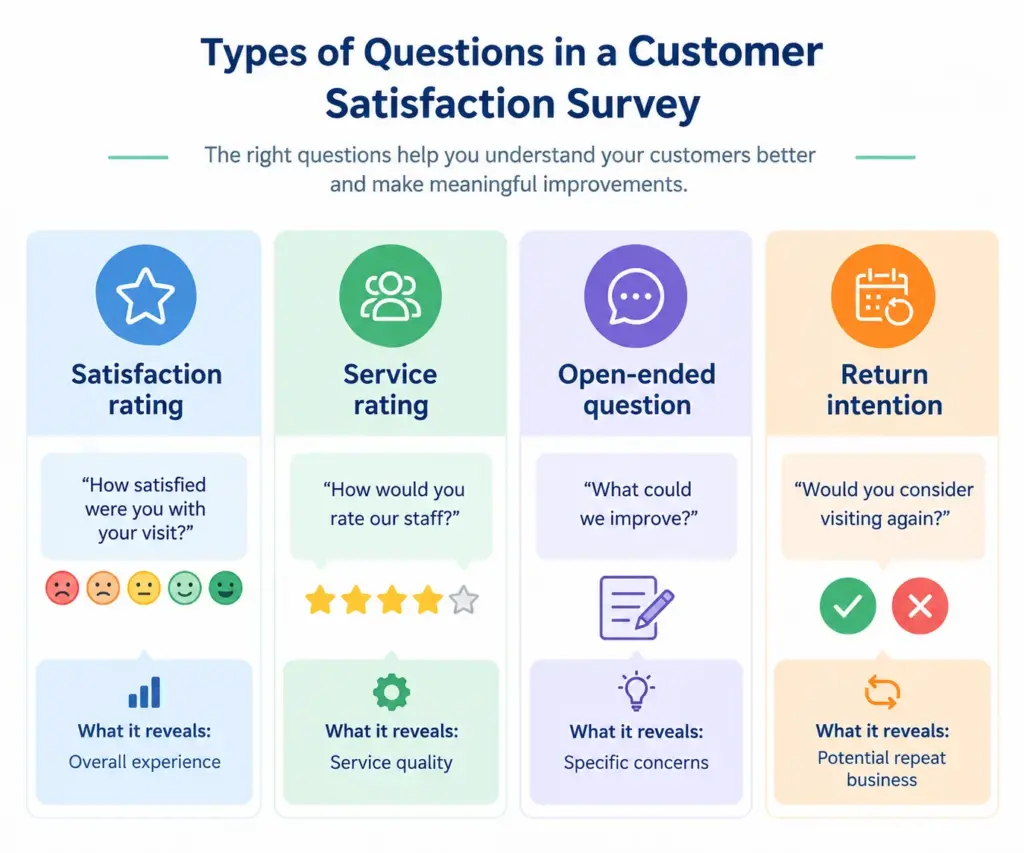
This combination helps turn customer feedback into actionable information.
Customize Questions for Different Local Industries
Not every business needs the same survey. A retail store might ask whether customers found the products they wanted, while a home service company could ask whether the technician arrived on time and completed the work satisfactorily.
Tailoring questions to your industry makes the answers more relevant and useful.
Keep Surveys Short and Easy to Complete
Customers are more likely to finish a survey when it takes little time and works well on a mobile device. Start with three to five relevant questions, use straightforward language, and make written comments optional.
A short, focused survey can support customer experience improvement without making feedback feel like another task customers must complete.
When and Where Should Local Businesses Ask for Feedback?
Even a well-written survey may not produce useful results if customers receive it at the wrong time or cannot access it easily. From my perspective, collecting feedback is not just about asking questions. It is about making the process convenient and giving customers a clear opportunity to share their experiences.
For local businesses, the best approach depends on the type of service, the customer journey, and how people prefer to communicate. Choosing the right timing and channel can help you collect more relevant responses without overwhelming customers.
Choose the Right Moment in the Customer Journey
Timing matters because customers should have enough experience to evaluate your business but still remember the details clearly. For example, a cafe can invite customers to share feedback shortly after their visit, while a salon can send a short survey after an appointment.
For businesses providing home repairs, landscaping, or other ongoing services, it may be better to request feedback after the job is completed. This allows customers to evaluate the entire experience, from communication and punctuality to the quality of the finished work.
I recommend avoiding repeated survey requests within a short period. Asking customers for feedback after every small interaction can become irritating rather than helpful. Instead, establish a reasonable schedule that captures important experiences while respecting customers’ time.
Compare Different Ways to Collect Customer Responses
There is no single customer feedback collection method that works for every business. The right option depends on your audience, resources, and the kind of experience you want to evaluate.
-
QR code surveys: Ideal for cafes, restaurants, and retail stores.
-
Email surveys: Useful for post-purchase and appointment follow-ups.
-
Website forms: Convenient for collecting online customer feedback.
-
In-person questions: Help gather immediate service feedback.
-
Printed feedback cards: Suitable for customers who prefer paper surveys.
For example, a restaurant could place a QR code on its receipt, while a plumbing company might email a survey after completing a repair. Both methods make feedback accessible at a natural point in the customer journey.
Encourage Honest Responses Without Pressuring Customers
The purpose of customer satisfaction surveys is to understand the real customer experience, not simply collect positive ratings. Use neutral wording, explain why feedback matters, and allow customers to skip questions they do not want to answer.
You should also explain how responses will be used and avoid requesting unnecessary personal information. If you offer an incentive for participating, make it clear that honest feedback is welcome regardless of whether it is positive or negative.
When customers feel comfortable sharing their opinions, your business has a better opportunity to identify genuine problems, improve service quality, and build stronger customer relationships.
How to Analyze Survey Results and Improve Customer Experiences
Collecting customer feedback is only half the job. The real value comes from understanding what customers are telling you and deciding what to do next. I recommend reviewing survey responses regularly rather than waiting until complaints become frequent. A simple process for analyzing feedback can help local businesses identify recurring problems, prioritize improvements, and deliver better customer experiences.
Track Satisfaction Scores and Recurring Feedback Themes
Start by reviewing your ratings and looking for patterns. Customer Satisfaction Score (CSAT) is a useful metric for understanding how satisfied customers feel about a specific experience. You can calculate it by dividing the number of satisfied respondents by the total number of respondents and multiplying by 100.
For example, if 40 out of 50 customers give a satisfied rating, your CSAT score is 80%.
Do not rely on ratings alone, though. Read written comments to understand why customers gave those scores. If several customers mention long waiting times, inconsistent service, or confusing pricing, those recurring themes deserve attention.
Prioritize Improvements Based on Customer Impact
Not every suggestion needs immediate action. I suggest starting with issues that appear frequently, affect important parts of the customer experience, or prevent customers from completing a purchase.
For example, a cafe might receive occasional requests for new menu items but repeated complaints about slow lunchtime service. Improving order handling may have a greater immediate impact than expanding the menu.
Create a short list of priorities, assign responsibility for each task, and set a realistic deadline. This turns customer feedback analysis into a practical improvement process instead of a collection of comments that nobody acts on.
Respond to Negative Feedback Professionally
Negative feedback can be uncomfortable, but it can also reveal problems that need attention. Acknowledge the customer’s concern, ask for clarification when necessary, and explain what you can do to address the issue.
For instance, if a customer reports an unsatisfactory home repair experience, the business could contact them privately, investigate the complaint, and arrange an appropriate solution.
Avoid arguing with customers or making promises you cannot keep. A thoughtful response demonstrates accountability, although it does not guarantee that every dissatisfied customer will return.
Close the Feedback Loop by Showing What Changed
Customers are more likely to feel heard when they can see that their opinions lead to meaningful improvements. If feedback reveals that appointment scheduling is confusing, simplify the booking process and communicate the change.
Businesses can share updates through email, social media, or in-store notices. This demonstrates that customer feedback is taken seriously and encourages customers to continue sharing their experiences.
Measure Whether Your Changes Are Working
After implementing improvements, compare relevant measures such as satisfaction ratings, complaint frequency, repeat visits, and customer retention. Review these results monthly to identify progress and areas that still need work.
By consistently measuring outcomes, local businesses can make informed decisions, improve service quality, and build stronger customer loyalty over time.
Build Stronger Customer Relationships Through Consistent Feedback
Customer satisfaction surveys work best when they become part of your regular business routine rather than a one-time activity. Collecting feedback helps you understand customer expectations, but using those insights consistently is what creates lasting improvements. For local businesses, this approach can strengthen customer relationships, encourage repeat visits, and make everyday decisions more customer-focused.
I believe businesses do not need complicated systems to get started. A clear process, a few relevant questions, and a willingness to make changes can create a strong foundation for better customer experience management.
Make Customer Feedback Part of Everyday Operations
Start by deciding when you will request feedback, who will review the responses, and how often you will evaluate the results. For example, a salon could review appointment feedback weekly, while a retail store might examine customer comments at the end of each month.
Consistency makes it easier to recognize recurring concerns instead of treating every response as an isolated incident. It also helps you determine whether recent improvements are making a difference.
Encourage employees to share common customer concerns they notice during daily interactions. Combining survey responses with these observations can provide a broader understanding of the customer experience. However, keep survey responses organized and respect customer privacy when discussing individual feedback.
Connect Customer Insights With Your Loyalty Strategy
Customer satisfaction surveys can also reveal what encourages people to return. Some customers may appreciate faster service, while others may value personalized offers, convenient rewards, or recognition for repeat purchases.
Use these insights to refine your customer loyalty strategy. For example, if customers frequently mention that they enjoy earning rewards, you could consider introducing a simple loyalty program that makes repeat visits more rewarding.
Platforms such as HappyRewards.io can help businesses engage customers through digital loyalty programs. By pairing customer feedback with an appropriate loyalty strategy, businesses can make more informed decisions about their customer engagement efforts.
Keep the distinction clear: surveys help you understand customer opinions, while loyalty programs provide ways to encourage continued engagement. Both can contribute to stronger customer relationships when they are designed around genuine customer needs.