

- Happy Rewards
- October 29, 2026
Can Businesses Reward Customers for Google Reviews?
Google reviews can influence how potential customers discover, evaluate, and choose a local business. Positive feedback can build trust, strengthen your online reputation, and help customers feel confident before making a purchase. To collect more reviews, some businesses consider offering discounts, free products, or loyalty points in exchange for customer feedback. However, this approach can create problems if it violates Google’s policies.
Google prohibits businesses from offering incentives in exchange for reviews, whether the reward is money, a free service, a discount, or loyalty points. Instead of risking review removal or other enforcement actions, businesses should focus on making it easy for customers to share honest feedback voluntarily.
The good news is that you can encourage genuine reviews without offering rewards. Simple review requests, direct links, QR codes, and timely follow-ups can help you collect authentic customer opinions. Meanwhile, Happyrewards.io helps businesses build customer loyalty through digital loyalty cards and rewards for repeat visits, keeping retention efforts separate from Google review requests.
What Google’s Review Policy Says About Customer Rewards
Google reviews help local businesses build credibility, attract potential customers, and understand customer experiences. However, businesses must follow Google’s guidelines when asking customers to share feedback. One important rule is that businesses cannot offer incentives in exchange for reviews. Understanding the Google review policy helps you encourage honest feedback without putting your online reputation at risk.
Can You Offer Discounts or Freebies for Google Reviews?
No. Google prohibits businesses from offering money, discounts, free products, services, or other benefits in exchange for customer reviews. The policy applies regardless of whether you ask for a positive review or simply request feedback in return for a reward.
For example, a restaurant cannot offer a free dessert for posting a Google review, and a salon cannot provide a discount on the next appointment in exchange for feedback on its Google Business Profile.
Common examples of prohibited Google review incentives include:
- Offering discount codes to customers who leave reviews.
- Giving free products or services in exchange for public feedback.
- Providing gift cards or cash for posting a review.
- Awarding loyalty points specifically for writing Google reviews.
- Offering additional benefits for five-star ratings or positive comments.
Businesses can still ask customers to share their experiences. The key distinction is that the request must be voluntary and must not depend on receiving a reward, a particular rating, or favorable feedback.
Which Types of Review Incentives Are Prohibited?
Google’s policy covers more than direct payments. Any benefit tied to posting, changing, or removing a review can violate its rules. Businesses should also avoid offering incentives to customers in exchange for editing negative feedback or deleting unfavorable reviews.
For example, promising a free service after a customer changes a two-star review to five stars is not an acceptable reputation management practice. Similarly, offering rewards only to customers expected to leave positive feedback can distort the overall picture of customer satisfaction.
These practices undermine the purpose of genuine customer reviews, which should reflect real experiences and independent opinions.
Why Honest and Unbiased Reviews Matter
Customers often rely on online reviews when comparing local businesses. They want feedback that reflects actual service quality, communication, pricing, and customer experience. Incentivized reviews can make it difficult for potential customers to distinguish authentic opinions from feedback influenced by rewards.
Following Google review guidelines helps businesses maintain trust and build a more reliable online reputation. It also encourages teams to focus on improving customer experiences rather than influencing ratings.
Businesses can use customer loyalty rewards to encourage repeat purchases, visits, and long-term relationships. However, these rewards must remain separate from Google review requests. A loyalty program can reward qualifying purchases without requiring customers to publish feedback, giving businesses a practical way to support retention while collecting honest reviews independently.
What Happens When Businesses Break Google’s Review Rules?
Collecting customer reviews can strengthen a local business’s reputation, but using prohibited incentives can create unnecessary risks. Google’s policies are designed to keep reviews authentic and useful for people choosing where to shop, eat, or book services. Businesses that ignore these rules may face review removals or other enforcement actions. Understanding the potential consequences can help you develop a safer Google review management strategy.
Can Google Remove Incentivized Reviews?
Yes. Google can remove reviews that violate its policies, including reviews posted in exchange for discounts, free products, cash, or other benefits. Even if a customer genuinely visited your business, the review may still violate the rules if an incentive influenced its publication.
For example, a salon that offers a discount to every customer who posts a Google review may collect several reviews in a short period. However, those reviews could be removed if Google identifies them as incentivized.
Businesses should avoid relying on review incentives to increase their ratings. Instead, focus on requesting genuine Google reviews from customers who have experienced your products or services.
How Review Manipulation Can Affect Your Business Profile
Review policy violations can affect more than the number of reviews displayed on your profile. Google’s enforcement measures may limit the benefits you expect from your review collection efforts and create additional work for your team.
Potential consequences include:
- Review removal: Reviews that violate Google’s policies may be deleted, reducing your displayed review count.
- Reduced customer trust: Customers may question your credibility if they discover that reviews were influenced by rewards.
- Reputation management challenges: Businesses may need to address concerns about the authenticity of their feedback.
- Business Profile restrictions: In serious cases, Google may apply restrictions or other enforcement measures under its policies.
These outcomes are not automatic in every case. However, businesses should understand that attempting to manipulate reviews can put their reputation and review strategy at risk.
Review Practices Businesses Should Avoid
A compliant review strategy starts with clear boundaries. Businesses should never make rewards, discounts, or other benefits conditional on a customer publishing or changing a review.
Avoid these common mistakes:
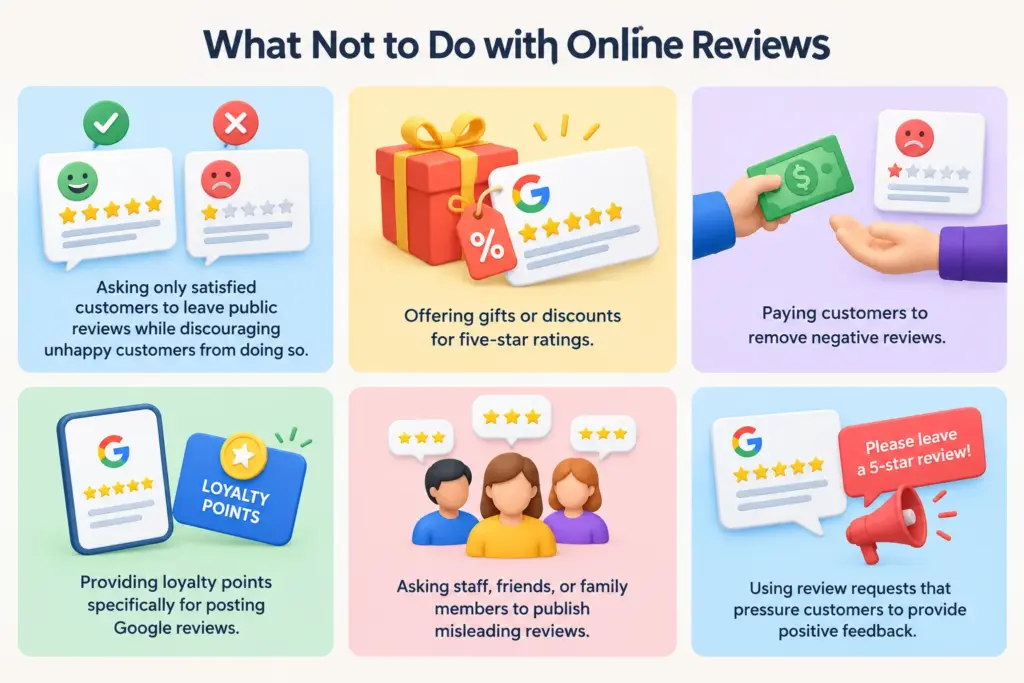
Following ethical review practices helps businesses build trust and maintain a credible online reputation. Instead of filtering feedback or offering incentives for positive ratings, encourage every customer to share an honest experience. Respond professionally to negative reviews, address genuine concerns, and use feedback to improve your products or services. This approach supports long-term customer relationships and helps potential customers make informed decisions.
Instead, invite customers to share honest customer feedback regardless of whether their experience was positive, negative, or mixed. Respond professionally to reviews, address recurring complaints, and use feedback to improve your service.
A consistent approach to Google review policy compliance helps businesses build credibility over time. By keeping review requests independent of rewards, you can support a trustworthy online reputation while using separate loyalty programs to encourage repeat purchases and lasting customer relationships.
How to Get More Google Reviews Without Offering Incentives
Businesses do not need discounts or freebies to encourage customers to share their experiences. A straightforward review process, thoughtful communication, and consistent customer service can help generate authentic feedback over time. By following Google review guidelines, you can strengthen your online reputation while making it easier for customers to express their opinions voluntarily.
Ask Every Customer for an Honest Review
One of the simplest ways to collect genuine Google reviews is to ask customers directly after they have interacted with your business. Make the request polite, neutral, and optional. Avoid asking only customers you expect to leave positive feedback, as this can create a misleading picture of customer satisfaction.
You can request feedback after a completed appointment, purchase, meal, or service. For example, a plumber might send a follow-up message after completing a repair, while a restaurant could invite diners to share their experience after their visit.
Keep these practices in mind:
- Ask customers to describe their honest experiences.
- Make it clear that leaving a review is optional.
- Never require a particular star rating or positive comment.
- Avoid offering discounts, freebies, or loyalty points for reviews.
A consistent approach to customer review requests helps businesses collect balanced feedback without violating Google’s policies.
Make Reviewing Easy With Direct Links and QR Codes
Customers are more likely to complete a review when they can find the right place quickly. Removing unnecessary steps can make the process more convenient without influencing what customers write.
Businesses can create a direct Google review link through their Google Business Profile and share it across appropriate customer communication channels.
Useful options include:
- Adding a review link to follow-up emails or text messages.
- Displaying a Google review QR code on receipts, menus, or service cards.
- Including a review link on the business website.
- Sharing the link in appointment confirmation or post-service messages.
Keep the invitation neutral. A QR code should make leaving feedback easier, not connect a review to a special offer or reward.
Choose the Right Time to Request Feedback
Timing can affect whether customers notice and respond to a review request. Contacting them shortly after a completed transaction or service often makes the experience easier to recall.
For example, a salon can send a polite request after an appointment, while an auto repair shop can follow up once the vehicle has been returned. Avoid sending repeated messages that pressure customers to respond.
Use Simple, Natural Review Request Messages
Your message should explain what you are asking without directing customers toward a particular rating.
For example:
“Thank you for choosing our business. If you have a moment, we’d appreciate it if you shared an honest review of your experience on Google. Your feedback helps us understand what we’re doing well and where we can improve.”
This approach encourages authentic customer feedback while respecting customer choice. Combined with convenient links and timely communication, it provides a practical way to build a stronger online reputation without relying on prohibited incentives.
How to Run a Loyalty Program Without Violating Google’s Rules
Customer loyalty programs help businesses encourage repeat purchases, strengthen relationships, and give customers more reasons to return. However, businesses must keep these programs separate from public review requests. Under Google’s policies, offering rewards in exchange for reviews is prohibited. A well-designed customer loyalty program can still support retention without influencing what customers publish online.
Keep Loyalty Rewards Separate From Public Reviews
The key is to reward customers for eligible purchases or visits, not for writing, changing, or removing a Google review. For example, a café can offer a free drink after a customer completes a qualifying number of purchases. A salon can provide a reward after several paid appointments.
These rewards should not depend on whether customers leave reviews or what ratings they give.
To maintain a compliant approach:
- Explain the conditions for earning and redeeming rewards clearly.
- Avoid connecting loyalty points to Google review requests.
- Never offer benefits for positive ratings or changes to negative reviews.
- Allow customers to share feedback independently of the loyalty program.
This separation helps businesses build customer loyalty while protecting the credibility of their Google Business Profile reviews.
Reward Repeat Purchases, Not Customer Ratings
A successful loyalty program gives customers a reason to return because they value the products, services, and benefits offered. Instead of focusing on review counts, businesses can reward meaningful customer actions that support long-term growth.
Common customer loyalty rewards include:
- Points earned on eligible purchases.
- Digital stamp cards for repeat visits.
- Discounts on future purchases after meeting clear spending or visit requirements.
- Birthday offers or benefits for loyal customers.
- Referral rewards for qualifying referrals, subject to applicable rules.
For example, a restaurant might offer a complimentary meal after a specified number of qualifying visits. A beauty salon could provide a reward after a customer completes several paid appointments. These programs encourage repeat business without making public feedback a condition.
Use Customer Feedback to Improve Retention
Reviews and loyalty programs serve different purposes, but both can help businesses understand their customers. Reviews provide public feedback, while loyalty program data can reveal purchasing patterns and repeat visit behavior.
Businesses can monitor metrics such as repeat purchase rate, visit frequency, reward redemption, and customer retention. Reviewing these indicators helps identify which offers customers value and where the customer experience could improve.
Make Review Requests Part of the Customer Journey
Businesses can invite customers to leave an honest review after a completed purchase or service, independently of any reward. Direct links, QR codes, and polite follow-up messages make the process convenient.
Happyrewards.io supports businesses with digital loyalty cards and customer rewards designed to encourage repeat visits. By keeping loyalty benefits separate from Google review requests, businesses can build stronger customer relationships while collecting authentic feedback through voluntary, unbiased requests.
Build Trust With Genuine Reviews and Customer Loyalty
Google reviews can influence how customers discover local businesses, compare services, and decide where to spend their money. While earning positive feedback is valuable, offering discounts, free products, or other benefits in exchange for reviews is not a sustainable strategy. Following Google review guidelines helps businesses collect authentic feedback while protecting their online reputation.
Instead of relying on incentives, focus on making it easy for customers to share their experiences. Simple requests, direct review links, QR codes, and timely follow-ups can encourage customers to leave honest feedback voluntarily. Remember that customers should be free to share positive, negative, or mixed experiences without pressure or rewards.
To build a reliable Google review management strategy, businesses should:
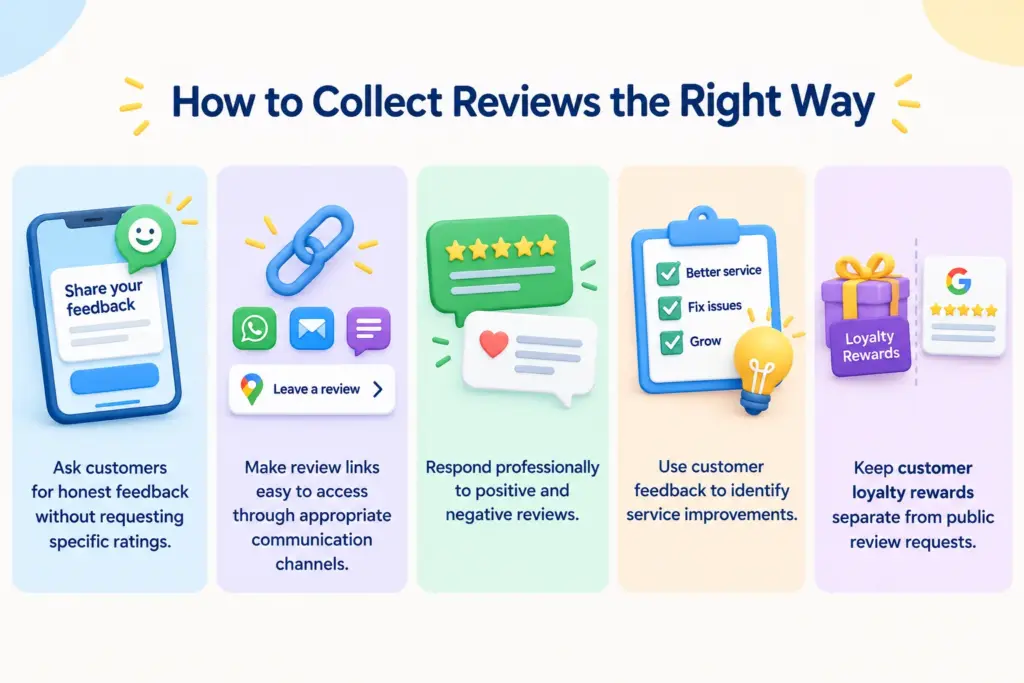
Encouraging honest feedback helps businesses build trust, improve customer experiences, and maintain a credible online reputation. Keep customer loyalty rewards separate from public review requests to ensure transparency and long-term customer relationships.
These practices help establish trust and provide useful insights into the customer experience. Over time, consistent service and transparent communication can contribute to a stronger online reputation.
At the same time, businesses should not overlook the value of customer retention. A loyalty program can encourage repeat purchases, reward regular visits, and give customers additional reasons to return. The important distinction is that rewards should be tied to qualifying purchases or other legitimate loyalty activities, not to writing, changing, or removing Google reviews.
Ultimately, sustainable growth comes from combining genuine customer experiences with consistent relationship-building. By following Google’s policies, requesting unbiased feedback, and rewarding customer loyalty appropriately, you can develop a trustworthy reputation without risking it for short-term review gains. Focus on delivering value, listening to customers, and making every interaction worthwhile. Those efforts can support both online reputation management and long-term customer retention.
