
- Happy Rewards
- October 27, 2026
Spa CRM: How to Manage Clients and Boost Retention
Running a successful spa involves more than delivering excellent treatments. Building lasting client relationships requires consistent communication, personalized experiences, and a clear strategy for encouraging repeat visits. However, many spa businesses struggle with scattered client records, inconsistent follow-ups, missed rebooking opportunities, and declining spa client retention. Without an organized approach, it becomes difficult to understand client preferences, track appointment history, and identify opportunities to bring customers back.
This is where spa CRM software can help. A customer relationship management (CRM) system allows spa owners to organize client information, monitor booking patterns, manage follow-ups, and deliver more personalized service. Combined with an effective spa loyalty program, these efforts can encourage repeat bookings and strengthen long-term customer relationships. Platforms such as Happyrewards.io can complement existing client management tools with digital loyalty cards and customer loyalty rewards, giving spas another way to recognize returning clients and encourage ongoing engagement.
What Does a Spa CRM Actually Help You Manage?
A spa CRM helps businesses organize client information and manage customer relationships more effectively. Instead of relying on separate spreadsheets, handwritten notes, or scattered messages, spa owners can use a centralized system to keep relevant client details accessible. This makes it easier to understand customer preferences, coordinate follow-ups, and deliver consistent service across visits.
Organizing Client Information Beyond Contact Details
A spa CRM software system does more than store names and phone numbers. It helps spa teams maintain useful client records that support personalized service and better communication.
Depending on the software, client profiles may include:
- Contact information: Names, phone numbers, email addresses, and communication preferences.
- Appointment history: Previous bookings, frequently requested services, and visit dates.
- Service preferences: Preferred treatments, product choices, and other relevant preferences shared by clients.
- Communication records: Follow-up notes, previous inquiries, and important service-related interactions.
Having this information organized helps staff prepare for appointments and recognize returning clients. For example, if a customer regularly books facials, the team can use their previous service history to provide relevant recommendations instead of asking the same questions at every visit.
Connecting Appointments With Client Relationships
Managing bookings is important, but maintaining communication between appointments also plays a role in spa client retention. A CRM can help teams keep track of follow-up tasks, identify upcoming rebooking opportunities, and maintain consistent communication.
For instance, after a treatment, a spa might send a thank-you message or invite the client to book another appointment when appropriate. A well-organized follow-up process reduces the likelihood of missed commitments and helps clients feel valued.
However, CRM software and spa appointment management software are not always the same. Some systems combine client records, scheduling, and reminders, while others require integration with a separate booking platform. Spa owners should understand these differences before choosing a solution.
Recognizing Client Patterns and Preferences
Over time, organized customer information can reveal useful patterns in client behavior. Spa owners may identify which services attract repeat bookings, how frequently customers visit, and which clients have not returned recently.
These insights can help businesses make more informed decisions, such as:
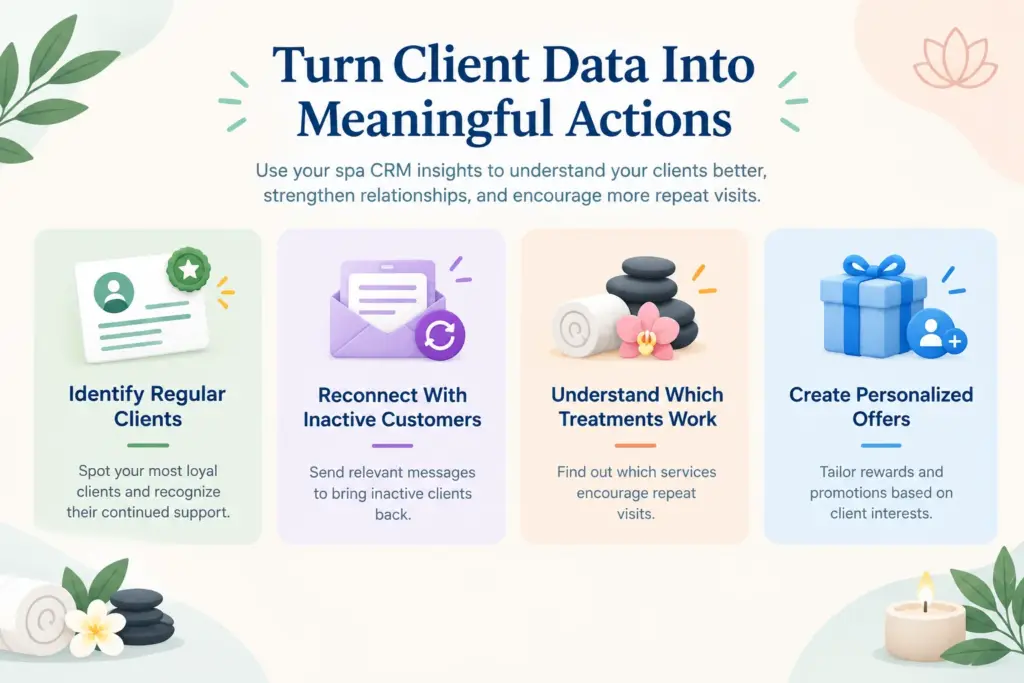
When combined with a suitable spa loyalty program, these insights can also help businesses reward returning clients and encourage ongoing engagement. The goal is to use client information thoughtfully, improve the customer experience, and build stronger relationships over time.
Which Spa Management Problems Can CRM Software Solve?
Running a spa involves managing appointments, maintaining client relationships, and keeping daily operations organized. When these tasks depend on manual records or inconsistent processes, important details can easily be overlooked. Spa CRM software helps address these challenges by organizing customer information, supporting follow-ups, and making it easier to understand client behavior.
Missed Follow-Ups and Inconsistent Communication
Following up with clients after appointments can encourage them to return, but busy spa teams may struggle to contact everyone at the right time. Without a clear process, rebooking opportunities and promised follow-ups can be missed.
A spa customer relationship management system can help teams organize communication tasks and maintain more consistent contact with clients. For example, a spa can send a thank-you message after a visit or remind a client about booking another appointment when appropriate.
Useful follow-up practices include:
- Sending appointment confirmations and reminders.
- Checking in with clients after selected treatments.
- Recording promised follow-ups so staff can complete them.
- Sharing relevant service updates with interested clients.
These practices help create a smoother customer experience without overwhelming clients with unnecessary messages.
Clients Who Do Not Return After Their First Visit
Attracting new customers is important, but encouraging them to return is equally valuable. Some clients may enjoy their first spa experience but forget to book again. Others may simply become interested in different services or choose another provider.
With organized spa client management, businesses can review visit history and identify customers who have not booked for a while. Staff can then send relevant reminders or service recommendations based on the client’s previous interests.
For example, a spa might invite a previous facial client to explore another suitable treatment. The message should feel helpful rather than overly promotional, and any follow-up should respect the client’s communication preferences.
Generic Offers That Fail to Build Loyalty
Sending the same discount to every customer does not always encourage lasting relationships. Clients have different preferences, spending habits, and reasons for visiting a spa.
Client segmentation allows businesses to group customers based on relevant characteristics, such as visit frequency, service preferences, or engagement. This makes it easier to create more meaningful campaigns.
Spa businesses can use segmentation to:
- Recognize frequent visitors with suitable rewards.
- Share relevant offers based on service interests.
- Reconnect with inactive clients using appropriate incentives.
- Promote loyalty benefits that encourage repeat bookings.
A well-designed spa loyalty program can complement these efforts by rewarding qualifying visits and giving customers an additional reason to return.
Disconnected Records and Repetitive Administrative Work
When client details are spread across spreadsheets, notebooks, booking tools, and messages, staff may spend unnecessary time searching for information. This can lead to duplicate records, inconsistent communication, and avoidable administrative work.
A centralized CRM helps organize relevant information in one place, making it easier for authorized staff to access the details they need. This improves coordination and allows the team to spend more time delivering quality service and building stronger client relationships.
Essential Spa CRM Capabilities for Better Client Experiences
Choosing the right spa CRM software starts with understanding which features help your team manage clients and deliver better service. The right system should make everyday tasks easier, keep customer information organized, and support long-term spa client retention. Rather than choosing a platform simply because it offers many features, focus on the capabilities that address your spa’s actual needs.
Client Profiles and Service History
A centralized client database helps spa teams access relevant customer information without searching through multiple records. It can include contact details, appointment history, service preferences, and communication records.
These profiles help staff recognize returning clients and provide a more consistent experience. However, businesses should collect only necessary information and protect sensitive treatment-related details through appropriate access controls.
Appointment Tracking and Follow-Up Workflows
Managing appointments involves more than recording booking dates. Spa teams also need to coordinate reminders, follow-ups, and opportunities for clients to book their next visit.
Depending on the platform, useful features may include:
- Appointment confirmations and reminders.
- Records of previous and upcoming bookings.
- Follow-up tasks after selected treatments.
- Rebooking reminders based on appropriate intervals.
- Notifications for pending customer requests.
Some CRMs include scheduling tools, while others integrate with dedicated spa appointment management software. Check which functions are available before selecting a system.
Client Segmentation and Personalized Marketing
Not every client needs the same message or offer. Client segmentation helps spas group customers according to visit frequency, service preferences, or engagement history.
For example, regular visitors might appreciate exclusive benefits, while clients who have not booked recently may respond better to a relevant service reminder. Segmentation helps make communication more useful and reduces the need to send identical promotions to everyone.
When planning campaigns, consider customer preferences, consent, and message frequency to maintain a positive relationship.
Loyalty Rewards That Encourage Repeat Visits
A spa loyalty program can complement CRM activities by giving clients additional reasons to return. Instead of relying entirely on discounts, spas can recognize continued engagement through rewards that suit their services and business model.
Common options include:
- Digital stamp cards for qualifying visits.
- Points earned on eligible purchases.
- Birthday rewards or special client benefits.
- Referral incentives for recommending the spa.
Happyrewards.io can support this approach with digital loyalty cards and reward-based experiences that encourage repeat engagement. A spa can use a loyalty solution alongside its existing CRM or booking system, depending on its needs.
How to Choose and Use a Spa CRM Without Overcomplicating Operations
Selecting the right spa CRM software requires a clear understanding of your business needs, daily workflows, and customer management challenges. A system that works well for a small independent spa may not provide everything a multi-location business requires. The goal is to choose a solution that simplifies operations, supports spa client retention, and remains manageable as your business grows.
Start With Your Biggest Client Management Challenge
Before comparing software, identify the tasks that create the most difficulties for your team. You may struggle with scattered client records, missed follow-ups, inconsistent communication, or limited visibility into repeat bookings.
Make a list of your priorities, such as:
- Organizing spa client information in one place.
- Improving appointment follow-ups and rebooking reminders.
- Creating more personalized customer communication.
- Tracking repeat visits and customer engagement.
- Managing a spa loyalty program alongside existing tools.
This list will help you focus on features that solve real problems rather than paying for unnecessary functionality.
Compare Features, Integrations, and Total Costs
Once you understand your requirements, compare platforms based on usability, available features, and compatibility with your existing systems. Some spas need an all-in-one solution, while others can manage client relationships through a CRM connected to separate booking and payment tools.
Consider these factors before making a decision:
- Ease of use: Staff should be able to learn the system without extensive training.
- Software integrations: Check compatibility with booking, payment, and marketing platforms.
- Pricing: Review subscription fees, setup costs, and charges for additional features.
- Customer support: Make sure assistance is available when technical issues arise.
- Reporting capabilities: Look for useful insights into client activity and retention.
Compare the total cost with the time saved and the improvements your team expects to achieve.
Build a Simple Client Retention Workflow
After choosing a system, introduce a straightforward process that staff can follow consistently. Start by maintaining accurate client records, recording relevant preferences, and assigning responsibility for follow-ups.
For example, your workflow might include:
- Recording essential client details during registration.
- Sending appointment confirmations and appropriate reminders.
- Following up after selected treatments when relevant.
- Encouraging rebooking through personalized communication.
- Offering suitable loyalty rewards for qualifying visits.
A solution such as Happyrewards.io can complement existing spa management tools by supporting digital loyalty cards and reward-based experiences that encourage repeat visits.
How to Measure Whether Your Spa CRM Is Improving Retention
Investing in spa CRM software is only useful when it helps your business achieve measurable results. Tracking the right spa customer retention metrics allows you to understand whether your efforts are encouraging repeat visits, improving communication, and strengthening client relationships. Instead of focusing on every available report, start with a few key performance indicators (KPIs) that reflect your business goals.
Track Repeat Visits and Client Retention
The number of clients who return gives you a useful indication of how well your spa maintains customer relationships. Reviewing repeat visits and retention over consistent periods can help you identify changes in customer behavior.
Important metrics include:
- Repeat visit rate: The percentage of clients who return for another appointment during a specific period.
- Client retention rate: The percentage of existing clients who continue using your services over a defined period.
- Visit frequency: How often clients book appointments within a particular timeframe.
- Client lifetime value (CLV): The estimated revenue a client generates throughout their relationship with your business.
For example, if repeat visits decline, review client feedback, service experiences, and follow-up practices to identify possible improvements.
Measure Rebooking and Client Engagement
A CRM can help your team organize follow-ups and identify opportunities to encourage future bookings. Measuring these activities shows whether your communication strategy is supporting customer engagement.
Consider monitoring:
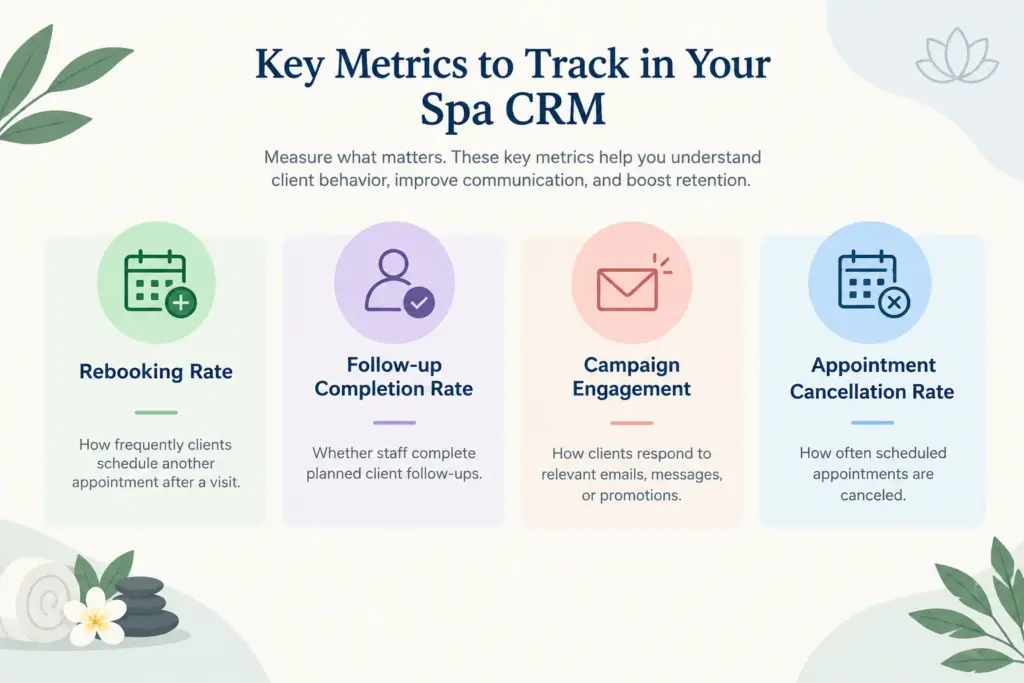
Tracking these spa CRM metrics helps you understand client behavior, identify gaps in follow-ups, and improve booking experiences. Review these indicators regularly to refine your communication strategy, reduce cancellations, encourage repeat visits, and build stronger, long-lasting client relationships.
Evaluate Your Spa Loyalty Program
A spa loyalty program can help encourage repeat visits, but participation alone does not establish whether the program is successful. Review how clients use rewards and whether the incentives support profitable customer relationships.
Useful indicators include loyalty program participation, reward redemption, repeat bookings among participating clients, and the cost of providing rewards. Digital loyalty solutions such as Happyrewards.io can complement existing client management processes by helping spas offer digital loyalty rewards and recognize returning customers.
Turn Client Data Into Practical Improvements
Regularly reviewing spa CRM analytics helps you identify what works and where adjustments may be needed. Use your findings to make practical decisions, such as:
- Adjusting follow-up timing when clients are less likely to rebook.
- Improving communication based on customer preferences.
- Revising loyalty incentives that receive little engagement.
- Reviewing feedback to identify recurring service concerns.
Set realistic targets and compare results over consistent periods. By using client retention data to guide decisions, your spa can improve customer experiences, encourage repeat bookings, and build stronger long-term relationships.
