
- Happy Rewards
- October 22, 2026
Birthday Emails vs. Birthday Rewards: Which Builds Customer Loyalty?
Birthdays give businesses a simple reason to reconnect with customers and make them feel valued. But is sending a personalized email enough, or does offering a birthday reward give customers a stronger reason to return? Both approaches can support customer loyalty, but they work in different ways. Birthday email marketing helps businesses deliver timely messages and exclusive offers, while a birthday rewards program gives customers a tangible benefit, such as a free product, discount, or bonus loyalty stamp.
For small businesses, choosing the right approach means understanding what customers value and what encourages repeat visits. Platforms like Happyrewards.io can help businesses explore digital loyalty cards as part of a more rewarding customer experience. The goal is not simply to celebrate a birthday, but to turn that moment into an opportunity for stronger relationships. Let’s look at how birthday rewards, personalized emails, and customer retention strategies can work together to build lasting loyalty.
Birthday Emails vs. Birthday Rewards: Understanding the Difference
When I look at birthday marketing, I see two useful ways for businesses to connect with customers: sending a personalized birthday email and offering a reward that customers can actually redeem. Although these approaches support customer loyalty, they serve different purposes. An email delivers the message, while a birthday reward gives customers a reason to take action. Understanding this distinction helps small businesses build a more effective birthday rewards program.
What Is Birthday Email Marketing?
Birthday email marketing involves sending customers personalized messages around their birthdays. These emails can include birthday wishes, exclusive offers, discount codes, or invitations to visit a business.
I find this approach particularly useful for businesses that already have a permission-based email list. Instead of sending another generic promotion, a business can use a birthday message to make the customer feel recognized.
Effective birthday emails often include:
- Personalized birthday messages: Make the communication feel relevant rather than automated and generic.
- Exclusive birthday offers: Share a discount, complimentary item, or special deal that encourages a purchase.
- Clear calls to action: Tell customers how to claim an offer or visit the business.
- Timely reminders: Send messages early enough for customers to plan a visit before the offer expires.
However, sending an email does not guarantee that customers will open it, redeem an offer, or return. The results depend on the message, timing, offer, and customer preferences.
What Are Birthday Loyalty Rewards?
Birthday loyalty rewards are special benefits customers receive around their birthdays as part of a business’s customer appreciation or loyalty strategy. These rewards can make the birthday experience more valuable by giving customers something tangible.
For example, a café might offer a free drink, a salon could provide a complimentary add-on service, and a local retailer might give customers bonus loyalty stamps with a qualifying purchase.
Common birthday rewards include:
- Free products or services: Let customers try something they enjoy.
- Birthday discounts: Offer a percentage or fixed amount off an eligible purchase.
- Bonus loyalty stamps: Help customers progress toward their next loyalty reward.
- Digital loyalty cards: Make reward details easier to access and keep available on a customer’s phone.
I recommend keeping these offers simple, relevant, and easy to redeem. A complicated reward can discourage participation, even when the benefit is attractive.
How Do Birthday Emails and Birthday Rewards Work Together?
I would not treat these approaches as competing strategies because they can complement each other. A birthday email can tell customers that a reward is available, while a digital loyalty card can help them access or track that benefit.
For instance, a coffee shop could send a birthday email offering a complimentary drink and explain how customers can claim it through its loyalty program. A platform such as Happyrewards.io can be relevant when a business wants to incorporate digital loyalty cards into this experience.
The key difference is simple: birthday email marketing communicates the offer, while birthday loyalty rewards provide the incentive. When both are relevant to your customers and easy to use, they can support stronger customer engagement, encourage repeat visits, and contribute to long-term customer retention.
How Birthday Offers Influence Customer Loyalty and Repeat Visits
I believe birthdays offer businesses more than a chance to send greetings or hand out discounts. They create a natural opportunity to make customers feel appreciated and give them a reason to come back. When businesses use birthday rewards thoughtfully, they can strengthen relationships, encourage purchases, and support long-term customer loyalty. However, the real value comes from offering something customers genuinely want, rather than sending promotions simply because it is their birthday.
Make Customers Feel Recognized and Appreciated
Customers receive promotional messages throughout the year, so a personalized birthday offer can feel more meaningful than an ordinary sales email. In my view, the best birthday loyalty rewards acknowledge the customer while offering a benefit that fits their interests.
Here are a few ways businesses can make birthday offers more personal:
- Personalized birthday messages: Use the customer’s name and a warm, genuine greeting instead of a generic promotional message.
- Relevant rewards: Offer something connected to the products or services customers already enjoy.
- Exclusive benefits: Provide a complimentary item, bonus loyalty stamps, or a birthday discount to make the occasion feel special.
For example, a neighborhood café could offer a regular customer a free birthday drink. This small gesture may encourage another visit and help the customer feel valued. Although one offer cannot guarantee loyalty, a positive experience can contribute to stronger customer engagement.
Give Customers a Reason to Return
A birthday reward can also encourage customers to visit when they might otherwise choose a competitor or postpone a purchase. I recommend making the reward attractive enough to motivate action without putting unnecessary pressure on profit margins.
Businesses can try different birthday marketing ideas, including:
- Cafés and restaurants: Offer a complimentary drink, dessert, or suitable birthday treat.
- Salons and spas: Provide a birthday upgrade or a discount on a qualifying service.
- Retail stores: Give customers a birthday coupon or bonus loyalty stamps with a purchase.
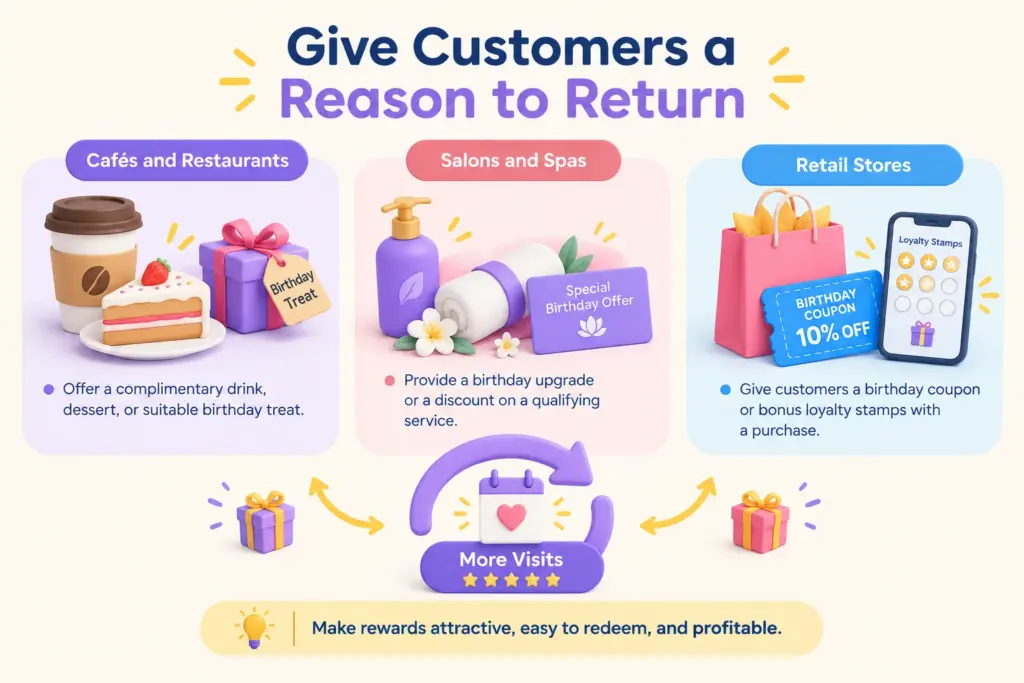
These birthday offers can encourage repeat visits, particularly when redemption is straightforward and the offer fits the customer’s needs. Businesses should clearly communicate any spending requirements or expiration dates.
Build Relationships Beyond a Single Birthday
I see birthday campaigns as an opportunity to introduce customers to an ongoing customer loyalty program, not just generate one transaction. A business can follow a positive birthday experience with useful updates, relevant rewards, and consistent service throughout the year.
For example, digital loyalty cards can help customers keep track of stamps and rewards between birthdays. Businesses using Happyrewards.io can explore how digital loyalty cards fit into their wider retention strategy.
Ultimately, effective birthday rewards programs combine personal recognition with genuine value. When customers enjoy the experience, they have a stronger reason to return, helping businesses work toward sustainable customer retention rather than relying on one-time birthday purchases.
How to Create a Birthday Rewards Program Customers Want to Use
A successful birthday rewards program should feel like a genuine thank-you, not another sales promotion. From my perspective, businesses get better results when they offer relevant benefits, make enrollment straightforward, and remove unnecessary steps from redemption. Whether you run a café, salon, restaurant, or retail shop, the goal is to create a birthday experience that customers appreciate and want to repeat.
Choose Rewards That Match Your Business
I recommend starting with rewards that suit your products, customers, and profit margins. An expensive offer is not always more appealing than a small benefit that customers genuinely enjoy.
Consider these birthday reward ideas:
- Free products: Offer a complimentary coffee, dessert, or small retail item.
- Birthday discounts: Provide a percentage discount or a fixed amount off an eligible purchase.
- Bonus loyalty stamps: Help customers get closer to earning their next reward.
- Complimentary upgrades: Add a service enhancement or product upgrade at no extra cost.
The right choice depends on your business model and customer preferences. I would rather offer one relevant reward that customers can easily understand than several complicated options that create confusion.
Make Birthday Enrollment Simple
To deliver personalized birthday loyalty rewards, businesses need a practical way to collect birthday information. I suggest inviting customers to participate through an in-store sign-up, a website form, or a digital loyalty program.
Keep the process short and explain why you need the information. Collect only what is necessary, obtain appropriate consent for marketing messages, and handle customer data responsibly.
Digital loyalty cards can also make participation more convenient by helping customers access their loyalty benefits on their phones. Platforms such as Happyrewards.io are worth exploring if you want to incorporate digital cards into your customer loyalty experience.
Set Clear Reward Rules and Redemption Periods
Even an attractive birthday offer can disappoint customers if the terms are confusing. I recommend establishing the rules before launching your program.
Make sure customers understand:
- When their birthday reward becomes available and when it expires.
- Whether a purchase is required to redeem it.
- Which products, services, or locations qualify.
- Whether the reward can be combined with other discounts.
Keep these conditions visible and easy to understand. Clear communication helps prevent misunderstandings and builds trust.
Promote the Reward at the Right Time
Timing matters because customers need an opportunity to use their rewards. I recommend sending birthday emails a few days before the birthday or at the beginning of the birthday month, depending on your offer’s validity period. A reminder can follow when appropriate, provided customers have agreed to receive marketing communications.
You can also promote the program through in-store signage, QR codes, and digital loyalty cards. The aim is to make customers aware of their benefits without overwhelming them with messages.
Ultimately, a well-designed birthday rewards program combines relevant incentives, simple enrollment, clear rules, and timely communication. When these elements work together, businesses can create a better customer experience and encourage repeat visits.
How to Measure Whether Your Birthday Loyalty Strategy Works
Launching a birthday rewards program is a good starting point, but I believe businesses should also measure whether it encourages customers to return. A popular offer does not automatically mean a profitable campaign. By tracking customer behavior, reviewing campaign costs, and listening to feedback, you can understand which birthday marketing strategies deliver value and where improvements are needed.
Track Redemptions and Repeat Visits
I recommend starting with a few straightforward metrics instead of trying to measure everything at once. These numbers help you understand whether customers are engaging with your birthday rewards and taking action.
Focus on these key indicators:
- Birthday reward redemption rate: Measure the percentage of eligible customers who redeem their birthday offers.
- Repeat visit rate: Track how many customers return after using a birthday reward.
- Purchase frequency: Check whether participating customers visit more often over time.
- Email engagement: Review email opens, clicks, and other available engagement metrics to understand how customers respond to birthday messages.
For example, if a café offers free birthday drinks, I would look beyond the number of drinks claimed. I would also check whether customers make additional purchases or return in the following weeks. Comparing results across similar periods can reveal useful patterns, although other factors may influence customer behavior.
Compare Campaign Costs With Business Results
Every birthday loyalty program has costs, including the value of free products, discounts, promotional tools, and staff time. I recommend evaluating these expenses alongside the revenue and repeat business associated with the campaign.
Consider reviewing:
- Reward costs: Calculate the cost of products, services, or discounts redeemed.
- Additional sales: Estimate the revenue generated by purchases associated with birthday visits.
- Profitability: Assess the contribution from additional purchases after accounting for relevant costs.
- Campaign performance: Compare results with previous campaigns or a suitable baseline.
One important distinction is that revenue from a birthday visit does not necessarily represent revenue generated by the campaign. Some customers might have visited anyway. Where practical, compare participating customers with a similar group that did not receive the offer.
Use Customer Feedback to Improve Offers
Numbers tell part of the story, but customer feedback helps explain why an offer succeeds or falls short. I suggest asking customers whether the reward was appealing, easy to redeem, and relevant to their preferences.
You can collect feedback through short surveys, follow-up emails, or casual conversations in-store. Then test small changes, such as different rewards, redemption periods, or message timing.
For businesses using digital loyalty cards, reviewing available participation and redemption data can also help identify opportunities to improve the experience.
Ultimately, effective customer retention strategies depend on continuous improvement. Measure the results, listen to customers, and refine your birthday rewards program based on evidence rather than assumptions.
Birthday Emails or Birthday Rewards: Which Strategy Should Your Business Choose?
Choosing between birthday email marketing and a birthday rewards program depends on your business goals, customer preferences, and available resources. I wouldn’t automatically choose one over the other because each serves a different purpose. Emails help businesses communicate with customers, while rewards give customers a tangible reason to engage. The right strategy is the one that fits your audience and creates a positive experience.
When Birthday Emails Make More Sense
I recommend birthday email marketing for businesses that already have a permission-based email list and want a simple way to send personalized birthday messages. Emails can be useful for promoting limited-time offers, sharing exclusive discounts, and reminding customers about upcoming rewards.
This approach works particularly well when businesses want to:
- Personalize customer communication: Send birthday greetings and relevant offers.
- Promote special deals: Share discount codes or complimentary gifts.
- Reach customers remotely: Let customers know about offers without requiring an in-store visit first.
- Measure engagement: Track available email metrics, such as clicks and conversions.
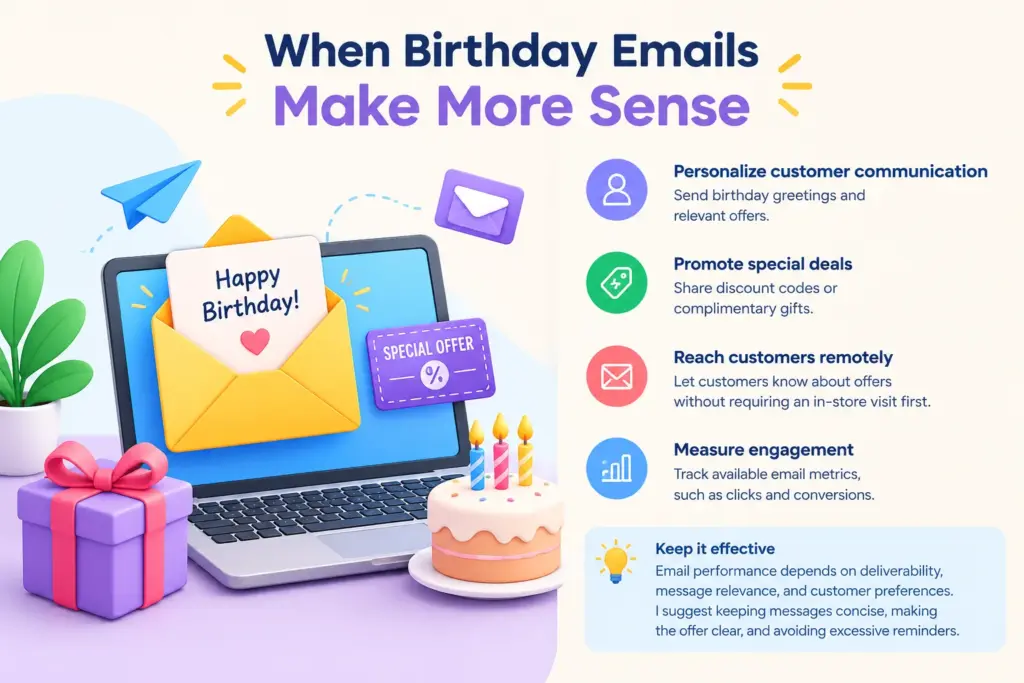
However, email performance depends on factors such as deliverability, message relevance, and customer preferences. I suggest keeping messages concise, making the offer clear, and avoiding excessive reminders.
When a Birthday Loyalty Program Is the Better Fit
If your main goal is to encourage repeat visits, I would consider a birthday loyalty program. Rather than relying only on promotional messages, businesses can provide benefits that connect birthdays with their wider rewards strategy.
For example, cafés can offer complimentary drinks, salons can provide service upgrades, and retailers can award bonus loyalty stamps. These birthday loyalty rewards give customers a concrete benefit while introducing them to the business’s broader loyalty program.
A digital loyalty card can make rewards easier to access and help customers keep track of their progress. However, the program still needs attractive benefits, clear redemption rules, and a convenient customer experience to be effective.
Why Combining Birthday Emails With Loyalty Rewards Can Work
In my view, businesses don’t need to treat these strategies as competing options. Combining them can create a smoother experience by connecting communication with a meaningful incentive.
For instance, a café could send a birthday email explaining that a complimentary drink is available through its loyalty program. The customer receives the message, understands the benefit, and knows how to redeem it. A digital loyalty card can support this process by making the reward accessible.
Platforms such as Happyrewards.io may be worth exploring for businesses interested in incorporating digital loyalty cards into their retention strategy.
Ultimately, birthday emails help communicate the offer, while birthday rewards provide the incentive. By combining both thoughtfully, businesses can improve customer engagement, encourage repeat purchases, and support long-term customer loyalty without overwhelming customers with promotions.
