- Happy Rewards
- October 16, 2026
Coffee Shop Marketing Strategies to Boost Off-Peak Sales
A coffee shop can be buzzing with customers in the morning and almost empty by midafternoon. If you run a cafe, you know how challenging it can be to maintain steady sales when customer traffic slows down, but operating expenses remain the same. The good news is that these quieter periods can become valuable opportunities to attract new customers, increase orders, and build lasting relationships with regulars.
The secret is not to offer discounts on everything. Effective coffee shop marketing strategies focus on understanding customer behavior and giving people a compelling reason to visit during slower hours. From creative coffee shop promotions and afternoon combo deals to customer loyalty programs and local marketing campaigns, small changes can make a meaningful difference to your sales.
Whether you own an independent cafe or manage a growing coffee business, the right approach can help you increase coffee shop sales, encourage repeat visits, and improve profitability. Solutions such as Happyrewards.io also offer a way to explore digital loyalty rewards that motivate customers to return. With a clear plan and consistent effort, you can turn quiet hours into an opportunity to grow your business.
Understand Your Coffee Shop’s Slow Hours Before Planning Promotions
Before investing in advertising or launching a discount campaign, take time to understand when and why your coffee shop experiences slower periods. Every cafe has a different customer pattern. A coffee shop near an office district might see a rush before work and a quiet afternoon, while one near a college may experience its busiest hours between classes. Recognizing these patterns helps you choose coffee shop marketing strategies that match your customers’ needs and your business goals.
Identify When Customer Traffic Drops
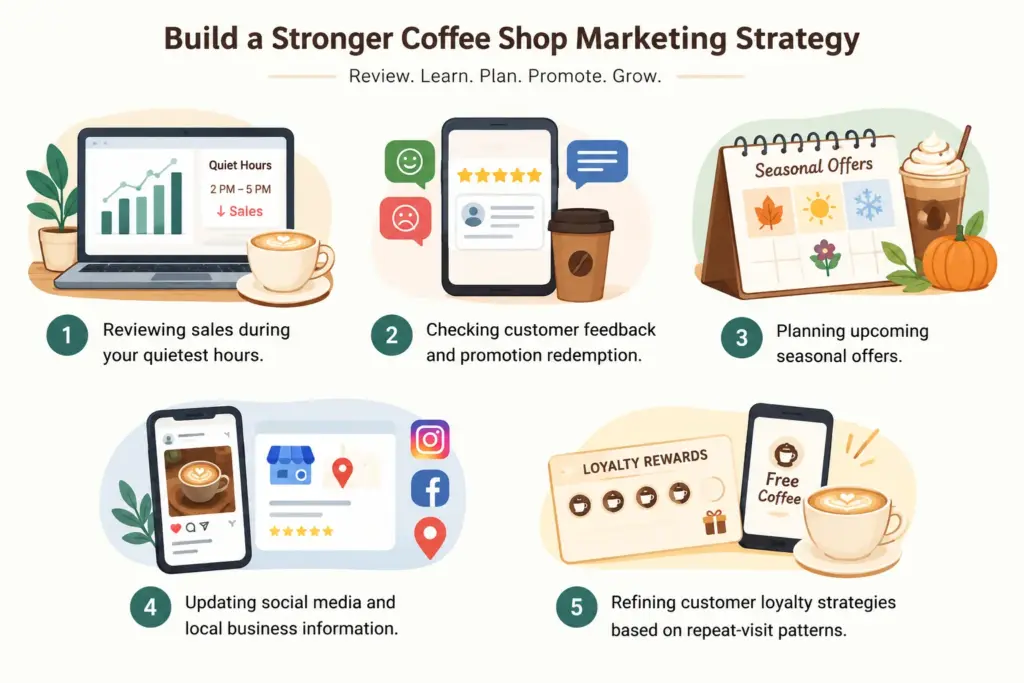
Start by reviewing your daily sales records and transaction history. Look at how many customers visit at different times, which products they purchase, and how spending changes throughout the week. This information can reveal opportunities that might otherwise go unnoticed.
For example, if your morning sales are strong but transactions decline between 2 p.m. and 5 p.m., you could introduce an afternoon coffee-and-snack offer or promote a seasonal drink during those hours.
Pay attention to these factors:
- Slow business hours: Identify the times when customer visits consistently decline.
- Quiet weekdays: Determine whether certain days generate fewer sales than others.
- Popular menu items: Find out which beverages and snacks customers prefer during different periods.
- Average order value: Understand how much customers spend per transaction during quieter hours.
- Seasonal trends: Consider how weather, holidays, school schedules, and local events affect foot traffic.
Review several weeks of data before making decisions. A single slow afternoon may be unusual, but a recurring pattern can indicate where a targeted promotion could help. You can also compare sales from similar weekdays to identify meaningful changes in customer behavior.
Understand What Your Customers Want During Quiet Hours
Knowing when customers stop visiting is only part of the picture. You also need to understand what would encourage them to choose your coffee shop during those periods.
Different customers have different priorities. Remote workers may appreciate comfortable seating and reliable Wi-Fi, students may look for affordable drinks and snacks, and office employees may want a convenient place to take an afternoon break. A promotion that appeals to one group may not interest another.
To understand your audience better, consider these approaches:
- Ask regular customers what would make them visit more frequently.
- Collect feedback about your menu, prices, seating, and overall experience.
- Review customer comments and online reviews to identify recurring preferences.
- Observe which products sell well during your slowest periods.
- Use purchasing information responsibly, where available and permitted, to understand customer preferences.
You do not need an expensive research campaign to learn what customers want. A few thoughtful conversations and a review of existing sales data can provide useful insights.
For instance, if customers frequently ask for afternoon snacks, a coffee-and-pastry bundle may be more effective than a general discount on every drink. If students tend to visit between classes, a quick-service offer could make your shop more appealing.
The goal is to create coffee shop promotions that solve a genuine customer need rather than relying on price cuts alone.
Set Clear Goals for Off-Peak Sales
Once you understand your slow hours and customer preferences, decide what you want your marketing efforts to accomplish. Without a clear objective, it becomes difficult to determine whether a promotion is actually helping your business.
Start with one or two measurable goals, such as:
- Increasing transactions during selected afternoon hours.
- Encouraging customers to purchase food alongside their coffee.
- Introducing new beverages to existing customers.
- Improving repeat visits on slower weekdays.
- Increasing revenue without sacrificing too much profit.
For example, you might aim to increase afternoon transactions by 10% over four weeks. Compare the results with a similar period before the campaign, while accounting for unusual events or seasonal changes.
It is also important to consider profitability. Higher sales do not automatically mean higher profits, particularly when discounts and ingredient costs are involved. Track promotion expenses alongside revenue to understand whether the campaign is worthwhile.
Once your goals are established, you can choose suitable cafe marketing ideas, measure their performance, and adjust your approach based on actual results. This gives every promotion a clear purpose and helps you invest your marketing budget where it can make the greatest difference.
Create Coffee Shop Promotions That Give Customers a Reason to Visit
Once you understand your slow hours, the next step is to give customers a compelling reason to visit during those periods. Effective coffee shop promotions do more than reduce prices. They encourage customers to try new products, add something extra to their orders, and discover experiences that make your cafe worth visiting.
Build Coffee and Snack Combos for Quieter Periods
Combining popular beverages with complementary food items is a practical way to increase order value. Instead of discounting every drink, create bundles that offer convenience and value while protecting your profit margins.
Consider these coffee shop promotion ideas:
- Pair a latte with a croissant for an afternoon treat.
- Offer iced coffee with a cookie during warmer months.
- Combine tea with a light snack for customers who prefer non-coffee options.
- Create a sandwich-and-coffee deal for nearby office workers.
Promote these combinations during your slowest hours and make the offer easy to understand. Before setting prices, calculate ingredient costs to ensure each bundle remains profitable.
Introduce Limited-Time Offers and Seasonal Specials
Customers are often curious about new flavors and seasonal drinks. Use that interest to create limited-time coffee offers that encourage visits without relying on constant discounts.
For example, introduce pumpkin-flavored drinks in the fall, refreshing iced beverages during summer, or specialty hot chocolate during colder months.
To make these offers effective:
- Choose products that match the season and your customers’ preferences.
- Display attractive drink photos on your menu and social media.
- Clearly communicate availability dates and prices.
- Track sales and customer feedback before making a seasonal item permanent.
These campaigns can generate interest while helping you test new menu ideas with less long-term commitment.
Develop Offers for Students, Remote Workers, and Nearby Offices
Your location can help determine which promotions will resonate most with potential customers. Students may appreciate affordable snack combinations, while remote workers might value a comfortable place to enjoy coffee during an afternoon break.
Consider local cafe marketing ideas such as student specials, group coffee orders for nearby offices, or weekday packages that combine beverages and light meals. Make sure these offers fit your staffing capacity, seating availability, and business model.
Use Events and Local Partnerships to Attract New Customers
Not every promotion needs a discount. Hosting a small coffee tasting, organizing a community meetup, or partnering with a nearby bookstore can introduce your cafe to new audiences.
You could collaborate with a local bakery on a tasting event or work with nearby businesses to share promotional materials. These partnerships can increase local awareness and encourage customers to explore your menu.
The key is to choose activities that suit your audience and are manageable for your team. Track visits and sales during each campaign to identify which coffee shop marketing strategies deserve another run.
Use Loyalty Rewards to Encourage More Frequent Coffee Shop Visits
Attracting customers during quiet hours is important, but encouraging them to return regularly can create more consistent sales over time. A well-planned coffee shop loyalty program gives customers an additional reason to choose your cafe instead of a competing coffee shop. When rewards are easy to understand and genuinely valuable, they can help strengthen customer relationships and encourage repeat purchases.
Reward Visits During Specific Time Windows
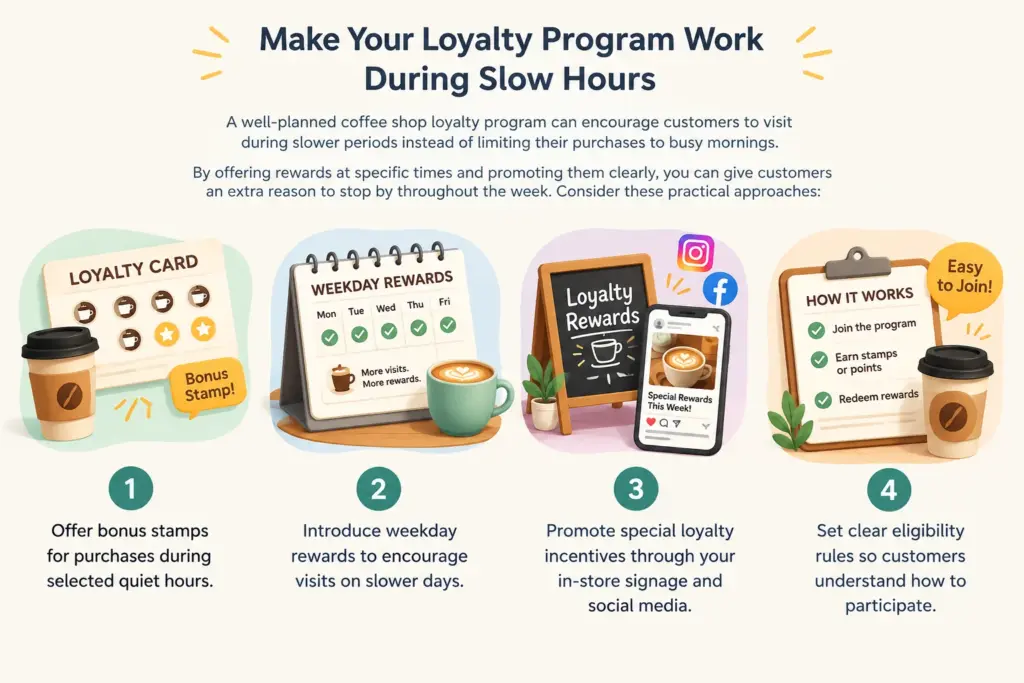
One way to increase off-peak coffee shop sales is to offer additional loyalty rewards during your slowest hours. Instead of providing the same incentive throughout the day, encourage customers to visit during periods when your cafe has spare capacity.
For example, you could offer an extra stamp on qualifying purchases between 2 p.m. and 5 p.m. or provide bonus points for weekday afternoon visits if your loyalty system supports them.
Consider these approaches:
A well-planned coffee shop loyalty program can encourage customers to visit during slower periods instead of limiting their purchases to busy mornings. By offering rewards at specific times and promoting them clearly, you can give customers an extra reason to stop by throughout the week. Consider these practical approaches:
Keep the rewards sustainable. The objective is to generate additional visits and profitable purchases, not simply to give away products customers would have bought anyway.
Create Rewards Customers Actually Want
A loyalty program works best when its benefits match what customers value. Complicated rules and rewards that feel out of reach can discourage participation, so focus on making the experience straightforward.
Popular coffee shop rewards program ideas include:
- A complimentary coffee after a set number of qualifying purchases.
- A free size upgrade on a customer’s favorite beverage.
- A reward that combines a drink with a bakery item.
- A special offer for customers who reach a spending or visit milestone.
Choose rewards that feel worthwhile without placing unnecessary pressure on your margins. You can also ask regular customers which benefits they would find most appealing before introducing a new offer.
Make Loyalty Enrollment Simple With Digital Cards
Traditional paper loyalty cards can work well, but customers sometimes forget them or lose them. Digital loyalty cards provide another option, allowing participating customers to access their rewards through supported digital experiences.
Depending on the platform, features may include QR-code access, mobile-friendly loyalty cards, digital stamps, and reward tracking. A solution such as Happyrewards.io can be explored by coffee shops interested in digital loyalty programs.
Before choosing a platform, check its available features, enrollment requirements, and compatibility with your preferred customer experience.
Measure Whether Loyalty Rewards Improve Repeat Visits
Do not assume a loyalty campaign is successful simply because customers redeem rewards. Monitor repeat visits, redemption rates, average spending, and the cost of providing incentives.
Compare activity during your targeted hours before and after introducing the program. These insights help you refine your customer retention strategies, keep rewards relevant, and determine whether your loyalty program contributes to sustainable growth.
Promote Your Off-Peak Offers Through Local and Digital Channels
Even the most attractive promotion will not deliver results if customers do not know about it. Once you have planned your offers, focus on reaching people who are likely to visit your coffee shop during quieter hours. A combination of social media, local search, email, and community marketing can help you increase visibility without requiring a large advertising budget.
Use Social Media to Highlight Daily Specials
Social media gives coffee shops an easy way to showcase their menu, announce promotions, and connect with nearby customers. Platforms such as Instagram and Facebook can be particularly useful for sharing visually appealing drinks and food combinations.
Try these coffee shop social media marketing ideas:
- Post photos of afternoon coffee deals and snack combos.
- Share short videos showing how seasonal drinks are prepared.
- Announce weekday specials before your slowest hours begin.
- Publish customer-approved photos from events and tastings.
- Use location tags and relevant local hashtags to improve discoverability.
Keep your posts specific. Instead of simply announcing a discount, explain what customers can get, when the offer is available, and where they can find your shop. Consistent, useful content helps customers remember your cafe when they are ready for a coffee break.
Improve Your Local Search Visibility
Many customers search online when looking for a nearby cafe, making local SEO for coffee shops an important part of your marketing strategy.
Start by keeping your Google Business Profile accurate. Update your opening hours, contact details, menu information, photos, and other available business details. You can also use supported profile features to share relevant updates and offers.
To strengthen your local presence:
- Include relevant location terms naturally on your website.
- Add clear menu and contact information.
- Upload recent photos of your drinks, food, and seating areas.
- Encourage customers to leave honest reviews.
- Respond professionally to customer feedback.
Accurate information helps potential visitors understand what your coffee shop offers before deciding to stop by.
Send Targeted Email and SMS Promotions
If customers have opted in to receive your marketing messages, email and SMS can help you promote offers directly to an interested audience.
For example, send a weekday afternoon special before the promotion begins or announce a seasonal beverage that customers can try during quieter hours.
For better results, keep messages short, relevant, and timely. Avoid sending too many promotions, and follow applicable consent, privacy, and opt-out requirements.
Encourage Customer Referrals and Word-of-Mouth
Your existing customers can help introduce your coffee shop to new people. Consider a referral offer that gives customers a reasonable incentive when a friend makes a qualifying purchase.
You can also build relationships with nearby businesses, participate in local community events, and encourage satisfied customers to share their experiences.
The goal of these coffee shop advertising strategies is to reach the right audience with a clear message. Track which channels generate visits and sales so you can focus your time and budget on the activities that deliver meaningful results.
Measure Results and Improve Your Coffee Shop Marketing Strategy
Launching a promotion is only the beginning. To understand whether your efforts are helping your business, you need to measure the results and make adjustments based on what you learn. The most effective coffee shop marketing strategies are not necessarily the ones that attract the most attention. They are the ones that encourage profitable purchases, bring customers back, and make better use of quieter hours.
Track the Metrics That Matter
Start with a few key performance indicators that show how your promotions affect business performance. You do not need complicated analytics software to get started. Your sales records and transaction reports can provide valuable insights.
Focus on metrics such as:
- Off-peak sales: Compare revenue during targeted hours before and after a promotion.
- Customer visits: Check whether more people are visiting during slower periods.
- Average order value: Determine whether customers are adding food or other items to their purchases.
- Promotion redemption: Measure how many customers use a particular offer.
- Repeat visits: Monitor whether customers return after their first promotional purchase.
- Profitability: Calculate whether the additional revenue justifies discounts, marketing expenses, and product costs.
Looking at these numbers together gives you a clearer picture of campaign performance. For example, a discount might increase transactions but reduce profit. A coffee-and-pastry bundle could generate fewer purchases but produce a better return.
Test One Promotion at a Time
It can be tempting to introduce several offers at once, especially when sales are slow. However, running too many campaigns simultaneously makes it difficult to identify which one is responsible for any improvement.
Instead, test one coffee shop promotion at a time and establish a clear measurement period.
For example, introduce a weekday afternoon combo for three weeks. Compare its performance with similar weekdays before the campaign, while considering factors such as weather, holidays, and nearby events.
You can also experiment with different offers, prices, and time windows. Keep the approach that produces sustainable results, adjust campaigns with potential, and discontinue those that consistently underperform.