
- Happy Rewards
- October 14, 2026
Email List Building Strategies to Help Local Businesses Grow
Running a local business means building relationships that last beyond a single purchase. But how do you stay connected with customers after they leave your store, finish an appointment, or place an order? That’s where learning how to build a customer email list for your local business can make a real difference. Instead of relying entirely on social media or paid advertising, you can use email marketing for local businesses to share useful updates, introduce new products, promote special offers, and encourage repeat visits.
The good news? You don’t need a huge marketing budget or complicated software to get started. With simple email list building strategies, convenient signup forms, and clear customer consent, you can gradually build a list of people who genuinely want to hear from you. You can also explore HappyRewards.io to discover digital loyalty solutions that support customer engagement and retention. Let’s look at practical ways to grow your email list while giving customers a good reason to stay connected.
Why a Customer Email List Matters for Local Customers
Building a customer email list is about more than collecting email addresses. It gives your business a practical way to maintain relationships, encourage repeat purchases, and understand what customers value. In my experience, local businesses get more from email marketing when they focus on helpful communication rather than sending promotions just to stay visible.
Build Direct Relationships With Existing Customers
Social media can help people discover your business, but you cannot rely entirely on platform algorithms to reach your followers. A permission-based customer email list gives you a direct communication channel with people who have agreed to receive your updates.
For example:
- A cafe can share new menu items and upcoming events.
- A salon can announce seasonal services and appointment availability.
- A fitness studio can send class updates and helpful workout tips.
- A neighborhood retailer can introduce new arrivals and relevant offers.
The key is to make every message useful. When customers receive information that matches their interests, email marketing for local businesses becomes a way to build trust instead of another source of unwanted messages.
Encourage Repeat Visits Without Constant Advertising
Finding new customers takes time and money. Staying connected with existing customers can help you encourage repeat visits without depending on paid advertising for every sale.
With thoughtful local business email marketing, you can send seasonal promotions, reminders, product updates, and invitations based on what your customers might find useful.
Consider a salon that sends an email about its seasonal hair-care services before summer. A cafe might announce a new breakfast menu or offer subscribers an update about an upcoming tasting event. These messages give customers a relevant reason to return.
I recommend starting with a manageable schedule rather than emailing too frequently. A few well-timed, relevant messages can be more useful than constant discounts that reduce profit margins or overwhelm subscribers.
Learn What Customers Actually Want
Your email list can also help you understand customer preferences. By reviewing campaign engagement and asking optional signup questions, you can identify which topics interest your audience.
Useful signals include:
- Email click-through rates: Which links or offers attract attention?
- Customer preferences: Which products, services, or updates do subscribers want?
- Campaign responses: Which messages lead to bookings, visits, or purchases?
Use this information to improve future campaigns, not to collect unnecessary personal details. Ask only for information that serves a clear purpose, and respect customers’ privacy and communication preferences.
A strong customer email list supports lasting relationships, repeat business, and more relevant marketing. Once you understand its value, the next step is choosing convenient places to invite customers to subscribe.
Choose the Right Places and Moments to Collect Email Addresses
Once you understand why an email list matters, the next step is making signup easy and natural. I recommend collecting email addresses at moments when customers already interact with your business. The goal is to make joining your local business email list convenient, relevant, and completely voluntary.
Make In-Store Signups Simple
Your physical location offers several opportunities to invite customers to subscribe. Place a signup card or QR code where customers can easily notice it, such as the checkout counter, reception desk, or waiting area.
For example, a cafe could display a QR code near its menu, while a salon could place one at reception.
Try these practical approaches:
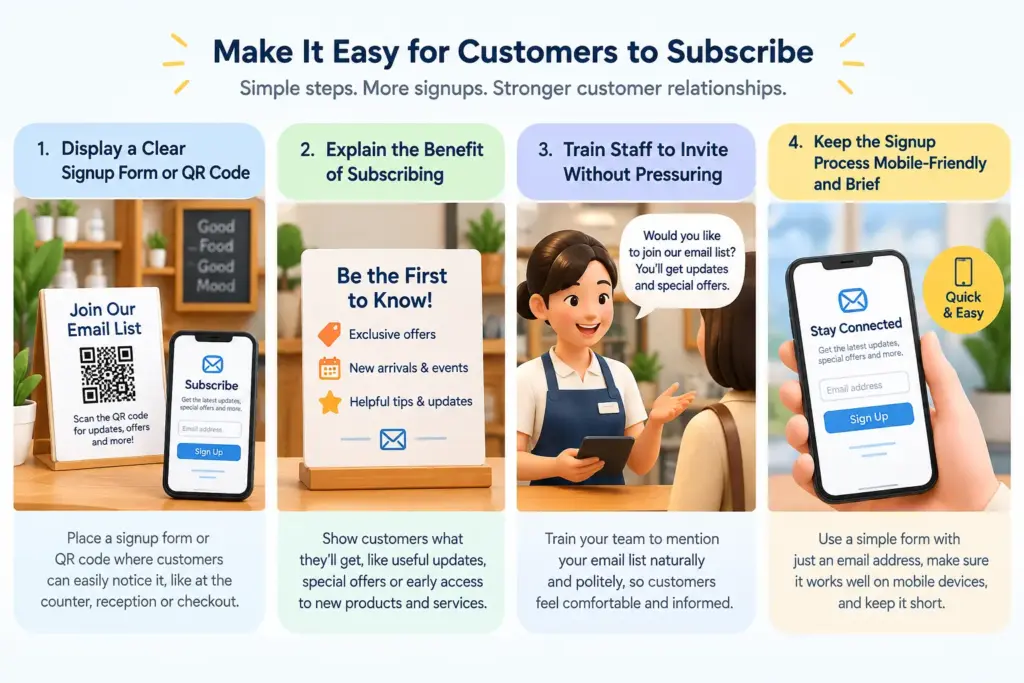
Make joining your email list simple and worthwhile. Use visible signup forms or QR codes, highlight benefits such as exclusive offers and useful updates, and encourage staff to invite customers politely. A short, mobile-friendly signup process helps customers subscribe conveniently while building stronger relationships with your local business.
Add Signup Opportunities to Your Website
Your website can collect email addresses even when customers are not visiting your store. Add a simple form to relevant pages rather than placing intrusive pop-ups everywhere.
Effective locations include:
- Your homepage or contact page.
- A dedicated newsletter signup page.
- Relevant service or product pages.
- Booking confirmation pages, with marketing consent requested separately.
Use clear wording that explains what subscribers will receive. A straightforward customer email collection process helps visitors make an informed decision.
Collect Emails During Bookings, Events, and Purchases
Bookings and events create natural opportunities to invite customers to join your list. A fitness studio might offer an optional newsletter signup during class registration, while a retailer could invite shoppers to receive product announcements after checkout.
However, collecting an email for a receipt or appointment confirmation does not automatically mean you have permission to send marketing messages.
Keep marketing consent separate, clear, and voluntary. Follow applicable email marketing and privacy requirements, and never assume that every customer wants promotional emails.
Use Social Media to Attract Subscribers
Social media can direct interested followers toward your signup page. Share the link in your profile, relevant posts, or event announcements, and explain the benefit of joining.
Avoid asking people to send their email addresses publicly in comments. Instead, direct them to a secure signup form with clear consent language.
The best email list-building strategies make subscribing easy wherever customers interact with your business. Once these opportunities are in place, focus on giving people a compelling reason to join and remain subscribed.
Give Customers a Good Reason to Subscribe
People are more likely to share their email addresses when they understand what they will gain in return. Instead of asking customers to join your list without explanation, create a clear value exchange. I recommend focusing on benefits that genuinely suit your audience and support your local business email marketing goals.
Offer Benefits Customers Can Actually Use
A useful incentive can make your email list-building strategies more effective. However, discounts are not your only option. Think about what your customers appreciate and what your business can consistently provide.
For example:
- Cafes: Early announcements about seasonal drinks or exclusive tasting events.
- Salons: Hair-care tips, service updates, and occasional special offers.
- Fitness studios: Workout advice, class announcements, and member events.
- Retail stores: New product launches, shopping guides, and subscriber-only promotions.
Choose incentives that encourage meaningful engagement without hurting your profit margins. A discount may attract signups, but useful content can give customers a reason to remain subscribed.
Set Clear Expectations Before Signup
Customers should know what happens after they join. Explain the type of content they will receive and how frequently you plan to send emails.
Your customer email signup form should clearly communicate:
- What subscribers can expect from your emails.
- How often you intend to contact them.
- Where they can find your privacy information.
- How they can unsubscribe whenever they choose.
Avoid promising weekly deals if you cannot maintain that schedule. Honest expectations help build trust and reduce unwanted subscriptions or unsubscribes.
Make the Signup Experience Short and Mobile-Friendly
A complicated form can discourage interested customers from completing registration. Keep your email subscription form simple by requesting only essential information, usually an email address and, optionally, a first name.
Make sure the form loads properly on mobile devices, uses readable text, and has a clear signup button. Test the entire process before promoting it.
Use Loyalty Programs as an Optional Signup Opportunity
A customer loyalty program can provide another reason for customers to stay connected with your business. For example, customers might receive information about available rewards, new benefits, or upcoming promotions.
You can explore HappyRewards.io for digital loyalty solutions that support customer engagement and retention. However, loyalty enrollment should not automatically subscribe someone to marketing emails. Request separate, clear consent for promotional communication.
When customers understand the value of subscribing, they are more likely to join willingly. Next, focus on managing your list responsibly so subscribers continue receiving relevant messages they actually want.
Keep Your Email List Permission-Based, Organized, and Useful
Collecting email addresses is only the beginning. To build a reliable customer email list, you need to manage subscriber information responsibly and send messages people actually want to receive. I always recommend prioritizing trust over list size because a smaller, engaged audience can be more valuable than thousands of uninterested contacts.
Get Clear Consent and Keep a Record
Before sending marketing emails, make sure customers understand what they are signing up for. Use clear consent language and explain the purpose of collecting their information.
Follow these email marketing best practices:
- Request clear, voluntary permission for marketing communications.
- Keep appropriate records of when and how subscribers consented.
- Explain how customer information will be used.
- Include a working unsubscribe option in marketing emails.
Remember, providing an email address for a receipt or booking confirmation does not automatically grant permission for promotional messages. Follow applicable privacy and email marketing regulations.
Organize Subscribers Into Practical Groups
Not every customer wants the same information. Email list segmentation helps you send more relevant messages based on legitimate business needs and customer preferences.
For example, a salon could group subscribers by their stated interests in hair care or skincare. A cafe might share updates about new beverages with customers who have expressed interest in those products.
Start with simple segments rather than collecting excessive personal information. Use only details that are necessary, appropriate, and supported by a valid reason.
Send a Welcome Email That Delivers on Your Promise
A welcome email introduces your business to new subscribers and confirms what they can expect. Send it promptly after signup and make the message useful.
Your welcome email can include:
- A brief thank-you message.
- The updates or benefits subscribers signed up to receive.
- Any promised offer or resource.
- Your business contact details and unsubscribe option.
Keep the tone friendly and make your business recognizable. Avoid overwhelming new subscribers with multiple promotional messages immediately after they join.
Maintain List Quality and Respect Customer Choices
A healthy small business email list requires regular maintenance. Remove or suppress invalid addresses, honor unsubscribe requests promptly, and avoid purchased or scraped contact lists.
You can also review inactive subscribers and consider a respectful re-engagement campaign before deciding whether to stop emailing them. Protect subscriber information by limiting access to authorized team members and using suitable security measures.
Responsible list management helps protect customer trust and improve email engagement over time. Once your list is organized, you can use relevant campaigns and performance data to encourage repeat business.
Turn Your Email List Into a Repeat-Customer Strategy
Building a customer email list is valuable when it helps people return to your business, discover relevant offers, and stay connected with your brand. I recommend starting with a simple plan you can maintain consistently rather than sending emails without a clear purpose. Focus on useful communication that supports customer relationships and measurable business goals.
Create a Simple Monthly Email Plan
You do not need to email subscribers every day to stay relevant. Develop a manageable email marketing strategy for local businesses based on your audience, resources, and customers’ expectations.
Your monthly plan might include:
- One helpful update about products, services, or events.
- One relevant seasonal promotion or special offer.
- One reminder about an upcoming event or new service.
For example, a cafe could announce a seasonal menu, while a salon might share practical hair-care advice. Keep messages timely and avoid sending emails simply to fill your schedule.
Use Campaigns That Match Customer Needs
Different messages serve different purposes. A customer retention email campaign should provide relevant information instead of repeating the same sales pitch to everyone.
Consider these campaign ideas:
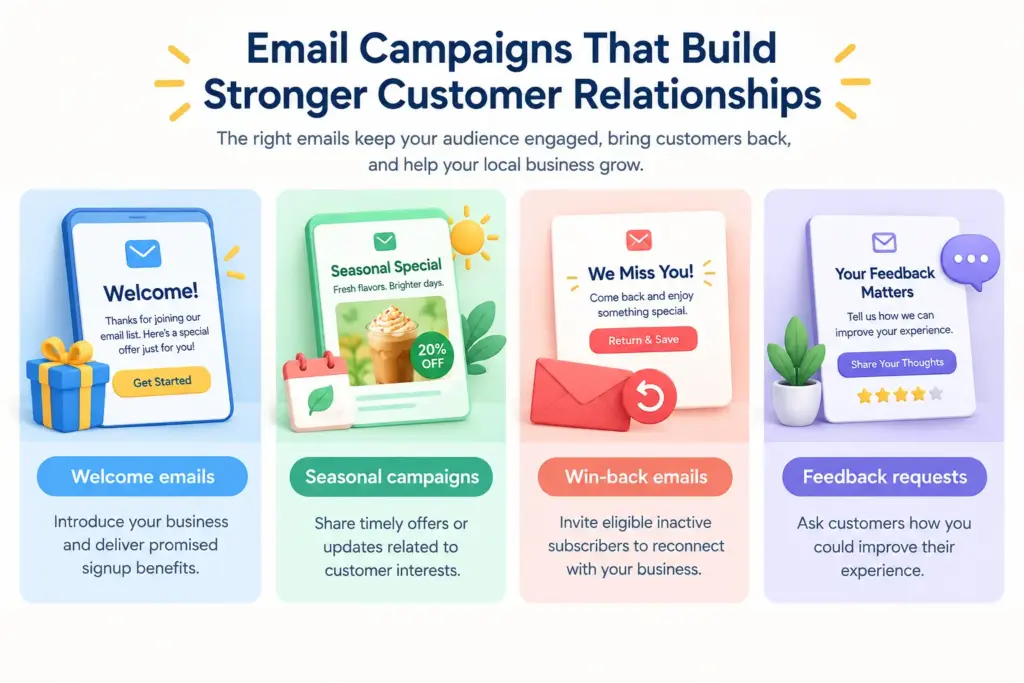
Personalize campaigns using appropriate preferences and customer interactions, while respecting consent and privacy requirements.
Choose email campaigns that match your customers’ needs and encourage ongoing engagement. Welcome emails build a positive first impression, seasonal campaigns highlight relevant offers, win-back emails reconnect with inactive subscribers, and feedback requests help you understand customer expectations. A balanced mix of these campaigns can strengthen customer relationships and encourage repeat business.
