- Happy Rewards
- October 8, 2026
Vistaprint Loyalty Card alternative
A loyalty card can be a simple way to encourage customers to come back, but the way that card works can make a big difference. Vistaprint loyalty cards are a familiar choice for businesses that want customized physical cards with their branding and reward details. They can work well for straightforward loyalty programs, especially when customers are happy to carry a card and staff are comfortable tracking visits manually.
However, physical cards also come with a few practical challenges. Customers can forget them, lose them, or leave them at home, while businesses may need to reorder cards whenever supplies run low or the loyalty offer changes. There is also limited opportunity to understand customer activity beyond the physical stamp or punch.
That is why many businesses are exploring a Vistaprint loyalty card alternative. Digital loyalty cards can make enrollment, reward tracking, and customer engagement easier while giving businesses more flexibility as their programs grow. Solutions such as HappyRewards.io offer an alternative approach for businesses that want to move beyond traditional printed cards and create a more convenient loyalty experience for their customers.
What Is a Vistaprint Loyalty Card?
A Vistaprint loyalty card is a simple printed tool businesses can use to encourage repeat purchases by giving customers a physical way to track their rewards. It is particularly common among cafés, salons, restaurants, retail stores, and other local businesses that want a straightforward customer loyalty program without requiring customers to download an app.
How Vistaprint Loyalty Cards Work
Vistaprint loyalty cards are primarily designed as printed loyalty cards. Customers carry the card with them and present it when they make a qualifying purchase.
A typical card may include:
- Business name and branding
- Loyalty program details
- Stamp or punch spaces
- Reward information
- Terms or conditions
- Contact or social media information
The physical format can be useful for businesses that want something customers can hold onto and recognize easily.
Custom Branding and Design
One advantage of using a printed card is the ability to create a design that matches the business’s visual identity. Colors, logos, images, typography, and messaging can all help make the card feel like an extension of the brand.
A well-designed loyalty card can also act as a small reminder of the business whenever customers see it in their wallet.
Stamps, Punches, or Reward Tracking
Traditional loyalty cards generally rely on stamp cards or punch systems. Staff members mark the card after an eligible purchase, and customers keep the card until they complete the required number of visits or purchases.
The system is easy to understand, but tracking remains largely manual. Staff need to remember to update the card, and customers need to remember to bring it.
Advantages of Traditional Loyalty Cards
For some businesses, physical cards still make sense because they are:
- Easy for customers to understand
- Simple for staff to manage
- Relatively inexpensive to produce
- Familiar to regular customers
- Useful for straightforward reward programs
- Tangible and easy to distribute in-store
Why Look for a Vistaprint Loyalty Card Alternative?
Printed loyalty cards can work well when a business wants a simple way to reward repeat customers. However, as a customer loyalty program grows, the limitations of a physical system can become more noticeable. From my perspective, the biggest issue is not that printed cards are ineffective. It is that they can become harder to manage when a business wants better customer engagement, easier tracking, and more flexibility. That is where a Vistaprint loyalty card alternative can make sense.
Physical Cards Can Be Lost or Forgotten
A physical loyalty card only works when customers have it with them. Someone might leave it at home, lose it in their wallet, or simply forget about it. That creates friction at the exact moment when you want to encourage another purchase.
For businesses relying on repeat customers, this can mean:
- Missed opportunities to record qualifying purchases
- Customers forgetting their reward progress
- Staff spending time explaining lost-card situations
- Less consistent participation in the loyalty program
A digital option can reduce some of these problems by making the loyalty experience accessible through a customer’s phone.
Reprinting Can Add Ongoing Costs
Printed cards are not a one-time expense. Businesses may need additional cards when their stock runs out, the branding changes, or the reward structure is updated.
Reprinting can involve:
- New card designs
- Printing quantities
- Shipping or delivery
- Storage
- Staff time spent managing inventory
For a small business, these costs may seem minor individually, but they can add up over time.
Limited Customer Data and Insights
A traditional card can show that a customer has earned stamps or punches, but it generally provides limited information about their broader behavior. Businesses looking to improve customer retention may want to understand patterns such as purchase frequency, reward activity, and engagement.
Without useful loyalty program analytics, it becomes harder to identify what is working and where customers are dropping off.
Manual Loyalty Tracking Takes Time
Physical cards depend heavily on staff. Someone needs to check the card, add the stamp or punch, and confirm that the purchase qualifies.
For a busy business, repetitive manual tasks can create unnecessary work. There is also more room for inconsistent tracking or simple human errors.
Digital Loyalty Offers More Convenience
A digital loyalty card can make the experience easier for both businesses and customers. Customers can access their loyalty information from their phone, while businesses can potentially manage rewards and customer activity from a centralized system.
The main benefits can include:
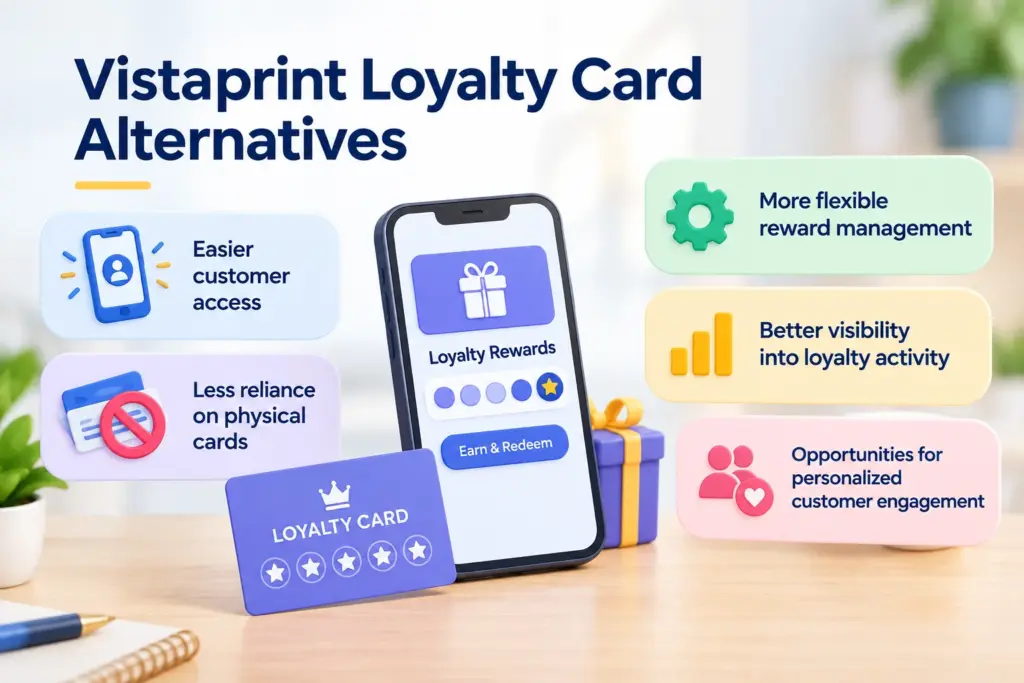
For businesses ready to move beyond the limitations of printed cards, a Vistaprint loyalty card alternative can provide a more flexible foundation for building and managing long-term customer loyalty.
Best Vistaprint Loyalty Card Alternatives
If you are moving beyond printed cards, the right Vistaprint loyalty card alternative depends on how much flexibility, automation, and customer information you need. Some platforms focus on simple digital stamp cards, while others combine loyalty with POS integration, customer profiles, rewards, and marketing tools. Here are four options worth considering.
1. HappyRewards
HappyRewards is a strong option for businesses that want to move from printed loyalty cards to a more flexible digital loyalty program. Its platform supports digital rewards cards, stamp cards, and membership cards, with integration for Apple Wallet and Google Wallet.
Businesses can use different reward structures depending on their goals, including points, stamps, referrals, birthdays, and VIP-style rewards. The platform also includes customer engagement, automated loyalty campaigns, and analytics designed to help businesses understand loyalty activity.
Best suited for: Small and growing businesses that want a branded, mobile-friendly loyalty system with multiple reward options.
2. Stamp Me
Stamp Me focuses on bringing the familiar stamp-card experience to customers’ phones. Customers can collect digital stamps and redeem rewards, while businesses can manage loyalty activity through its web-based Loyalty Portal.
The platform also provides tools for customer engagement, including push notifications, SMS, birthday rewards, and lapsed-customer campaigns on applicable plans. It does not currently integrate directly with POS systems, which may matter to businesses looking for a more connected checkout experience.
Best suited for: Businesses that want a straightforward digital stamp card rather than a broader points-based loyalty system.
3. Square Loyalty
Square Loyalty can be particularly useful for businesses already operating within the Square ecosystem. Customers can enroll through supported Square checkout experiences using their mobile number, and businesses can create programs based on purchases, spending, or visits.
Because loyalty connects with Square’s Point of Sale and Customer Directory, businesses can view customer loyalty activity alongside customer information. This makes it a practical choice when loyalty needs to work closely with an existing POS workflow.
Best suited for: Businesses already using Square POS that want loyalty built into their existing system.
4. Loyverse
Loyverse combines POS software, customer management, and loyalty functionality in one platform. Its loyalty program lets businesses award points for purchases and allow customers to redeem those points for discounts.
It also provides customer purchase history, loyalty activity, and customer information that businesses can use to better understand purchasing behavior. Customers can be identified through options such as name, phone number, or barcode-based loyalty cards.
Best suited for: Small businesses that want to combine their POS system, customer database, and loyalty program.
Vistaprint vs Digital Loyalty Cards: Cost, Convenience, and Flexibility
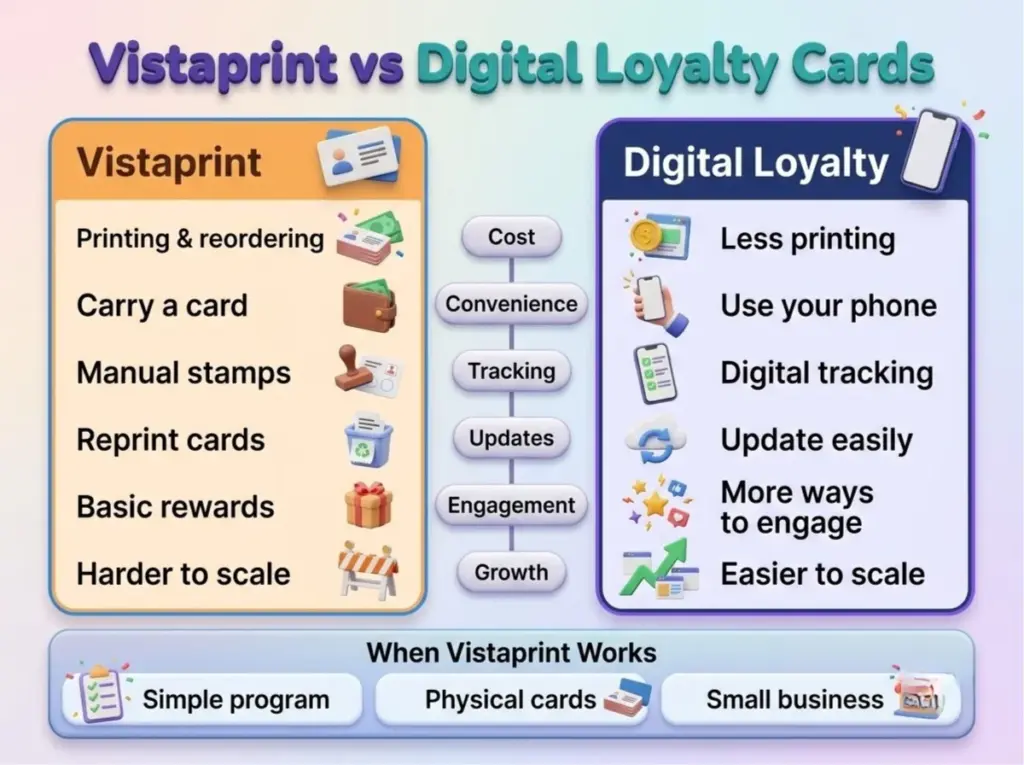
Choosing between a printed card and a digital loyalty card is less about which option is universally better and more about what fits your business model. A physical card can be perfectly practical for a simple program, while digital loyalty offers more flexibility as customer expectations and business needs evolve.
Initial and Ongoing Costs
Vistaprint involves design, printing, shipping, storage, and reordering costs. Digital systems generally reduce dependence on printed materials and can be easier to maintain over time. However, digital platforms may involve subscription or transaction fees, so compare the total cost rather than focusing only on the starting price.
Customer Convenience
Physical cards require customers to carry them and remember to present them. Digital loyalty lets customers access their loyalty card from their phone, reducing the chance of forgotten cards.
Loyalty Program Management
Managing stamps or punches manually can work for a small customer base. Digital platforms can centralize reward tracking, customer records, and program activity, reducing repetitive staff tasks.
Updating Rewards and Offers
Printed cards are fixed once produced. If you change the reward structure, you may need new cards. Digital programs can make it easier to adjust loyalty rewards, offers, or campaigns without redesigning and reprinting every card.
Customer Engagement
A printed card mainly records progress. Digital loyalty can support broader customer engagement through personalized offers, notifications, reward reminders, and other marketing activities, depending on the platform.
Business Growth and Scalability
Physical cards can become harder to manage as enrollment and locations increase. A digital customer loyalty program can provide more centralized management and useful insights for businesses planning to grow.