
- Happy Rewards
- September 30, 2026
How Vape Shops Can Increase Customer Retention
Getting a customer through your door once is great, but getting them to come back is where long-term growth begins. For vape shops, customer retention depends on more than a single promotion. A consistent customer experience, relevant communication, and a well-planned loyalty rewards program can all give customers a reason to return.
So, what can you actually do to build those repeat relationships? In this guide, we’ll explore how Vape Store Marketing can support retention, how a Vape Store Loyalty Program can encourage repeat purchases, and how customer segmentation, personalized marketing, and automated loyalty campaigns can make your efforts more relevant. We’ll also look at practical ways to re-engage inactive customers, measure customer loyalty, and use customer analytics to improve your retention strategy over time.
Understand What Makes Customers Return to a Vape Shop
Before talking about rewards, loyalty points, or retention campaigns, I like to start with a simple question: why would a customer choose to come back to your shop? A Vape Store Loyalty Program can provide an additional reason to return, but it works best when the overall customer experience is already positive. Customers remember whether their visit was convenient, whether they received useful assistance, and whether the store consistently met their expectations.
In this section, we’ll look at the factors that influence customer retention and how understanding customer behavior can help you create stronger long-term relationships.
Go Beyond the First Purchase
A first purchase shows that a customer was interested enough to buy, but it does not automatically create loyalty. I prefer to think of that first transaction as the beginning of the customer relationship.
Your Vape Store Marketing should therefore support the entire customer journey, from the first interaction to repeat engagement.
A simple journey might look like this:
First interaction → First purchase → Positive experience → Repeat visit → Loyalty → Long-term relationship
Ask yourself:
- What makes existing customers return?
- Is the shopping experience convenient?
- Are customers finding what they need?
- Is communication clear and consistent?
- Are returning customers given a reason to stay engaged?
These questions can reveal opportunities that a short-term promotion may miss.
Make the Customer Experience Consistent
Consistency is an important part of customer retention. Customers should know what to expect when they interact with your business.
That does not mean every visit has to feel the same. Instead, the basics should remain reliable.
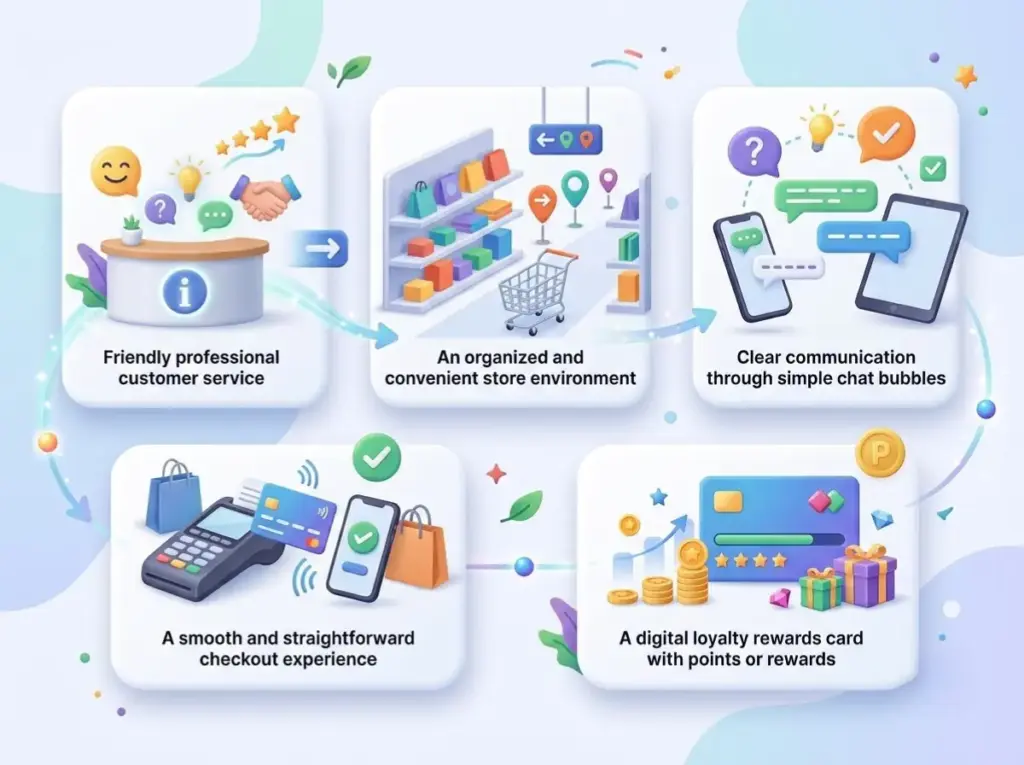
In my experience, small points of friction can quickly affect customer loyalty. Confusing reward rules, inconsistent service, or difficulty finding information can weaken an otherwise strong relationship.
That is why I would treat customer experience as the foundation and loyalty incentives as an additional layer.
Understand Different Customer Behaviors
Not every customer interacts with your store in the same way. Customer segmentation helps you recognize these differences instead of sending the same message to everyone.
You might have:
- New customers
- Repeat customers
- Frequent customers
- Occasional customers
- Inactive customers
- Loyalty members
Each group may need a different type of customer engagement. A new customer may need a simple introduction to your loyalty program, while an inactive customer may need a relevant re-engagement message.
You do not need dozens of complicated segments. Start with meaningful behavioral differences and refine them as you collect more customer data.
Use Customer Feedback to Improve Retention
Sometimes the best way to understand retention problems is simply to ask customers.
I like using customer feedback as a practical diagnostic tool. Ask whether the experience was easy, whether customers found what they needed, and what could make their next visit better.
Look for recurring patterns rather than isolated comments. If several customers struggle with the same part of the experience, that is a useful signal for your customer retention strategy.
The key takeaway is simple: before building more promotions, understand what already makes customers want to return. Once you know that, your Vape Store Marketing and Vape Store Loyalty Program can be designed around real customer needs rather than assumptions.
Build a Strong Vape Store Marketing Strategy Around Retention
Once you understand why customers return, the next step is connecting those insights to your Vape Store Marketing strategy. I’ve found that retention works better when marketing does not stop after the first purchase. Instead, every message, interaction, and campaign should help maintain the customer relationship and create a consistent reason for customers to stay engaged.
Connect Marketing With the Customer Journey
Think of marketing as a continuous customer journey rather than a one-time acquisition activity. A customer may discover your store, make a first purchase, return later, and eventually become a regular customer.
Your marketing can support each stage:
Different customer stages call for different marketing approaches. For a new customer, the focus should be on welcoming them and introducing the overall store experience. A first-time buyer can receive communication that encourages continued engagement, while a repeat customer can be recognized for their ongoing activity. For a frequent customer, the goal is to strengthen customer loyalty through relevant engagement and rewards. Meanwhile, inactive customers can be approached with appropriate re-engagement efforts designed to bring them back into the customer journey.
When I plan a retention strategy, I always ask what the customer should experience next. That simple question helps prevent marketing from becoming a collection of unrelated promotions.
Create Consistent Customer Communication
Customers should not hear from your business only when you want them to make another purchase. Useful and consistent communication can strengthen customer engagement over time.
Depending on your business and applicable requirements, communication could include:
- Loyalty updates
- Reward notifications
- Store information
- Membership updates
- Customer appreciation messages
- Relevant program reminders
The goal is to make communication useful rather than overwhelming. I’ve seen businesses send too many generic messages and then wonder why engagement falls. Relevance usually matters more than volume.
Use Customer Segmentation to Make Marketing More Relevant
One of the easiest ways to improve retention marketing is to stop treating every customer as the same.
With customer segmentation, you can organize customers according to meaningful behaviors, such as purchase frequency, loyalty participation, or recent engagement.
For example:
- New customers can receive introductory communication.
- Returning customers can receive loyalty-related updates.
- Frequent customers can receive milestone recognition.
- Inactive customers can enter appropriate win-back campaigns.
This makes personalized marketing more practical because you are responding to customer behavior instead of making assumptions about everyone.
Combine Online and In-Store Experiences
Your digital marketing should connect naturally with the physical store experience. If customers discover your business online but receive completely different information in-store, the experience can feel disconnected.
I prefer thinking of this as one customer journey:
Digital discovery → Store visit → Purchase → Loyalty engagement → Repeat interaction
A digital loyalty program can help connect these stages by giving customers a convenient way to access their rewards and membership information.
Focus on Value Instead of Constant Promotions
Marketing does not always have to mean another discount. Long-term customer retention can also come from making customers feel recognized and keeping communication relevant.
Consider focusing on:
- Useful loyalty information
- Clear program benefits
- Customer appreciation
- Relevant updates
- Convenient digital experiences
- Meaningful milestones
The stronger the underlying relationship, the less your retention strategy has to depend on constant promotions.
A thoughtful Vape Store Marketing strategy should therefore work alongside your Vape Store Loyalty Program, customer experience, and customer engagement efforts. When these pieces support one another, marketing becomes part of a broader retention system rather than simply a way to generate another transaction.
Launch a Vape Store Loyalty Program That Encourages Repeat Visits
Once the customer experience and marketing foundation are in place, a Vape Store Loyalty Program can give customers another practical reason to stay connected with your store. In my experience, the most effective loyalty programs are not complicated. They make the value clear, keep rewards easy to understand, and fit naturally into the existing customer journey.
Why a Vape Store Loyalty Program Can Support Retention
A loyalty program can turn occasional interactions into an ongoing relationship by giving customers a structured way to engage with your business. Instead of relying entirely on individual promotions, you can create a consistent loyalty rewards program that recognizes eligible customer activity.
The basic idea is simple:
Purchase or engagement → Earn rewards → Reach a milestone → Redeem reward → Continue engagement
This can support repeat purchases and strengthen customer loyalty when the program is easy to use.
Choose a Simple Reward Structure
I always recommend starting with simplicity. If customers need a calculator to understand your rewards, the program is probably too complicated.
Depending on your business model and applicable regulations, a loyalty program might use:
- Points-based rewards
- Digital rewards
- Cashback-style incentives
- Membership benefits
- Milestone rewards
- Points: Encourage continued activity
- Milestones: Recognize ongoing engagement
- Membership: Create a sense of belonging
- Digital rewards: Make rewards easy to access
The exact structure should depend on your business goals, customer expectations, and applicable laws and platform policies.
Make Rewards Relevant to Customer Behavior
A good customer loyalty strategy should reflect how customers actually interact with your business. Look at behaviors such as visit frequency, loyalty participation, and reward engagement.
For example, you might use different recognition for occasional and frequent customers rather than giving every customer exactly the same experience.
This is where customer segmentation becomes useful. Instead of creating random rewards, you can use customer data to understand which types of incentives generate meaningful engagement.
Introduce VIP or Tiered Loyalty
For customers who consistently engage with your store, a VIP loyalty program or tiered structure can provide another way to recognize ongoing participation.
A simple structure might include:
- Entry-level membership
- Higher engagement tier
- VIP recognition
The important part is transparency. Customers should understand how tiers work, what benefits are available, and what conditions apply.
Add Referral-Based Loyalty
Customer referrals can also become part of a broader loyalty strategy where appropriate. A referral program can recognize customers who introduce eligible new customers to the business.
I’ve found that referral programs work best when the rules are straightforward. Customers should know how referrals are tracked, what qualifies, and when rewards become available.
Keep the Loyalty Experience Digital and Convenient
A digital loyalty program can reduce friction by giving customers convenient access to their rewards and membership information.
Useful features can include:
- Digital loyalty cards
- Reward tracking
- Mobile access
- Digital notifications
- Simple redemption processes
Technology should make the experience easier, not add another layer of complexity.
A well-designed Vape Store Loyalty Program ultimately works as part of a larger customer retention strategy. When rewards are simple, relevant, and convenient, they can complement your Vape Store Marketing efforts and give customers another reason to remain engaged with your business.
Personalize Customer Engagement to Increase Retention
A loyalty program can give customers a reason to return, but personalization can make those interactions feel more relevant. I’ve found that customers are more likely to engage when communication reflects their relationship with a business instead of treating everyone as part of the same audience. That is where customer segmentation, personalized marketing, and thoughtful customer engagement can strengthen your overall customer retention strategy.
Stop Treating Every Customer the Same
One of the biggest mistakes I see in retention marketing is sending the same message to every customer. A new customer and a frequent customer have completely different relationships with your store, so their communication should not necessarily look identical.
Instead, consider factors such as:
- Purchase frequency
- Recent activity
- Loyalty participation
- Reward engagement
- Customer lifecycle stage
This information can help your Vape Store Marketing become more relevant without making the strategy unnecessarily complicated.
Segment Customers Based on Engagement
Customer segmentation allows you to organize customers into useful groups based on behavior.
I usually recommend starting with a few meaningful segments rather than creating too many categories. Once you understand the behavior of each group, you can refine your strategy using customer data and customer analytics.
Recognize Customer Milestones
Customers do not always need another generic promotion to feel recognized. Customer appreciation can also come through meaningful milestones within an appropriate loyalty program.
Depending on the program structure, these could include:
- Loyalty milestones
- Membership anniversaries
- Reward milestones
- Program achievements
The key is to make recognition feel intentional. A milestone message can remind customers that their continued engagement is noticed while also reinforcing the value of the loyalty rewards program.
Re-Engage Customers Who Have Stopped Returning
Inactive customers are another important part of customer retention. Instead of waiting indefinitely for them to return, you can identify periods of inactivity and develop appropriate win-back campaigns.
I like to think of this as a gentle reminder rather than a constant sales push. First, identify when customers typically become inactive. Then consider whether a relevant loyalty update, customer appreciation message, or other permitted communication could encourage renewed engagement.
Track the results afterward. If a particular campaign consistently brings customers back, that information can help improve your retention strategy.
Automate Routine Loyalty Communications
As a customer base grows, manually managing every loyalty interaction becomes difficult. Marketing automation can help handle predictable communications while your team focuses on the in-store customer experience.
Automation can support activities such as:
- Reward notifications
- Loyalty updates
- Milestone reminders
- Membership communications
- Appropriate re-engagement messages
The important distinction is that automation should support personalization, not replace it. I see the best results when businesses use automation for routine communication while keeping the overall customer experience thoughtful and human.
Ultimately, personalization makes a Vape Store Loyalty Program more than a collection of rewards. Combined with customer segmentation, personalized marketing, and marketing automation, it can help create a more relevant customer journey and support stronger long-term customer loyalty.
Turn Loyalty Into a Long-Term Customer Retention System
A Vape Store Loyalty Program should not operate as a standalone rewards card. I’ve found that loyalty becomes much more valuable when it connects with the entire customer journey, from the first visit to ongoing engagement. The goal is to create a system where customer interactions provide useful insights, and those insights help you improve the experience over time.
Connect Loyalty With the Entire Customer Journey
Think of loyalty as one part of a larger retention process:
First Visit → Customer Profile → Loyalty Enrollment → Repeat Visit → Reward → Continued Engagement → Long-Term Loyalty
Each stage allows you to understand what customers need and how they interact with your business.
For example, if a customer joins your loyalty program but never engages with their rewards, that could indicate that the program is difficult to understand or that its benefits are not clear. That insight can help you improve the customer experience rather than simply adding more rewards.
Reward More Than Just Purchases
A customer loyalty strategy does not always have to focus exclusively on transactions. Depending on your program structure and applicable regulations, you can recognize appropriate forms of customer engagement, such as eligible referrals or loyalty milestones.
Possible recognition areas include:
- Loyalty milestones
- Membership participation
- Eligible customer referrals
- Reward achievements
- Ongoing program engagement
I prefer this approach because it makes loyalty feel like an ongoing relationship rather than a simple discount mechanism. At the same time, every reward should have clear terms and comply with applicable laws and platform requirements.
Build a Feedback Loop
The strongest customer retention strategy is one that keeps improving. Your loyalty program can help create a feedback loop where customer behavior informs future decisions.
A simple process looks like this:
- Customer action: Track engagement
- Data collection: Gather customer data
- Analysis: Identify behavior patterns
- Personalization: Adjust communication
- Response: Monitor engagement
- Improvement: Refine the loyalty strategy
For me, this is where customer analytics becomes particularly useful. Instead of assuming that a reward is effective, you can examine enrollment, engagement, redemption, and repeat activity to understand what is actually happening.
Make Loyalty Part of Everyday Operations
Even the best digital loyalty system will struggle if customers or employees do not understand how it works.
Make sure your team knows:
- How customers can join
- How rewards are earned
- How rewards are redeemed
- What program rules apply
- How to answer common loyalty questions
The process should feel natural during the customer interaction rather than like an additional administrative task.
I’ve always found that simple programs are easier for both employees and customers to adopt. When everyone understands the system, your Vape Store Marketing and loyalty efforts can work together more consistently.
Ultimately, loyalty becomes more powerful when it is treated as an ongoing customer engagement system rather than a one-time promotion. By connecting rewards, customer data, feedback, and everyday interactions, your Vape Store Loyalty Program can become an important part of a sustainable customer retention strategy.
Measure Whether Your Retention Strategy Is Working
You can have a great Vape Store Loyalty Program and a thoughtful Vape Store Marketing strategy, but how do you know whether they are actually improving customer retention? I always recommend looking beyond enrollment numbers. A program can attract plenty of members while producing little change in repeat engagement. Tracking the right customer retention metrics helps you understand what is working and where your strategy needs adjustment.
Track Repeat Purchase Rate
Repeat purchase rate is one of the clearest indicators of whether customers are returning. Rather than focusing only on total sales, look at how many customers make another eligible purchase within your chosen measurement period.
For example, compare:
- Customers who made one purchase
- Customers who returned for another purchase
- Customers who became frequent customers
- Customers who became inactive
Tracking these patterns over time can reveal whether your retention efforts are changing customer behavior.
Monitor Customer Retention Rate
Your customer retention rate provides a broader view of how effectively your business is maintaining its existing customer base.
I like to compare retention across different periods and customer segments rather than looking at a single number. This can help identify whether retention is improving among new customers, repeat customers, or loyalty members.
Measure Loyalty Program Engagement
Enrollment alone does not tell you whether customers value your loyalty program. Look at how members actually interact with it.
Useful loyalty program metrics include:
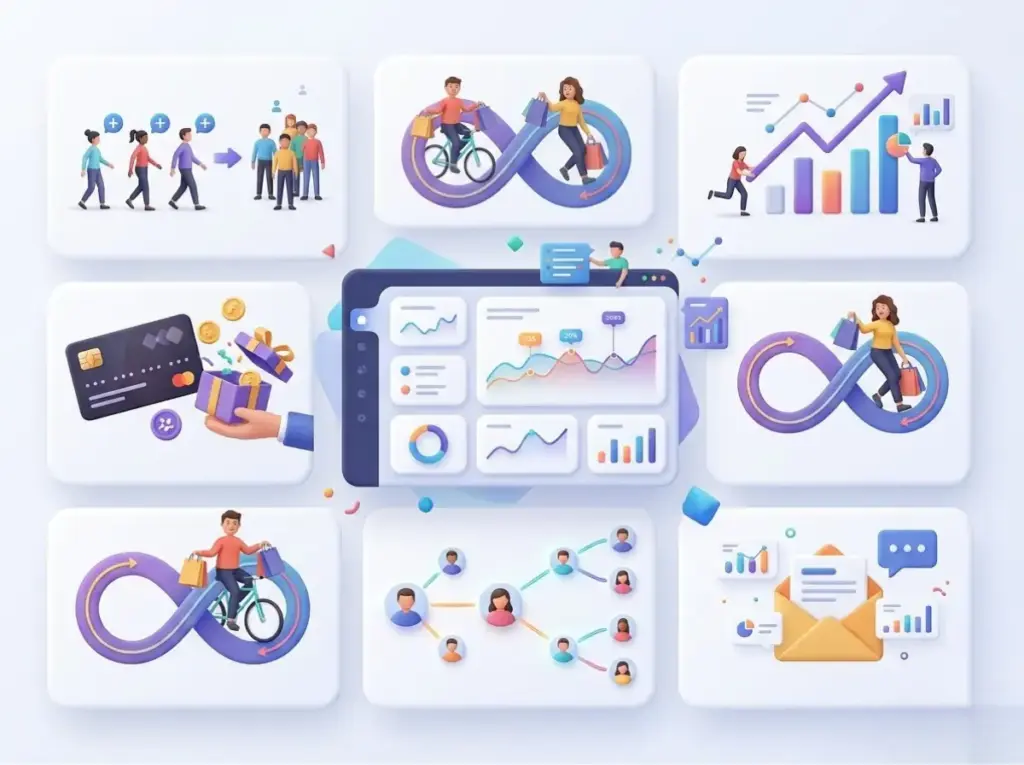
For me, reward redemption rate is particularly useful because it shows that customers are not simply signing up and forgetting about the program.
Identify Customer Drop-Off
Retention data can also show you where customers stop engaging.
Ask questions such as:
- When do new customers become inactive?
- Which customer segments have the highest drop-off?
- Are loyalty members returning more frequently?
- Which campaigns generate renewed engagement?
- Are customers earning rewards but not redeeming them?
This type of analysis can reveal problems that total sales numbers may hide.
Use Analytics to Improve the Strategy
The real value of customer analytics comes from turning data into action. If one reward structure produces stronger engagement, you can investigate why. If a particular customer segment becomes inactive quickly, you can examine its experience and communication.
I prefer treating measurement as a continuous feedback loop:
Measure → Analyze → Adjust → Test → Measure Again
You do not need to change everything at once. Small, measured adjustments can make it easier to understand what is influencing customer loyalty.
Ultimately, a successful customer retention strategy is not something you set up once and forget. By monitoring repeat purchases, loyalty engagement, customer retention metrics, and customer behavior, you can keep refining your Vape Store Marketing and Vape Store Loyalty Program around what your customers actually respond to.
Conclusion
Customer retention does not come from one promotion or a single reward. As we’ve discussed, it starts with a reliable customer experience, continues through relevant Vape Store Marketing, and strengthens with a simple Vape Store Loyalty Program.
From understanding customer behavior and using customer segmentation to personalizing communication, re-engaging inactive customers, and tracking customer retention metrics, each part of the strategy can contribute to stronger customer loyalty. The key is to keep the experience useful, convenient, and easy for customers to understand.
This is where Happyrewards.io can help bring your loyalty efforts together with tools for digital loyalty programs, loyalty rewards, customer engagement, and retention campaigns.
So, take a look at your current strategy. Are you simply attracting customers, or are you giving customers meaningful reasons to keep coming back?
