
In 2026, customer acquisition has become more expensive, digital advertising costs continue to rise, and consumers are overwhelmed with choices. Yet despite constant shifts in technology and consumer behavior, one strategy continues to outperform almost every other growth tactic: loyalty programs.
Many businesses once believed loyalty programs were outdated “points-and-discount” systems. But modern loyalty has evolved far beyond punch cards and coupons. Today’s best loyalty ecosystems combine personalization, convenience, gamification, mobile engagement, emotional connection, and data-driven experiences.
The result? Brands with strong loyalty programs are increasing customer lifetime value, reducing churn, and creating predictable recurring revenue — even during economic uncertainty.
For businesses in 2026, loyalty is no longer optional. It is infrastructure.
Why Loyalty Programs Matter More Than Ever
The economics are simple.
Acquiring a new customer is significantly more expensive than retaining an existing one. Research from
Harvard Business Review
and
Bain & Company
consistently shows that even a modest increase in customer retention can dramatically improve long-term profitability.
This is exactly why brands are shifting budgets away from pure acquisition and toward retention ecosystems.
Modern consumers are also changing:
- Gen Z expects instant rewards and mobile-first experiences
- Customers switch brands quickly when there is no emotional connection
- Subscription fatigue has increased the importance of perceived value
- Personalized offers outperform generic discounts
- Consumers want experiences, status, and convenience — not just coupons
The brands that understand this are dominating their industries.
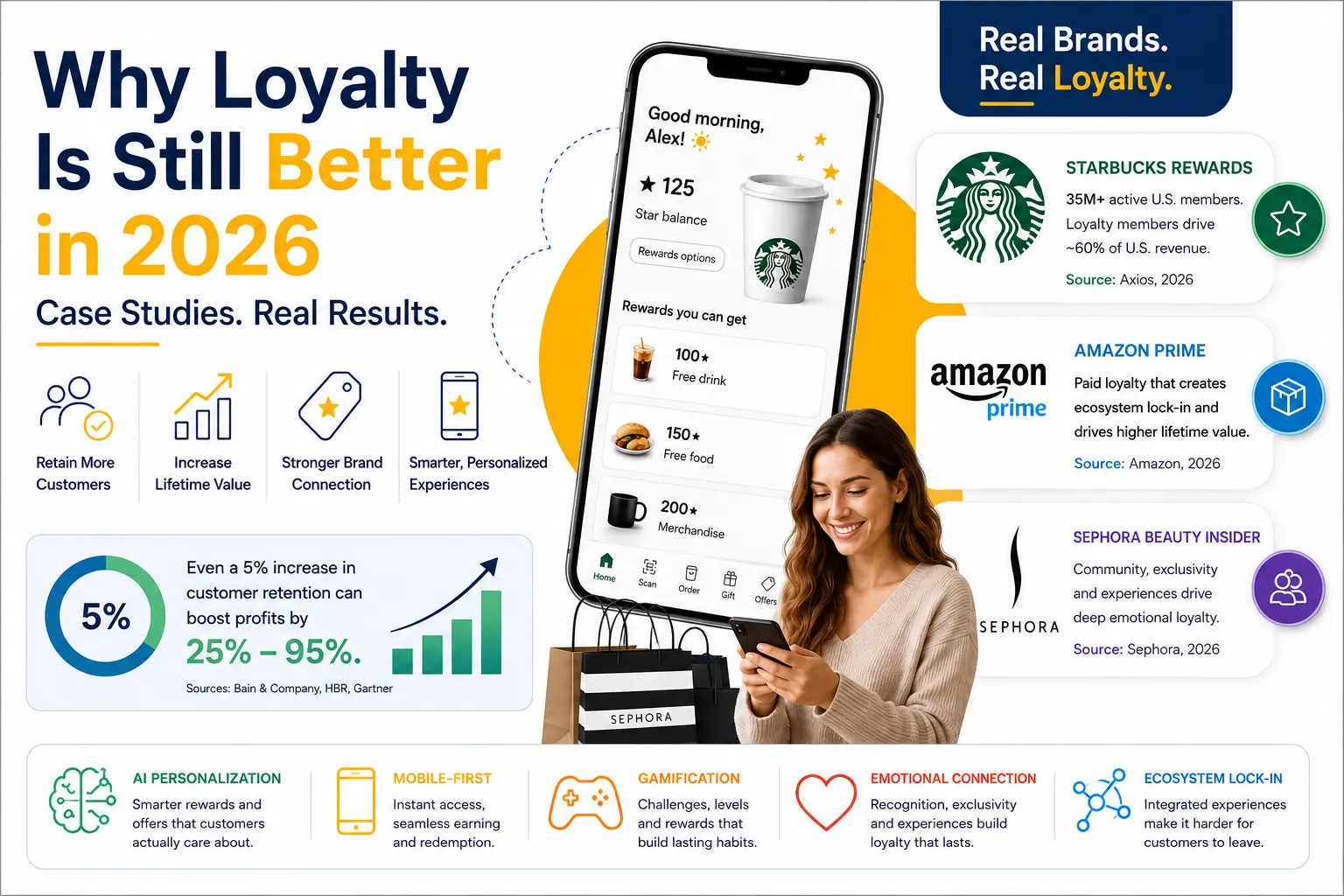
Loyalty in 2026 Is Not About Discounts
The biggest misconception about loyalty programs is that they are simply discount systems.
That is no longer true.
The best-performing loyalty programs in 2026 focus on:
1. Convenience
Customers stay loyal when the experience becomes frictionless.
2. Emotional Connection
People return to brands that make them feel recognized.
3. Habit Formation
Apps, streaks, rewards, and gamification encourage repeat behavior.
4. Data Personalization
Modern loyalty systems use behavioral data to deliver highly relevant offers.
5. Ecosystem Lock-In
The more integrated the rewards system becomes, the harder it is for customers to switch competitors.
This is why companies like
Starbucks,
Amazon Prime,
and
Sephora
continue investing heavily into loyalty even in 2026.
Case Study #1: Starbucks Rewards
Few loyalty programs in the world are as influential as Starbucks Rewards.
By 2026, Starbucks had over 35 million active rewards members in the United States alone, with loyalty members contributing a major portion of company-operated revenue.
Source:
Axios
But Starbucks did not succeed because of free coffee.
It succeeded because it turned loyalty into behavior.
What Starbucks Did Right
Mobile-First Ecosystem
The Starbucks app combines:
- Ordering
- Payments
- Rewards
- Promotions
- Personalized recommendations
- Gamified challenges
This creates a seamless customer experience.
Instant Gratification
Customers see progress immediately after every purchase. Small wins create habit-forming behavior and increase repeat visits.
Gamification
Double-star days, seasonal bonuses, challenges, and tier upgrades create urgency and excitement.
Emotional Engagement
Starbucks expanded its tiered system with premium perks and exclusive experiences, transforming loyalty from “discounting” into identity and status.
Reference:
Reuters
The Business Impact
Starbucks estimated that even one additional purchase per year from loyal members could generate hundreds of millions in additional revenue.
That is the power of retention economics.
Case Study #2: Amazon Prime
Amazon built one of the most successful loyalty ecosystems in history with Amazon Prime.
Unlike traditional rewards systems, Prime is a paid loyalty program.
Customers pay to stay loyal.
That completely changed the industry.
Why Prime Works
Prime combines:
- Fast shipping
- Streaming
- Exclusive deals
- Gaming perks
- Grocery benefits
- Cloud storage
- Ecosystem integration
The more services customers use, the more difficult it becomes to leave Amazon.
This is called ecosystem lock-in.
The genius of Prime is psychological: once customers pay for membership, they naturally want to maximize value from the subscription. That increases purchase frequency.
The Real Lesson
Prime proved that loyalty is not about giving things away.
It is about increasing perceived value and convenience.
Many modern SaaS companies, delivery apps, and eCommerce brands are now replicating this model through:
- VIP memberships
- Paid reward tiers
- Exclusive access clubs
- Subscription loyalty
Case Study #3: Sephora Beauty Insider
Sephora created one of the strongest emotional loyalty systems in retail.
Unlike basic transactional programs, Sephora built a community-driven loyalty ecosystem.
What Makes Sephora Different
Tiered Status
Customers move through levels based on spending:
- Insider
- VIB
- Rouge
Higher tiers unlock exclusivity and prestige.
Experiential Rewards
Instead of simple discounts, Sephora offers:
- Early access
- Limited drops
- Exclusive products
- Beauty events
- Personalized recommendations
Community Integration
The brand combines loyalty with:
- Social proof
- Beauty communities
- Tutorials
- User-generated content
This creates emotional retention, not just transactional retention.
Reference:
99Minds
Why Loyalty Programs Are Growing in 2026
1. Rising Advertising Costs
Paid ads are becoming more expensive across platforms like Google, Meta, TikTok, and YouTube.
Brands can no longer rely only on acquisition.
Retention now delivers higher ROI.
2. AI Personalization
AI-powered recommendation systems are making loyalty smarter.
Modern programs can:
- Predict churn
- Recommend rewards
- Trigger offers automatically
- Personalize experiences in real time
AI has transformed loyalty from static points systems into intelligent retention engines.
Reference:
Reloadly
3. Mobile-First Consumers
Consumers expect rewards inside apps, not through physical cards.
The most successful loyalty programs now integrate:
- Push notifications
- Digital wallets
- Real-time rewards
- QR-based earning
- Instant redemption
4. Gen Z Behavior
Gen Z consumers actively choose brands based on loyalty perks and app experience.
This generation grew up with gamification and expects it everywhere.
Reference:
Business Insider
Common Reasons Loyalty Programs Fail
Not every loyalty system works.
Many businesses launch weak programs that customers ignore.
The most common mistakes include:
- Overcomplicated rules
- Weak rewards
- No emotional connection
- Lack of mobile integration
- No data personalization
What Businesses Should Do in 2026
Build Omnichannel Loyalty
Customers should earn and redeem rewards seamlessly across:
- App
- Website
- Physical store
- POS systems
Use Gamification
Challenges, streaks, milestones, badges, and levels dramatically improve engagement.
Reward Behavior — Not Just Purchases
Reward:
- Reviews
- Referrals
- Social sharing
- App engagement
- Community participation
Focus on Experience
Experiential rewards outperform generic discounts over time.
Track Metrics That Matter
Key loyalty KPIs include:
- Repeat purchase rate
- Churn rate
- Customer lifetime value
- Redemption rate
- Average order value
- Visit frequency
The Future of Loyalty
The next generation of loyalty programs will likely include:
- AI-driven personalization
- Real-time dynamic rewards
- Subscription-based loyalty
- Cross-brand reward ecosystems
- Predictive retention automation
But the core principle will remain unchanged:
Customers stay loyal when brands consistently create value, convenience, recognition, and emotional connection.
Technology may evolve, but human psychology does not.
Final Thoughts
Loyalty programs are not dying in 2026.
They are becoming more important.
The brands winning today are not simply selling products. They are building ecosystems customers do not want to leave.
Companies like Starbucks, Amazon, and Sephora prove that loyalty programs can drive billions in recurring revenue when executed correctly.
For businesses, the lesson is clear:
Customer acquisition gets attention.
Customer loyalty builds empires.
