
- Happy Rewards
- March 17, 2026
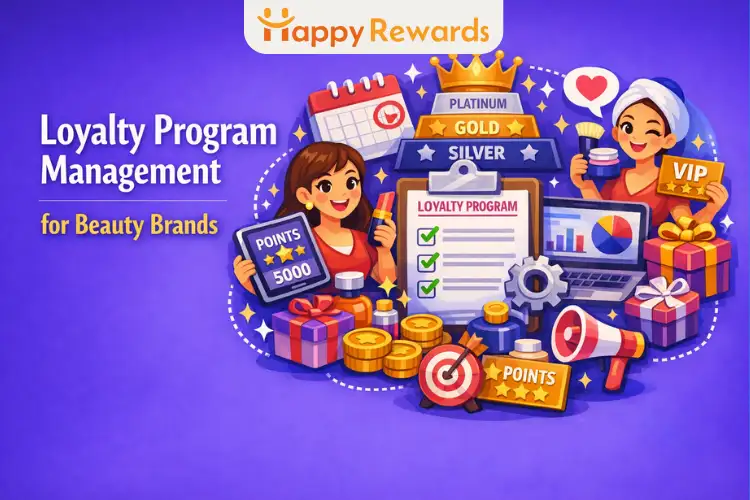
Loyalty Program Management for Beauty Brands
The beauty industry is one of the most competitive markets on the planet. New brands launch every single day.
Customers are flooded with options, Instagram ads, and influencer recommendations. And yet, the brands that are actually winning — Sephora, Ulta, MAC — all have one thing in common: a rock-solid loyalty program management strategy.
This isn’t just about giving out points. It’s about building relationships. It’s about making your customers feel like they belong to something bigger than a transaction. And trust me — when done right, a well-managed loyalty program can completely transform your customer retention, your revenue, and your brand’s identity.
In this guide, we’re going to walk you through everything — from why beauty brands desperately need loyalty program management, to the types of programs that actually work, to how tools like HappyRewards.io are making it ridiculously easy to pull it all off. Let’s dive in!
Think of this guide as a conversation between friends — not a boring textbook. By the end, you’ll have a clear roadmap to build or upgrade your beauty brand’s loyalty program, backed by real examples, practical tips, and smart strategy. Ready? Let’s go.
Why Beauty Brands Can’t Afford to Ignore Loyalty Program Management?
Let me throw some numbers at you that’ll make you sit up straight.
According to LoyaltyLion, a staggering 95% of Ulta Beauty’s total sales come from members of its loyalty program. Not 20%. Not 50%. Ninety-five percent. That’s not a coincidence — that’s the power of smart loyalty management at work.
Here’s why this matters for your brand specifically. Beauty customers are unique. They’re buying cleansers every 2–3 months, mascara every 3–6 months, and serums on repeat.
These are predictable purchase cycles. If you’re not using a loyalty program to tap into those natural touchpoints, you’re basically leaving money on the table every single month.
Now add in the churn rate problem. Beauty brands that don’t actively manage retention see customers drift away — not because they hated your product, but because a competitor offered them something shinier.
This is where retention marketing becomes your secret weapon. Brands with effective loyalty programs see 30% higher customer retention and 25% increased average order values, according to industry benchmarks.
And let’s talk about Customer Lifetime Value (CLV) — this is the real metric you should be obsessing over. A customer who comes back 5 times is worth 5x more than one who buys once. Churn reduction by even a small margin compounds dramatically over time. The maths really is that simple.
Beyond numbers, there’s something deeply personal about beauty. People develop emotional connections with the brands that “get” their skin type, their aesthetic, their vibe.
That emotional loyalty translates directly into brand advocacy — loyal customers who don’t just rebuy, they recommend. They post on Instagram. They tag friends. They become your unpaid marketing team.
In a world where customer acquisition costs are skyrocketing — we’re talking $50–$150+ per customer on Instagram ads alone — the smartest move is to invest deeply in the customers you already have. That starts with having a loyalty program, but it doesn’t end there. The real magic lies in managing that program with intention.
So if you’ve been treating your loyalty program as a “set it and forget it” feature, this guide is about to change that perspective completely. Because in 2025, the brands that win are the ones that treat loyalty as a living, breathing strategy — not a checkbox.
Types of Loyalty Programs That Actually Work for Beauty Brands
Not all loyalty programs are built equal — and in the beauty space, the type you choose can make or break your entire retention strategy. Let’s walk through the models that are crushing it right now.
1. Points-Based Programs — The Classic That Still Slaps
This is the OG of loyalty programs — and for good reason. A points-based system rewards customers for every purchase, review, referral, or social share. They collect points, and when they’ve got enough, they redeem them for rewards (discounts, free products, you name it). The beauty of this model (pun intended) is that it creates a habit loop. Every action feels rewarding, which keeps customers coming back.
Brands like Mirenesse call their points “Love Points” — simple, on-brand, and clever. The redemption rate is one of the key metrics you’ll want to watch here. High redemption = high engagement = healthy program.
2. Tiered Loyalty Programs — Creating VIP FOMO
Tiered loyalty programs are where things get exciting. Imagine Silver, Gold, and Platinum tiers — each unlocking better VIP benefits, exclusive offers, early access to product launches, and personalized perks. Sephora’s Beauty Insider program (with its Insider, VIB, and Rouge tiers) is the gold standard here. The higher the tier, the more customers feel like they belong to an exclusive club — and nobody wants to drop a tier.
This model is brilliant for driving up average order value because customers will spend just a little more to reach the next tier. LoyaltyLion research shows tiered programs significantly boost average order values, especially when the tier benefits are genuinely desirable.
3. Referral Programs — Turn Fans Into Marketers
Referral programs are one of the most cost-effective growth strategies for beauty brands. When a loyal customer refers a friend and both of them earn a referral bonus — a discount, a free product, extra points — everybody wins.
More importantly, referred customers tend to have higher customer lifetime value because they came in through a trusted recommendation, not a cold ad.
4. Gamification — Make Loyalty Fun
This is where beauty brands are getting seriously creative. Gamification means adding game-like elements — badges, leaderboards, progression bars, challenges, and streaks — to your loyalty program.
Glow Recipe’s Club Glow does this beautifully with their three tiers named Bouncy, Dewy, and Ultimate. The names alone make you want to level up.
Gamified rewards create emotional engagement, not just transactional ones. When customers feel like they’re on a journey with your brand, they become invested in the outcome.
5. Subscription & Membership Programs — Loyalty on Autopilot
The subscription model is gaining massive traction in beauty. Customers pay a monthly or annual fee for premium benefits — free shipping, cashback, early access, exclusive products. Amazon Prime’s Beauty Program is a textbook example.
The upfront commitment creates deep brand attachment, and the frequency of purchase goes through the roof because customers want to get their money’s worth.
Whether you’re going points-based, tiered, gamified, or subscription-based — the key is choosing the model that aligns with your customers’ behavior and your brand’s identity.
And ideally? You’d blend two or more of these together. The best loyalty programs in beauty today are hybrid models — flexible, fun, and deeply personal.
Looking for inspiration on how to structure your program? Explore real-world loyalty program examples on our blog →
The Key Elements of Killer Loyalty Program Management for Beauty Brands
Okay, so you’ve picked your program type. Now what? This is where the real craft of loyalty program management begins.
Let’s talk about the elements that separate an average program from one your customers actually rave about.
1. Personalization — Because One Size Fits Nobody
In the beauty world, personalization isn’t a nice-to-have — it’s the whole game. Your customers have different skin tones, hair textures, beauty goals, and shopping behaviors.
A 22-year-old shopping for acne skincare needs different rewards and communications than a 40-year-old looking for anti-aging serums.
Smart loyalty management uses customer segmentation and first-party data to serve each customer an experience that feels tailor-made.
Think personalized product recommendations, birthday rewards, anniversary rewards, and offers based on actual purchase history. This is personalized marketing at its best — and it drives massive engagement.
2. Omnichannel Loyalty — Meet Customers Everywhere They Are
Your customers shop on your website, your app, at pop-up events, and sometimes in physical stores. Your loyalty program needs to follow them everywhere seamlessly.
That’s the essence of omnichannel loyalty — a unified experience whether they’re browsing on a mobile loyalty app, checking their digital wallet, or redeeming points in-store.
Antavo’s research on beauty loyalty highlights that brands offering seamless omnichannel experiences see significantly higher program participation rates and a deeper emotional connection with members.
3. Behavioral Triggers & Automation — The Smart Way to Engage
Imagine automatically sending a push notification to a customer who hasn’t shopped in 60 days, with a personalized “We miss you — here’s 100 bonus points” message. That’s automation powered by behavioral triggers doing its thing.
Great loyalty program management uses triggers based on real customer behavior — when they browse a product without buying, when their points are about to expire, and when they reach a tier milestone.
These micro-moments are golden opportunities to re-engage and deepen the relationship. Paired with smart campaign management, automation can run your entire retention engine on autopilot.
4. CRM Integration & First-Party Data
Here’s a truth bomb: your loyalty program is one of the best sources of first-party data you have. Every swipe, every redemption, every product review tells you something about your customer.
When your loyalty platform integrates with your CRM integration tools — like Klaviyo, HubSpot, or Salesforce — you can use that data to power hyper-targeted email marketing, SMS campaigns, and even product development decisions.
5. Surprise and Delight — The Secret Loyalty Weapon
Nobody expects a free deluxe sample on their third order. Nobody expects a handwritten thank-you card. Nobody expects a surprise and delight moment — which is exactly why it works so well.
These unexpected gestures create powerful emotional memories and skyrocket your Net Promoter Score (NPS). When customers feel genuinely appreciated — not just rewarded — that’s when real loyalty is born.
Combining all these elements — personalization, omnichannel presence, smart automation, data integration, and those delightful surprises — is what elevates your loyalty program from functional to phenomenal.
And yes, managing all of this is a lot, which is exactly why having the right technology partner matters so much.
Common Challenges in Loyalty Program Management (And How to Tackle Them)
Let’s get real for a second. Running a loyalty program for a beauty brand isn’t always sunshine and glow serums.
There are some very real challenges that trip brands up — and knowing them upfront saves you a ton of headache.
Challenge 1: Low Engagement After Sign-Up
Customers join with enthusiasm, earn a welcome gift, and then… nothing. They forget the program exists. This is the engagement cliff — and it’s more common than you’d think.
The fix? Nail your onboarding experience. Use push notifications, email drips, and a clear, beautiful member portal that reminds them what they’ve earned and what they’re close to unlocking. A strong user experience (UX) here makes all the difference.
Challenge 2: Point Expiration Frustration
Nothing kills goodwill faster than a customer discovering their hard-earned points expired while they weren’t looking. Point expiration and breakage need to be handled with care.
Best practice: always send reminder emails before points expire, offer grace periods, and consider a “points never expire” policy if your margins allow. Treating customers fairly builds trust — and trust builds long-term loyalty.
Challenge 3: Fraud and Abuse
Yes, loyalty fraud is a real thing. People create fake accounts, abuse referral systems, or game point-earning mechanics.
Without robust fraud prevention measures, you end up subsidizing bad actors while your genuine customers feel the pinch. Good rewards software with built-in fraud detection (like IP monitoring, self-referral blocking, and digital identity verification) is non-negotiable.
Challenge 4: Difficulty Tracking ROI
“Is this loyalty program actually making us money?” If you can’t answer this confidently, you’ve got a management problem.
Tracking Loyalty ROI requires clear metrics — redemption rate, retention rate, CLV of program members vs. non-members, and conversion rate from casual buyer to loyal member. Without data, you’re flying blind.
Challenge 5: Managing Loyalty Across Multiple Channels
Customers expect their loyalty experience to be consistent whether they’re on your website, app, or in-store. Siloed systems that don’t talk to each other create frustrating experiences — a customer earns points online but can’t redeem them in-store, for example.
This is where API integration becomes critical. Your loyalty platform needs to connect seamlessly with your e-commerce, POS, and CRM systems. Research from Mention Me consistently shows that fragmented loyalty experiences are one of the top reasons customers disengage from programs.
Re-engagement campaigns and win-back strategies are also essential tools in your arsenal. When you see a customer’s activity dropping off, don’t wait — act proactively with a targeted campaign that brings them back before they churn entirely.
The good news? Every single one of these challenges has a solution — and most of them can be solved with the right platform and a proactive management mindset. Speaking of which…
Real-World Inspiration: Beauty Brands Absolutely Nailing Loyalty Program Management
Let’s look at some real brands doing this brilliantly — because sometimes the best way to learn is to see what actually works.
Sephora Beauty Insider — The Gold Standard
Sephora’s Beauty Insider is widely considered the poster child of beauty loyalty. With three tiers (Insider, VIB, Rouge), a rich reward catalog, community forums, and exclusive early product access, it’s a masterclass in combining transactional loyalty with emotional loyalty.
Members feel like part of an exclusive beauty community — not just shoppers. Their NPS scores are consistently high, and brand advocacy is through the roof. The community-building aspect — where members share tips, reviews, and beauty advice — is a genius example of building a brand community through a loyalty program.
Ulta Beauty’s Ultamate Rewards — Loyalty That Drives 95% of Sales
We already mentioned this stat — 95% of Ulta’s sales come from loyalty members. What makes Ultamate Rewards work is its sheer simplicity combined with powerful incentive management.
Customers earn points on every dollar spent, get birthday rewards, and receive personalized offers. The program bridges the online and offline experience beautifully — a true omnichannel loyalty success story.
Blume’s Blumetopia — Emotional Loyalty Done Right
Blume, a female POC-founded skincare brand, built their loyalty program around values — confidence, friendship, and self-love — not just points. Their program, “Blumetopia,” rewards customers for social engagement, purchases, and community participation.
The brand’s emotional connection with its customers is so strong that members become genuine brand evangelists, spreading the word organically. This is the power of aligning your loyalty program with your brand’s deeper purpose — it creates brand affinity that no discount can buy.
Douglas Beauty Card — Surprise, Delight, and Spend More
According to Mention Me, members of Douglas’s beauty loyalty programme spend on average 20% more than non-members.
Their secret sauce? Consistent surprise and delight moments — birthday gifts, exclusive event invitations, early sale access — combined with easy-to-use account management tools that keep members engaged year-round.
The common thread across all these success stories? They’re all actively managing their programs — not just running them. They’re analyzing data, testing new rewards, responding to customer feedback, and constantly evolving. That’s the mindset your brand needs to adopt.
Practical Tips to Level Up Your Beauty Brand’s Loyalty Program Management
Whether you’re starting fresh or improving what you already have, here are some game-changing tips to take your loyalty program management to the next level.
- Audit Your Program Quarterly: Use loyalty analytics to check what’s working and what’s not. Track your redemption rate, churn rate, and CLV of members vs. non-members. Data should drive every decision.
- Leverage AI for Personalization: AI-driven rewards, predictive modeling, and machine learning can help you anticipate customer needs, recommend the right rewards, and send the right message at the right moment. This is no longer science fiction — it’s table stakes for 2025.
- Segment Your Members: Not all loyal customers are the same. Use demographic targeting and psychographic profiling to create tailored campaigns for your high-value customers, first-time buyers, and lapsed members separately. Customer segmentation is the backbone of effective retention marketing.
- Build a Feedback Loop: Actively ask your members what rewards they want, what frustrates them, and what would make them refer a friend. This feedback loop feeds your customer-centricity and improves your customer satisfaction scores dramatically.
- Gamify the Journey: Add progression bars, milestone challenges, and seasonal campaigns to keep your program feeling fresh and exciting. Gamification increases engagement frequency and makes your program sticky.
- Focus on Non-Monetary Incentives: Experiential rewards, early access, beauty workshops, and non-monetary incentives create emotional loyalty that outlasts any discount.
- Track Your NPS Religiously: Your Net Promoter Score is the most honest measure of how your customers feel about your brand. Run NPS surveys quarterly, link the results to loyalty program participation, and use the insights to fuel continuous improvement.
Read our in-depth guide on loyalty program best practices for beauty brands →
Conclusion
Here’s the thing about the beauty industry — it’s personal. Customers don’t just buy products; they buy into a feeling, an identity, a community. And a well-managed loyalty program is the thread that keeps all of that together.
We’ve walked through why beauty brands need serious loyalty management, the types of programs that deliver results, the key elements of a winning strategy, the challenges to watch out for, and the brands that are showing us exactly how it’s done. The common denominator? Intentionality. Every great loyalty program is built and managed with a deep understanding of the customer — their behavior, their desires, and their emotional drivers.
In 2025, customer-centricity isn’t just a buzzword — it’s your competitive advantage. Your brand equity is built one loyal customer at a time. And with the right rewards software, the right strategy, and the right mindset, Loyalty ROI becomes one of the most powerful and predictable engines in your entire business.
Whether you’re a Direct-to-Consumer (DTC) indie beauty brand or a multi-channel cosmetics retailer, the time to take your loyalty program seriously is right now. Not next quarter. Not after your next product launch. Now — because your competitors certainly aren’t waiting.
Ready to build a loyalty program your beauty customers will actually love? Get started with HappyRewards.io today
