
- Happy Rewards
- December 6, 2025
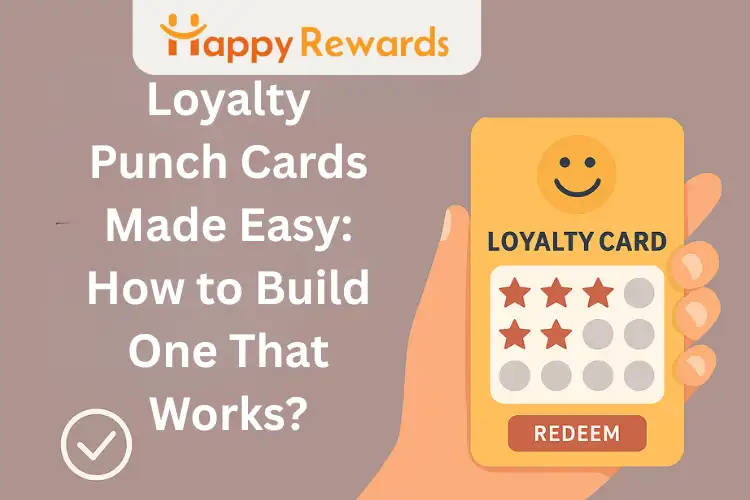
Loyalty Punch Cards Made Easy: How to Build One That Works?
In 2026, small and medium-sized businesses are fighting harder than ever for every customer. Acquiring a new one costs 5–25 times more than retaining an existing one, yet most owners still burn budget on ads instead of customer retention strategies. The simplest, most proven fix? A well-designed loyalty punch card that turns one-time buyers into regulars.
Studies show loyalty punch cards increase repeat purchases by up to 52%, boost customer lifetime value (CLV) dramatically, and can improve retention by 30% or more.
Whether you run a café, salon, gym, boutique, or service business, this guide gives you everything you need to create a customer loyalty program that actually works using platforms like HappyRewards.io —from psychology and design to launch and measurement.
Ready to punch up your sales and build real brand loyalty? Let’s get started.
What Are Loyalty Punch Cards? A Quick Refresher
Even in our hyper-digital age, the concept of loyalty punch cards remains beautifully simple and incredibly effective. Understanding the fundamentals helps you choose the right format and avoid common pitfalls from the start.
The Classic Definition
A loyalty punch card (also known as a rewards punch card, customer stamp card, or coffee punch card) is a frequency program that rewards customers with a “punch,” stamp, or digital mark for every qualifying purchase.
After collecting a set number—typically 8–12—the customer redeems the card for a free product, service, or discount. It’s a straightforward incentive program built on gamification and customer appreciation.
Physical vs. Digital Punch Cards
Physical cards are instantly recognizable and require zero tech adoption, making them great for older demographics or ultra-local businesses.
However, they’re easily lost, impossible to track, and open to fraud. Digital punch cards, delivered through apps or mobile wallets, eliminate those issues while adding automation, reminders, and valuable data—making them the clear winner for 2026.
The 2026 Evolution
Today’s digital loyalty punch cards live in Apple Wallet or Google Pay, update instantly, and send “You’re one punch away!” notifications.
Platforms like Happy Rewards have turned the old paper system into a powerful closed-loop loyalty tool with geo-fencing, automated marketing, and real-time analytics—all while keeping the nostalgic fun of “filling the card.”
The core psychology hasn’t changed: people love progress bars and free stuff. What has changed is the seamless customer experience (CX) and the treasure trove of data modern rewards programs now deliver.
The Proven Benefits of Loyalty Punch Cards for Your Business
Implementing loyalty punch cards isn’t just a nice-to-have—it’s one of the highest-ROI moves a small business can make. Here are the biggest wins, backed by real numbers.
Boost Repeat Purchases and Visit Frequency
Loyalty punch cards add gamification to everyday transactions. Customers subconsciously buy more often (or spend more per visit) to earn the next punch.
Coffee shops routinely see 20–30% more visits, while quick-service restaurants report up to 52% higher transaction frequency from active cardholders.
Dramatically Improve Customer Retention Rates
Retaining a customer is 5–25× cheaper than acquiring a new one. Punch-card users become emotionally invested in “finishing” their card, creating stickiness.
Businesses using frequency programs enjoy retention jumps of 30% or more, and loyal customers spend 67% more over their lifetime than one-time buyers.
Increase Average Order Value (AOV) Through Upselling
To earn punches faster, customers often upgrade their order—grande instead of tall, add-ons at the salon, or extra sides at lunch.
This subtle behavioral nudge directly lifts average order value without feeling salesy, delivering an immediate boost to your bottom line.
Cost-Effective Marketing with Measurable ROI
Unlike paid ads that stop working the moment you stop paying, loyalty punch cards create ongoing repeat business at a fraction of the cost.
The reward expense is more than covered by the additional purchases required to earn it, often delivering loyalty program ROI of 300–800%.
Collect First-Party Data for Personalization
Every punch is a data point. Digital systems reveal purchase patterns, favorite items, visit times, and more—fueling personalized engagement, targeted offers, and smarter inventory decisions. This turns a simple reward system into a powerful relationship marketing engine.
The numbers don’t lie: 75% of consumers say they favor brands with good rewards programs. In a crowded market, loyalty punch cards are your quiet competitive advantage.
Step-by-Step Guide: How to Build Effective Loyalty Punch Cards
This is the actionable core you came for. Follow these six steps, and you’ll launch a program customers actually use.
Step 1: Define Clear Goals and Know Your Audience
Every great customer loyalty program starts with clarity. Are you driving frequency (cafés, gyms) or higher spend (retail, restaurants)? Create simple customer personas—who is your high-value regular? A yoga studio might aim for “10 classes → 1 free,” while a boutique might choose “Spend $300 → $50 off.” Align rewards with both your margins and what excites your audience.
Step 2: Choose Between Physical and Digital (Go Digital)
Physical cards work for tiny, low-tech operations, but digital punch cards win on convenience, tracking, and fraud prevention.
Customers never forget their phone, redemptions are instant, and you get real-time analytics. Platforms like Happy Rewards integrate with Square, Clover, Lightspeed, and more—setup takes under 15 minutes.
Step 3: Design a Card That’s Beautiful and On-Brand
Design drives enrollment. Use your brand colors, logo, and playful icons (coffee cups, scissors, dumbbells) that match your niche.
Keep it clean—9 to 12 punch slots maximum—and add a prominent QR code for instant sign-up. Tools like Canva, MyCreativeShop, or Happy Rewards’ built-in editor make professional designs drag-and-drop easy.
Step 4: Craft Rewards and Rules That Motivate Action
Simplicity wins: “Buy 9, get the 10th free” is perfect for most. Add excitement with bonus double-punch days, birthday punches, or referral stamps. Set a 6–12 month expiration to create gentle urgency without frustration. Make the reward feel valuable but profitable—10%–15% of total spend is the sweet spot.
Step 5: Implement Bulletproof Tracking and Redemption
Train staff religiously for physical cards, or let technology do the work with digital. Happy Rewards validates redemptions instantly at the POS and can send “almost there” push notifications. Use unique codes and geo-triggers to eliminate fraud completely.
Step 6: Launch Loudly and Train Your Entire Team
Treat launch day like a grand opening—signage, social posts, email blasts, receipt messages. Give every new customer their first punch free to seed excitement. Role-play with staff so every team member explains the program confidently and consistently.
Follow these steps and you’ll have a living, breathing loyalty program for small business that runs itself and grows revenue on autopilot.
Design and Reward Ideas to Make Your Punch Cards Irresistible
Great design and clever rewards turn a good program into a can’t-live-without one. Steal these ideas.
Design Ideas That Get Noticed
Seasonal & Holiday Themes: Switch to pumpkin stamps in October or heart punches in February—customers love limited-edition cards and share them on social media.
Playful Progress Bars (Digital): Replace circles with a filling coffee cup, growing plant, or climbing mountain. Visual progress is addictive and keeps customers coming back.
Minimalist Luxury (Salons & Boutiques): Clean black-and-white designs with gold foil accents scream premium and make customers proud to show their card.
Scratch-Off Surprise Punches: Add one mystery scratch-off spot—could be 1 punch or 5. Instant delight and word-of-mouth gold.
Reward Ideas That Drive Behavior
Referral Bonus Punches: Bring a friend → both get an extra punch. Turns customers into your marketing team overnight.
“Almost There” Surprise: When someone hits 80%, auto-send a bonus punch or small freebie. Converts near-completers into finishers.
Tiered VIP Upgrades: After three completed cards, automatically upgrade them to a better ratio (buy 7 get 1 free) plus birthday gifts.
Experiential Rewards: Instead of just a product, offer a free workshop, styling session, or behind-the-scenes tour—memorable and shareable.
Happy Rewards can automate every one of these ideas with zero extra work.
Common Mistakes to Avoid When Creating Loyalty Punch Cards
Even smart owners trip on these pitfalls. Dodge them and your program will thrive.
Making Rules Too Complicated
If a customer can’t explain the program in 10 seconds, it’s too complex. Stick to one clear goal and simple terms—confusion kills enrollment and completion.
Setting the Reward Threshold Too High
Asking for 15–20 punches feels impossible and leads to abandonment. 8–12 is the proven sweet spot for most businesses.
Forgetting to Promote the Program
The best card in the world does nothing if customers don’t know it exists. Promote at every touchpoint—signs, receipts, social, email signatures, staff shirts.
Relying Only on Physical Cards
Up to 40% of paper cards are lost before redemption. Go digital or at least offer both—your revenue will thank you.
Skipping Staff Training
Inconsistent punching or clueless staff destroys customer trust instantly. Weekly refreshers and mystery shopper checks keep everyone sharp.
Ignoring Data and Never Iterating
Launch is just the beginning. Track redemption rates, visit frequency, and customer feedback monthly. Small tweaks based on real data can double results.
Avoid these traps and your loyalty punch cards will run smoothly for years.
Measuring Success and Iterating Your Program
Launching is exciting—measuring and improving is what separates good programs from legendary ones.
Key loyalty program metrics to watch monthly:
- Redemption rate (aim for 70%+)
- Increase in visit frequency and average order value
- Growth in customer lifetime value (CLV)
- Program enrollment percentage
Happy Rewards’ dashboard shows all of these in real time, plus customer segments and exportable reports. Send short surveys after redemptions (“How likely are you to recommend us?”) and run quarterly A/B tests on rewards.
Small, data-driven changes—like adding a double-punch Tuesday—can deliver massive lifts. Treat your program as a living asset, not a set-it-and-forget-it tactic.
Conclusion
Loyalty punch cards are still one of the simplest, most powerful tools to turn casual buyers into loyal fans—and they work better than ever in digital form.
You now have the complete playbook: the psychology, the step-by-step build, creative ideas, pitfalls to avoid, and exactly how to measure success.
The fastest way to get started? Head to happyrewards.io, pick a template, and have your digital punch card live before your next shift.
Download our free punch card template pack from the HappyRewards.io platform, launch this week, and watch your regulars start smiling (and spending) more than ever.
What’s the best reward you’ve ever earned with a punch card? Tell me in the comments—I read every single one!
Here’s to making 2026 the year your customers can’t imagine going anywhere else.
